Malaga has long been one of my absolute favourite destinations, if not for its beautiful old city centre than most definitely for its rich history and breathtaking views from atop the Gibralfaro.
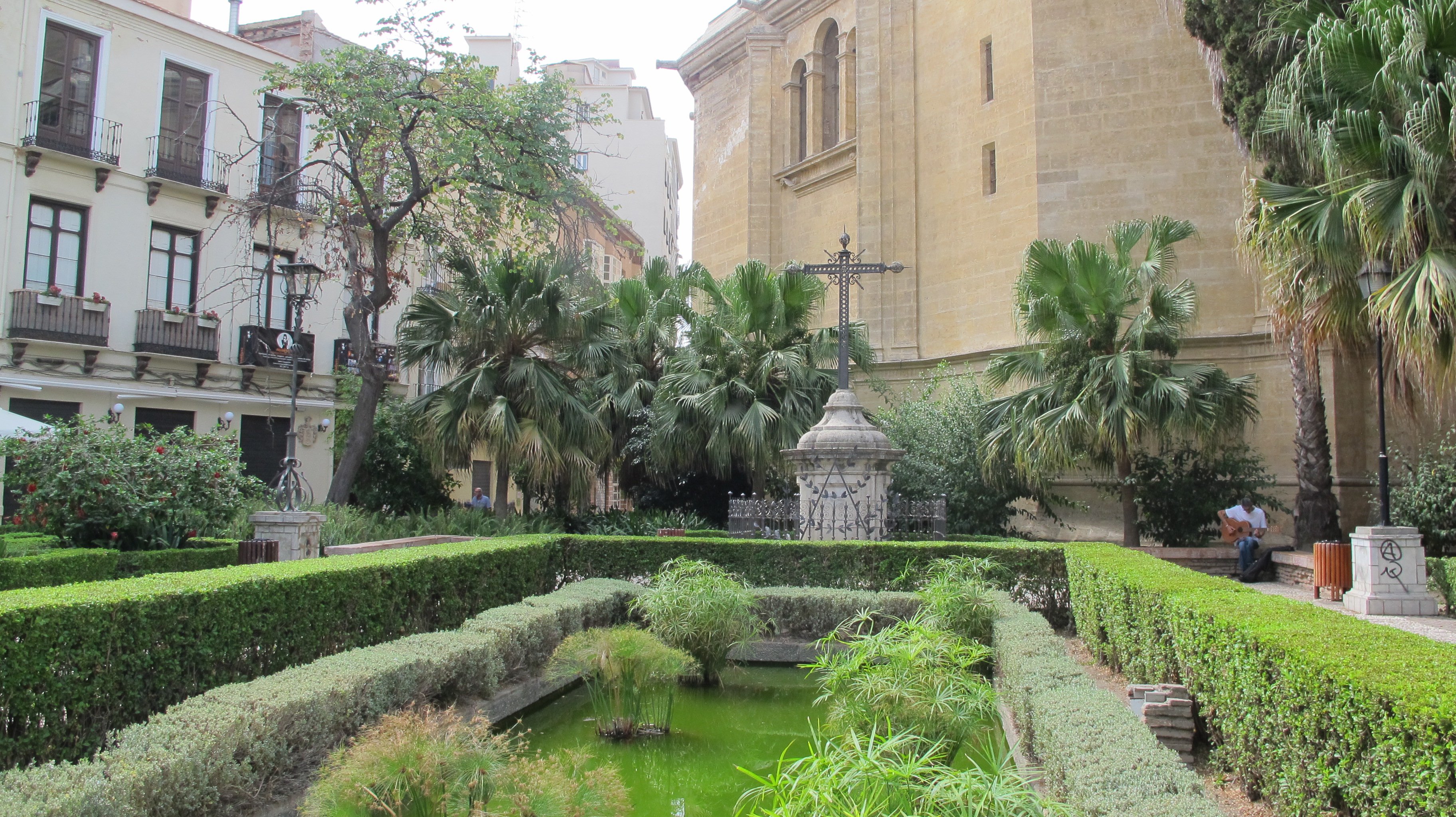
Rose garden in Malaga, beautiful spot along the waterfront
We arrived in Malaga mid afternoon after a scenic train ride through the country side. Upon arrival we checked into our room – booked through airbnb – located in the heart of the old city centre. The room was located in an airy third floor walk up with tall ceilings, an adorable kitchen and spacious living room with large windowed doors opening up to two balconies overlooking the cobblestone streets below. Our room was adorably decorated in whitewashed finish with a large cupboard for our clothes and the most comfortable beds ever – and lets not forget, real, actual pillows…like actual foam pillows. If I’d had room in my backpack, they may have accidentally made their way into my luggage. Mornings were an absolute delight at this place, we enjoyed our breakfasts in the company of other guests and sharing travel stories with them…loved this place.
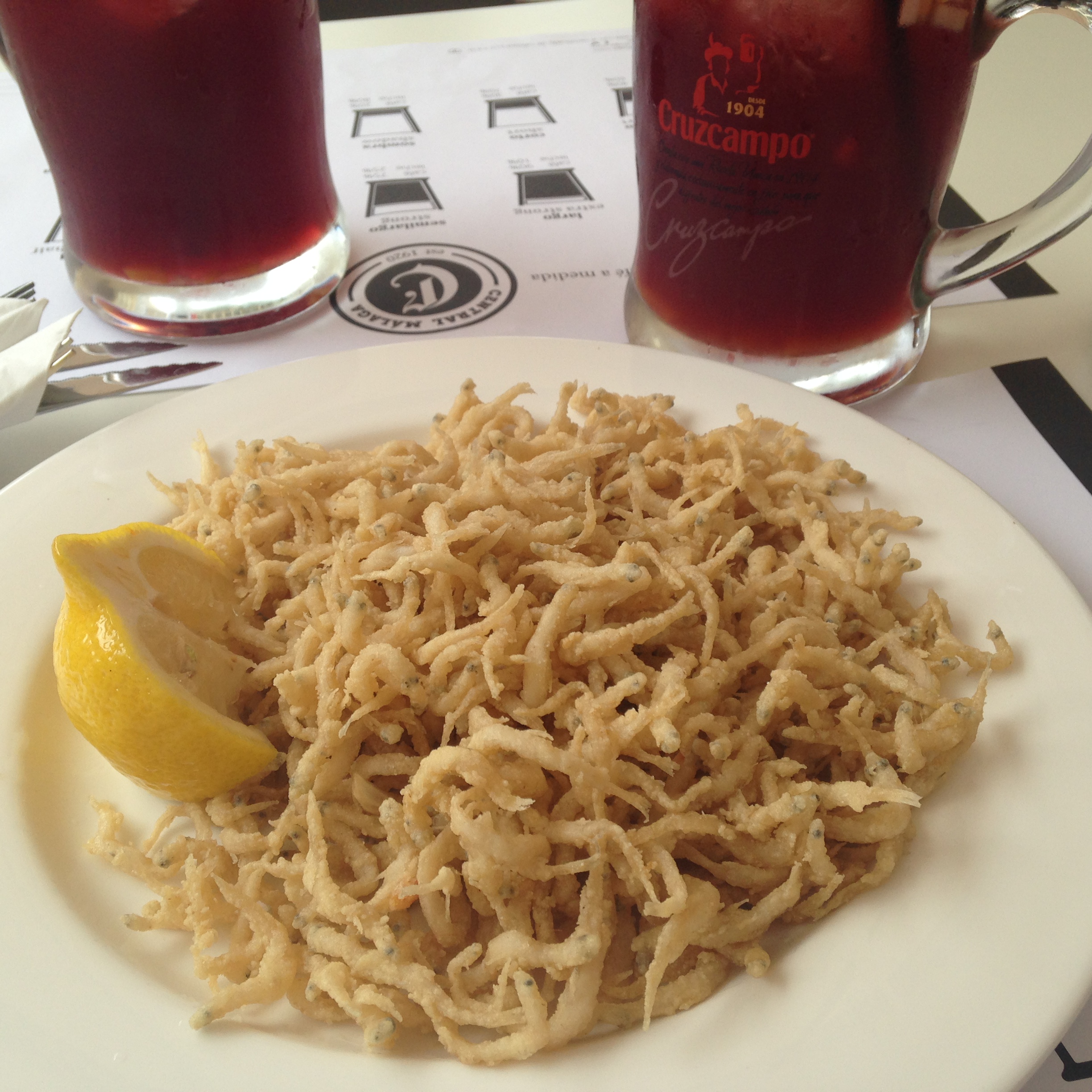
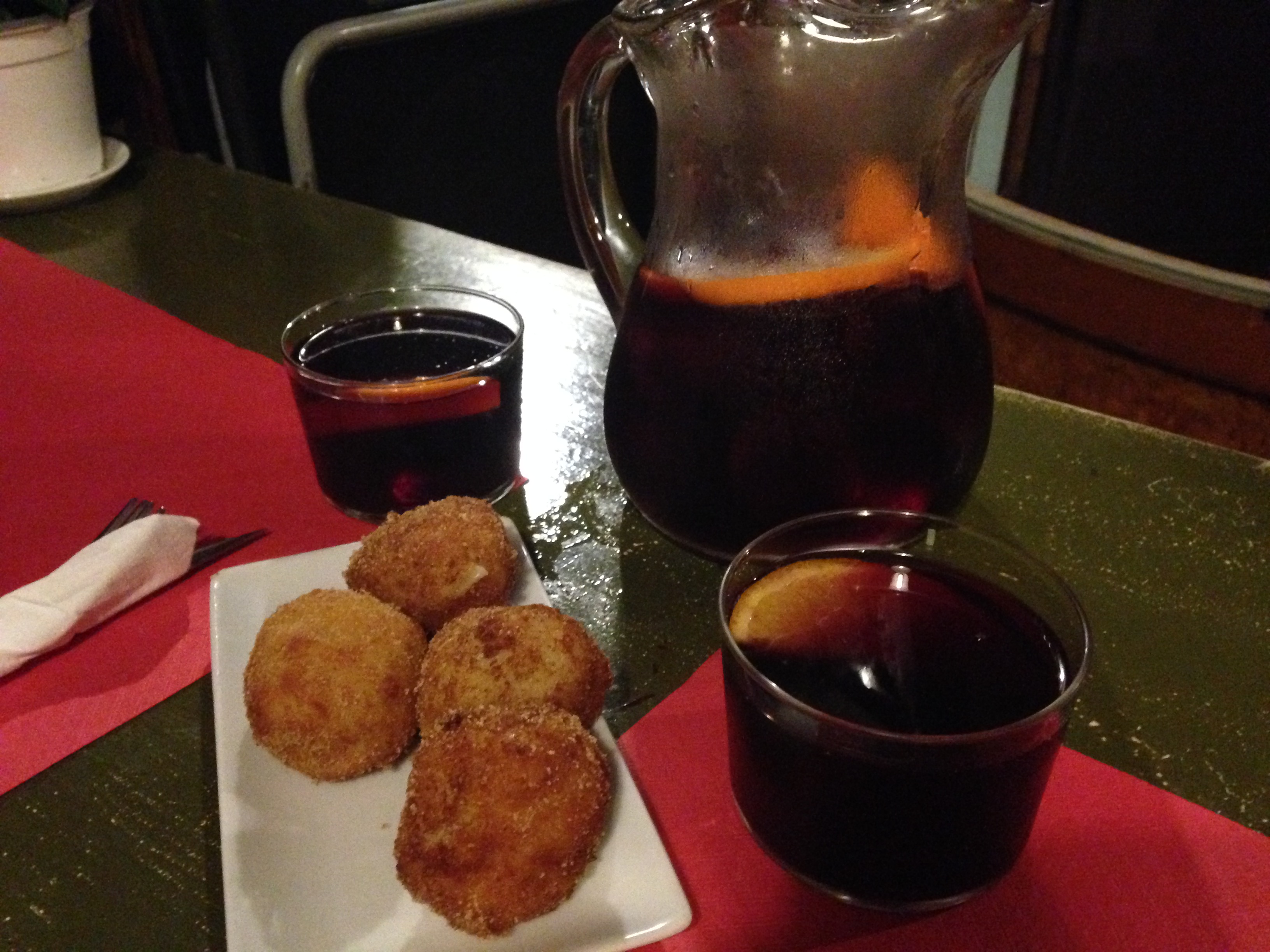
Freshly caught and deep fried whitebaits with sangria
After checking in we made our way to Confederation Square located in the heart of Malaga, one of my favourite spots to people watch. We promptly sat down at a table on one of the restaurant terraces overlooking the square and ordered a pitcher of sangria and plate of battered and fried whitebaits…absolutely scrumptious! We lingered there for most of the afternoon musing about our adventure so far and what we should explore while staying in Malaga.
We had initially planned a day trip to Morocco from Malaga, but soon discovered that we wouldn’t have enough time to do so. Luckily for us, this would give us time to explore the Alcazaba and the Castillo de Gibralfaro instead. The Alcazaba is a former palace-fortress dating back to 1057 and was occupied by the Muslim governors during their time in Spain. Easily walkable and bargain as you can visit both sites for less than 3 euros – if you are willing to wait until later in the afternoon to make the climb to the Castillo de Gibralfaro as entrance is free after 2pm. We decided to explore both the following day.
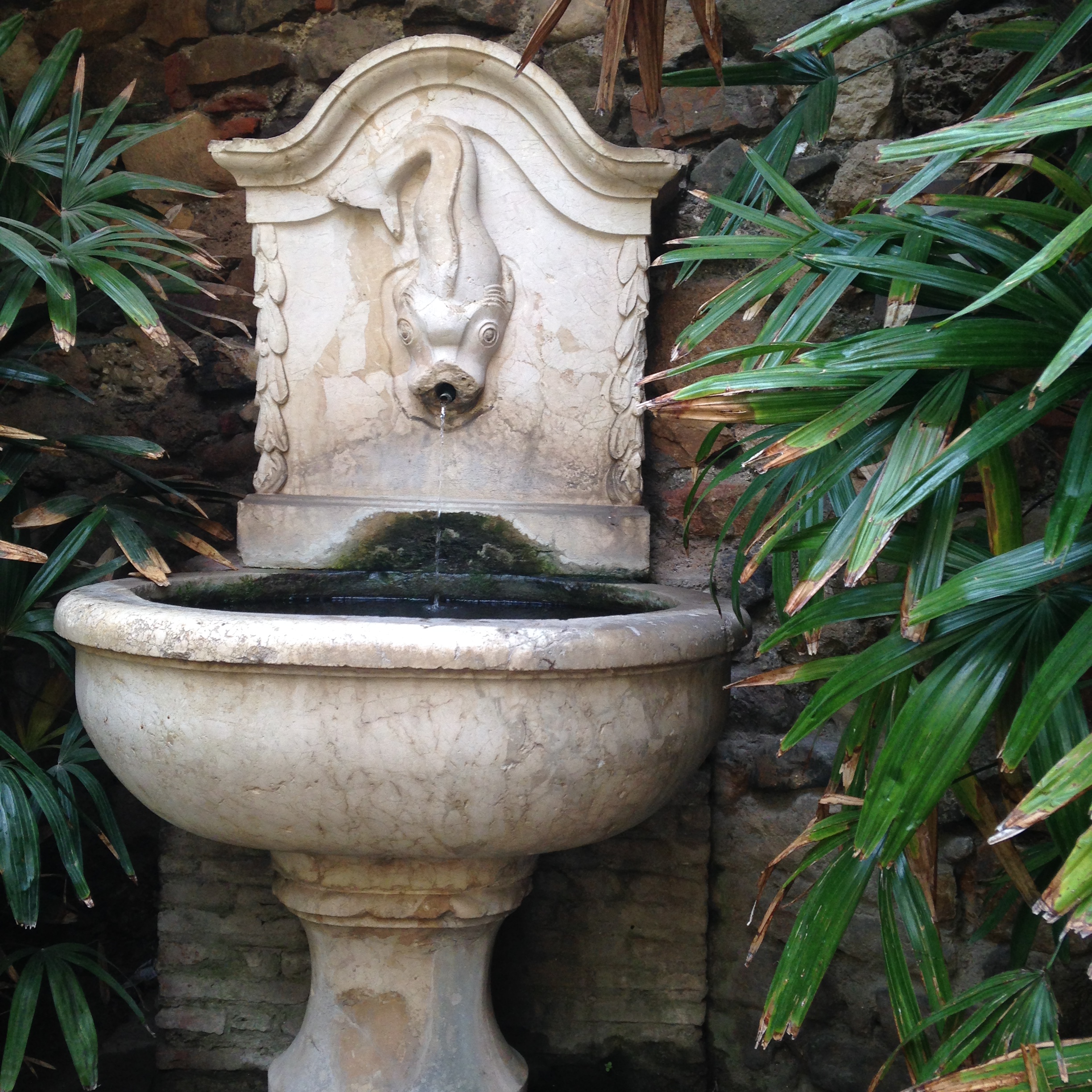
One of many beautiful gardens for you to enjoy as you stroll through Malaga
That evening, we decided to check out the tapas scene in Malaga and made our way to El Tapy, a local tapas bar which was highly rated on Yelp because of it’s varied menu and cheap eats. What. A. Shit. Show. The place was crowded and our server ushered us to a tiny table in the back room, crammed up against another table. It was so crammed that the guy at the next table kept hitting me in the back with his elbow every time he took a drink from his wine glass and he and his friend had just ordered another full bottle of wine! We ordered two beers which were brought to us fairly quickly, they were ice cold and accompanied by, quite possibly, the most gag inducing plate of paella I’ve ever had the misfortune of putting in my mouth. I’m afraid it was time to call time on El Tapy. We downed our beers and spent the next 20 minutes trying to flag down our server in order to get our bill. Emma literally, no joke, had to tackle another server in order to finally get our bill. We made haste out of there and off to a quaint little tapas placed we had walked by earlier in the evening, Vineria Cervantes.
Disgusting El Tapy paella, to be avoided at all costs
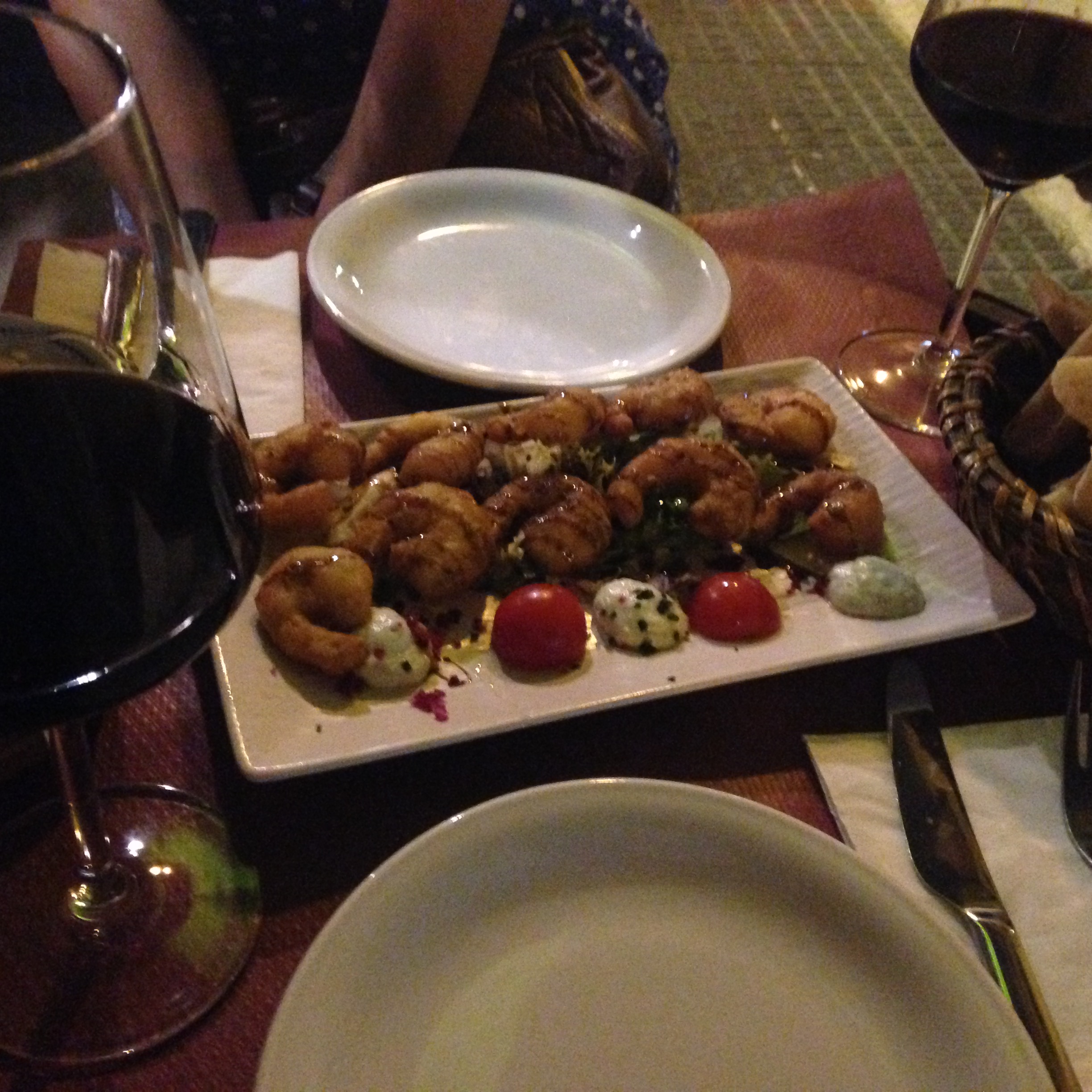
It was brilliant! We were seated at a small table outside (perfect for people watching) and given a menu. Now the challenges was in choosing something since every plate that passed by our table looked mouth watering and every dish described on the menu sounded delicious. We finally decided on the battered prawns with treacle and a coriander mayonnaise and the Argentine steak with tomatoes and roasted potatoes, paired with a Rioja tinto – Biga ‘crianza’. Their wine list was quite impressive, with many wines available by the glass, so choosing a wine was a bit of an effort, but our server was extremely knowledgeable and quite helpful in helping us choose the right wine.
Vineria Cervantes’ Prawns with treacle and cilantro aoli, not to be missed.
The prawns were incredibly tasty with the sweetness of the treacle playing off nicely against the tang of the coriander mayo. The steak was cooked to perfection and though the tomatoes and roast potatoes were nice, the star of the dish was the spicy chimichurri sauce served alongside, it was heaven. The entire meal brought a tear to my eye, it was so freakin’ good, with the Rioja capping off an absolutely wonderful meal in Malaga.
It’s worth a mention that we ordered the half plates and we did not leave hungry.
Our first step the following day was the Picasso Museum, a permanent Picasso exhibit on display in the artist’s childhood home. Picasso lived in Malaga as a child, left to pursue his art and returned to Malaga only once at the age of 19. The family home was restored and now houses approximately 250 of his oeuvres, generously donated by his family trust. The price is 7 euros and includes the audioguide, which was very informative and offered a great deal of insight into his personal life, his creative process and his progression as an artist. Touring the museum takes about an hour to 90 minutes and not only includes his paintings, but also features a few of his sculptures and a large collection of his pottery which was donated to the museum by his widow. The pottery was quite interesting, but the room in which it is housed was the showstopper, as they feature beautiful murals and gilded ceilings. Absolutely stunning. Of note, the museum also features some pretty interesting temporary exhibits from time to time. Last time I was there, the Dennis Hopper photography exhibit was on offer, and this time they were featuring Louise Bourgeois’ I’ve Been to Hell and Back .
The museum also houses an archaeological dig in the basement, discovered while the home was being restored, displaying remains from the Roman wall which at one time surrounded the city. Though the display itself is quite small, it’s well worth a visit.
Our next stop was the Alcazaba, a palace cum fortress constructed in the early 11th century to house the Muslim emperors who ruled the region at that time. If you plan on visiting this place, be sure to set aside at least a couple of hours and make the hike up the hillside to the Castillo de Gibralfaro as well for some stunning views of the city. Both are amazing examples of Moorish architecture and an absolute must. We also took advantage of the small cafe on site and took a much deserved sangria break under the shade of the trees and overlooking the city below. Delightful!
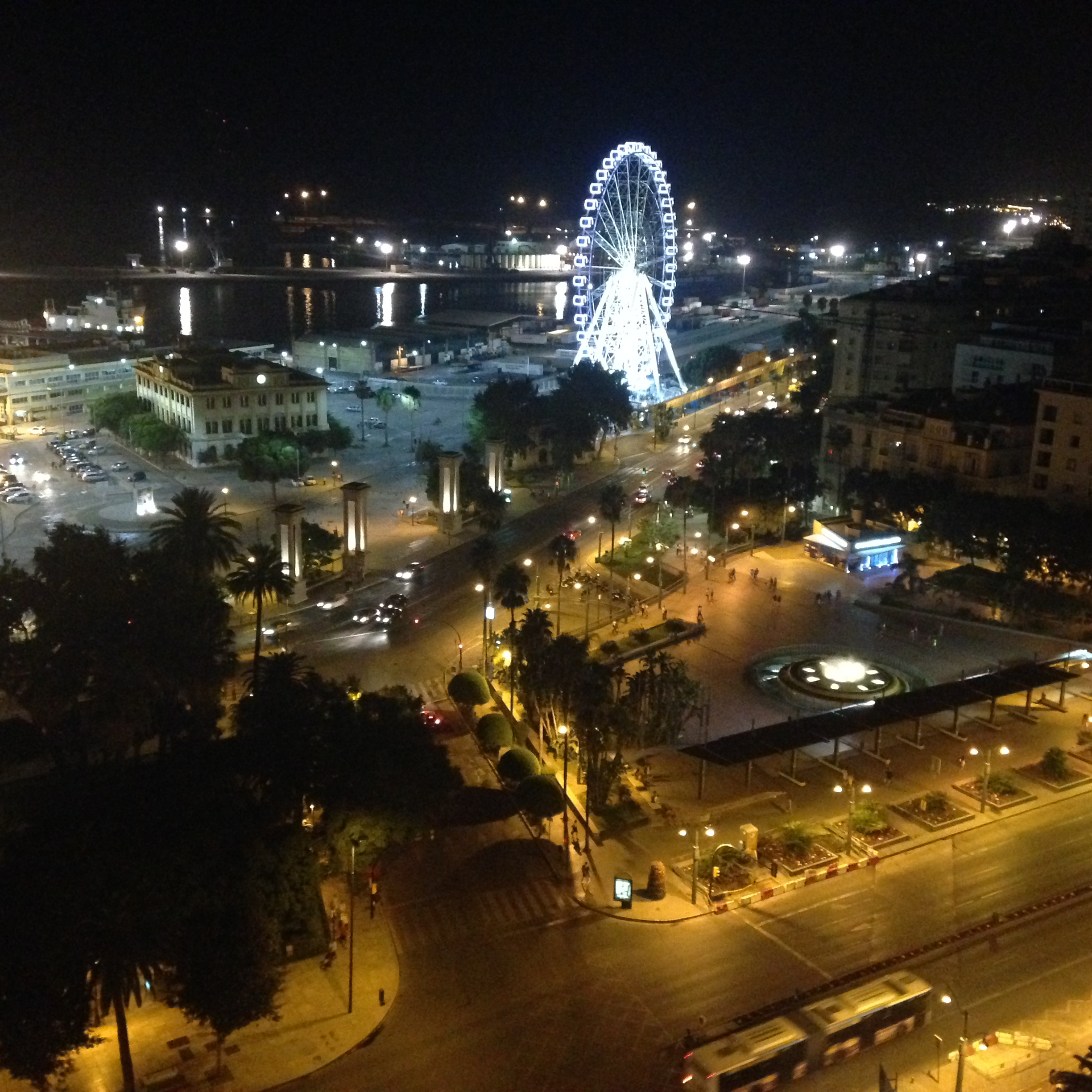
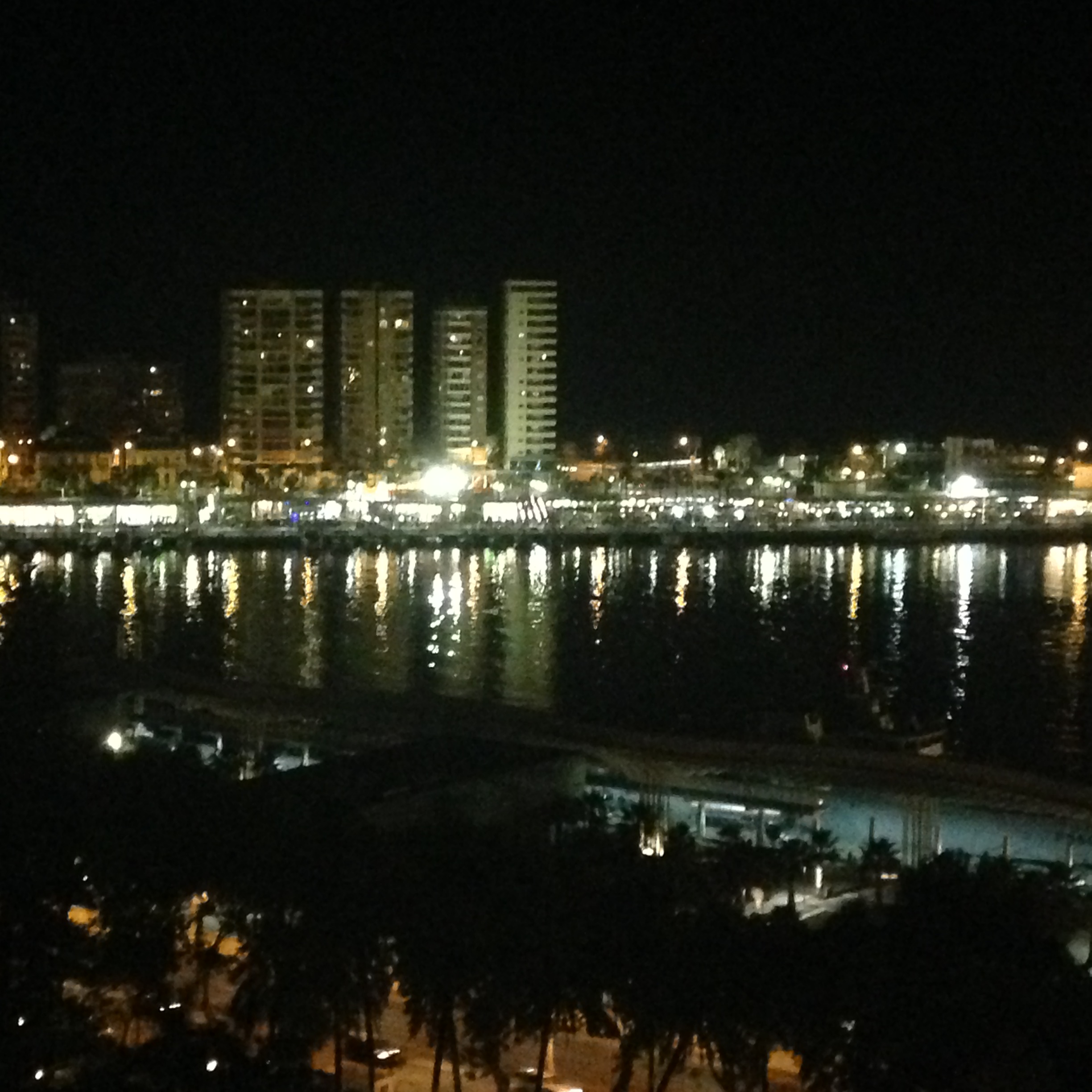
After a full day of sightseeing, what better way to cap of the day then drinks on the roof of the Marriott hotel followed by dinner at one of the oldest restaurants in the city. Our hosts had recommended the rooftop at the Marriott and it did not disappoint. We were treated to 360 degree sweeping views of the city below while we sipped our sangrias and watched dusk turn into night.
Views from atop the AC Marriott in Malaga, simply breathtaking
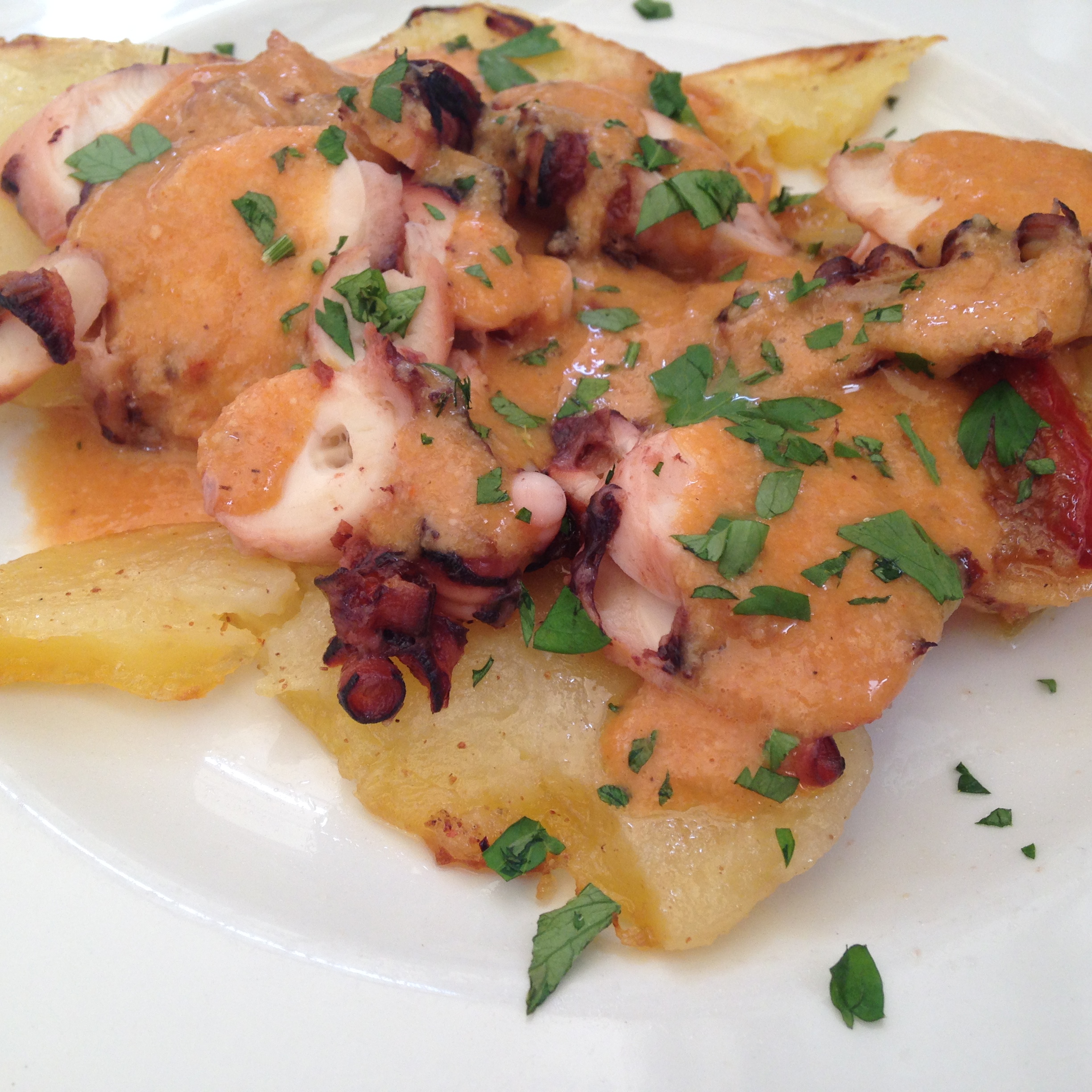
Later, we made our way to El Chinitas, one of the oldest restaurants in Malaga. The restaurant specializes in seafood and has an extensive wine list. Prices are what you would expect to pay in the touristy part of the city, but the food was good and we were treated to a delicious meal on the terrace. We shared a mixed tapas appetizer plate featuring fish, meat, beans and sausages and each had a fish plate. I ordered the sole meuniere and Emma ordered their deep fried seafood platter. I wish I could say the food was amazing, but sadly it was not. My fish was average at best and the appetizer selection was less than stellar, though Emma appeared to enjoy her seafood plate.
Sole a la meuniere – El ChinitasFried fish platter, a must try in Malaga
Following dinner, we walked through its cobblestone streets, exploring the many bars and terraces where locals and tourists alike commiserate over sangria and the music from the clubs spills out into the streets. The perfect end to our last day in this beautiful place.
This beautiful 2000 year old city was definitely one of the many highlights of this trip. Once considered to be a major fishing and much desired trade hub, Sevilla was conquered by both the Cartagenas and the Romans, colonized and named by Julius Caesar, then Muslim occupied for more than 500 years. As expected this rich and storied past has influenced its architecture, traditions, food, culture and its people.
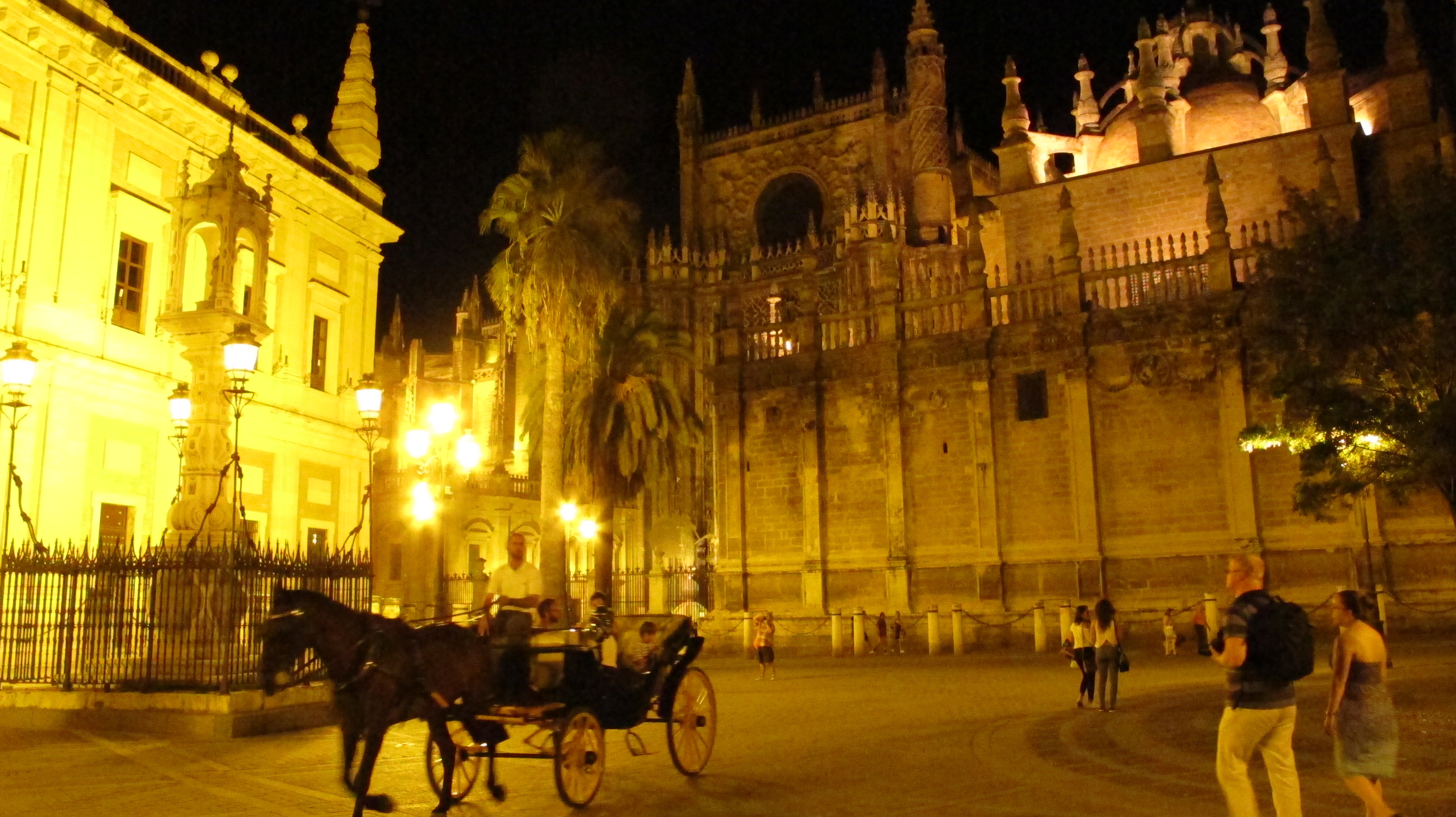
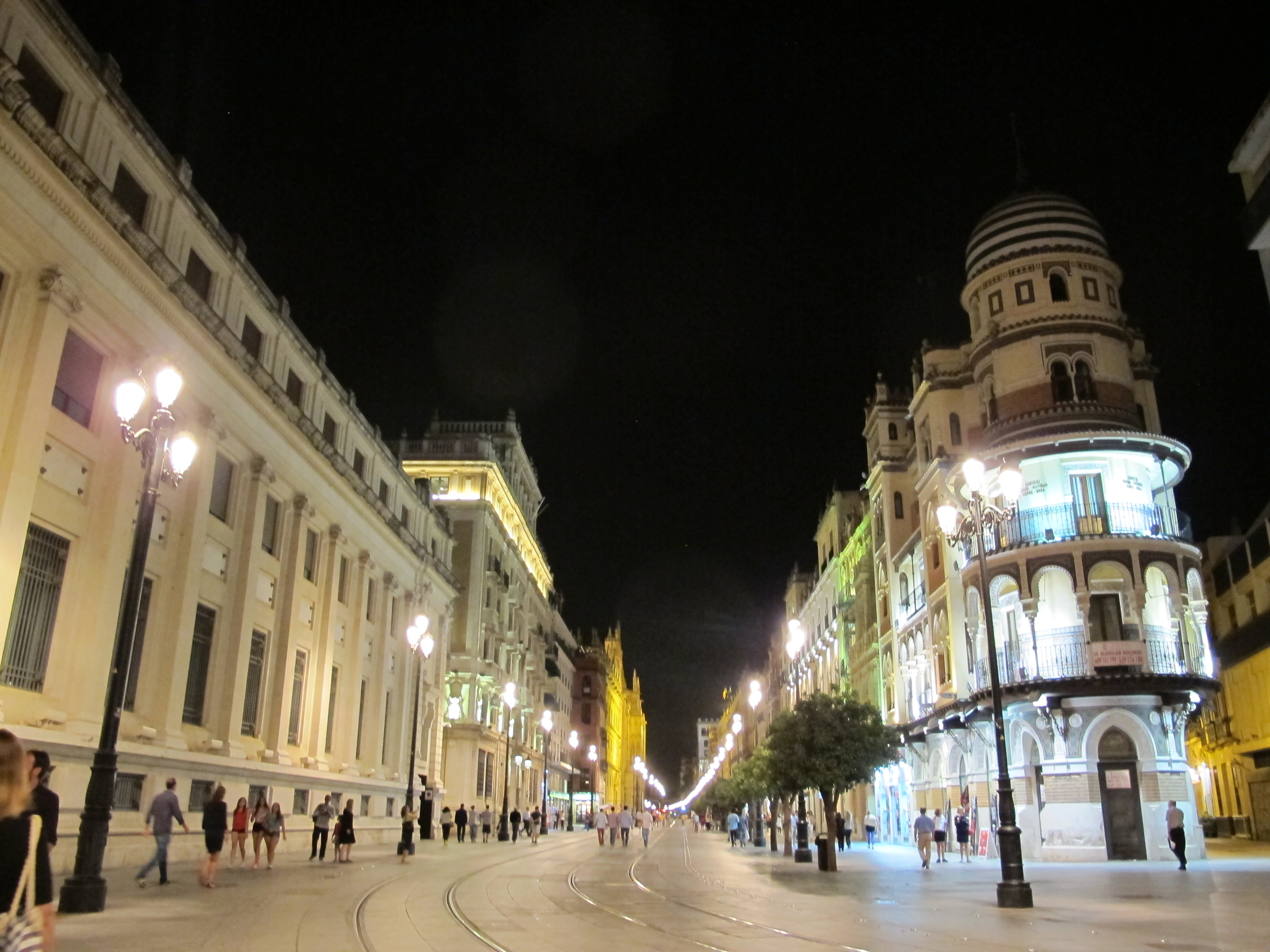
Seville at night, there is no place more beautiful.
We arrived in Seville by train in the early afternoon and quickly made our way to Pension Vergara, a former convent now converted into a two story pension, and our home for the next few days. The pension was located on the most famous neighbourhoods of Seville – though we didn’t know it at the time. More on that later.
After checking in to our room, we unloaded our bags and made quick work of finding a nearby restaurant for a bite to eat and a glass of wine, of course. Let me say that this did not prove to be very difficult as the winding cobblestone streets outside our pension were lined with restaurants, tabernas, terraces and bodegas. We had hit pay dirt!
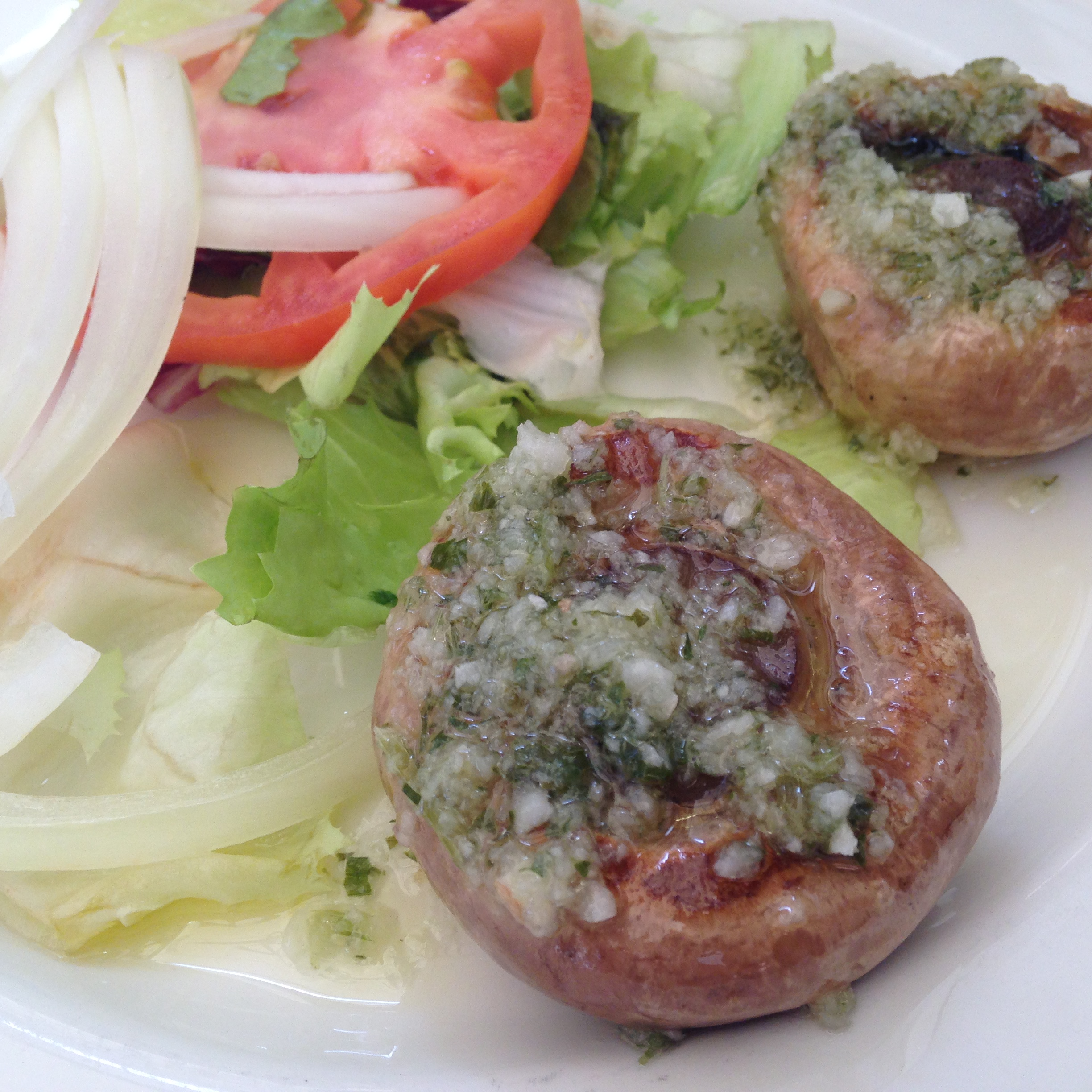
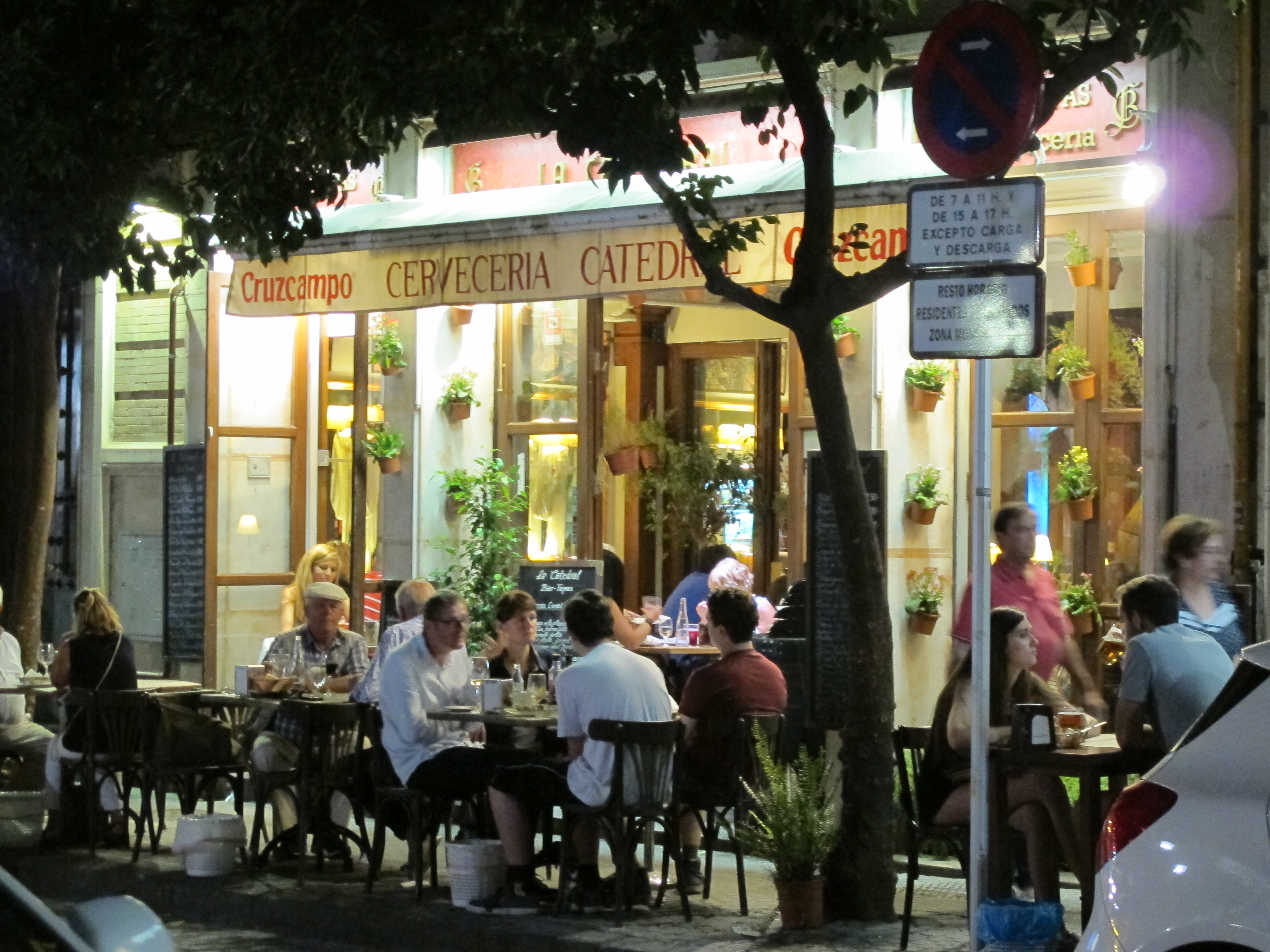
Our first food stop on this leg of the trip was Cerverceria Giraldi, A small restaurant with a stunning sidewalk view of the cathedral. We ordered small tapas plates of Iberico ham, grilled lamb chops, grilled mushrooms, and manchego cheese along with a crisp bottle of perfectly chilled vinho verde.
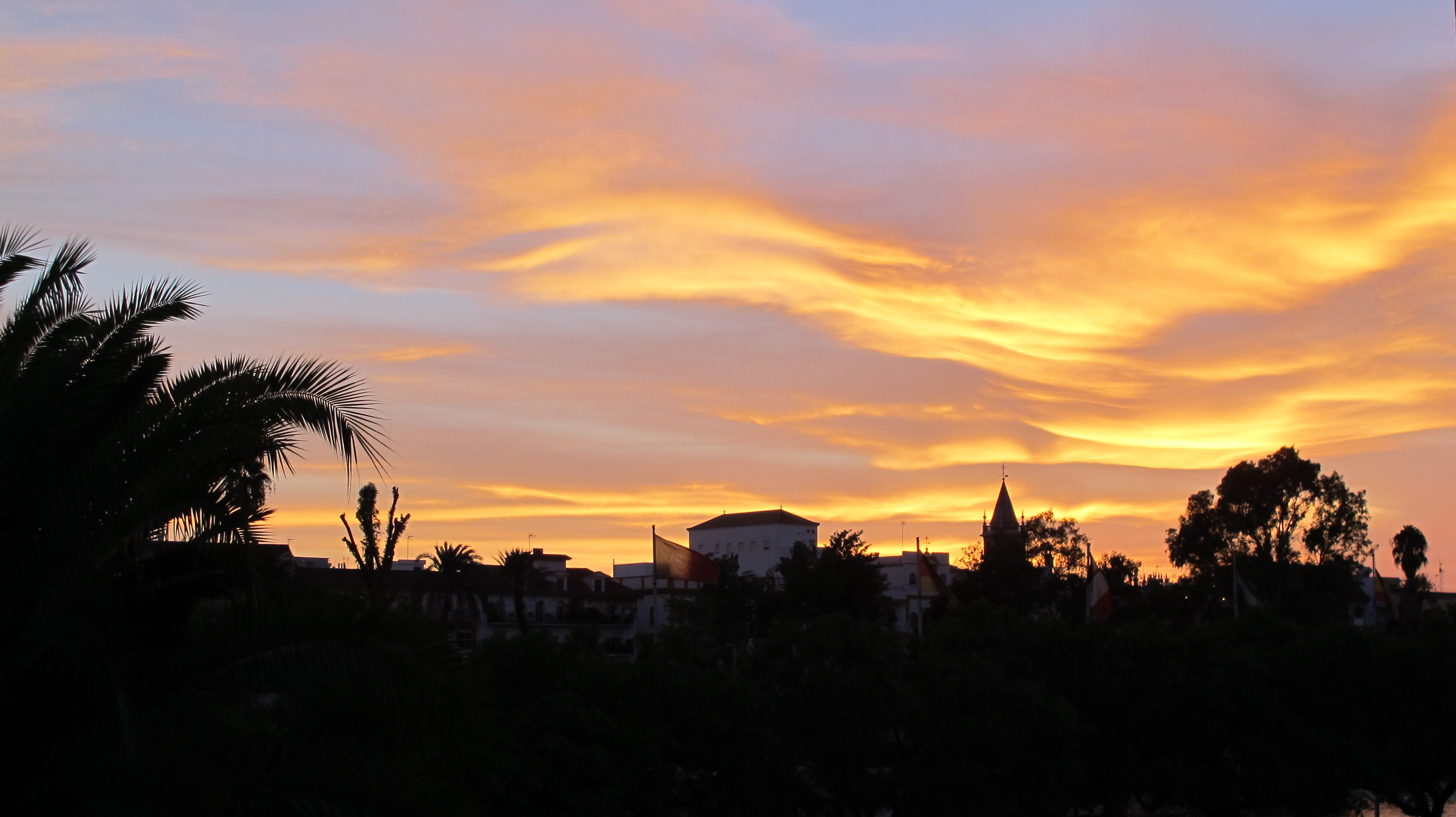
We lingered over our tapas and wine planning out our last few days in Spain while watching tourists and locals alike going about their business in the shadow of the cathedral and later that evening we walked through the city snapping pictures and taking in the beauty of this wonderful place. Sevilla at night is absolutely stunning. I must have taken over a thousand pictures while visiting this city alone. Just incredible. After a few hours of taking in the magnificence of this place at night, and witnessing quite possibly, one of the most beautiful city sunsets I’ve ever seen, we headed back to our pension for a solid night’s rest. There was a lot to see here and we didn’t want to miss a second of it!
The following morning we headed to the meeting spot for the free walking tour. Our guide Lupee was born in Seville and has a degree in Art History, so she was the perfect person to lead our tour through this historic city. Our tour focused on the the many monuments of Seville, as well as the area near the cathedral, the India Archives and the Real Alcazar. The tour lasted about 3 hours with stops at the oldest bullfighting ring in Sevilla, the Gold Tower, the Royal Tobacco Factory, now converted into a public university, the grounds of the Ibero-American Exposition World’s Fair which took place in Seville in 1929, and the Plaza de Espana . While we saw many things on this tour, my favourite stop was by far, the Plaza de Espanya, also built as part of the Ibero-American Export to highlight Spain’s industry and technology exhibits. Currently it houses Seville’s City Hall along with various government departments. Fun Fact: the building was also used in the filming of Lawrence of Arabia.
Plaza de Espanya
While on our walking tour, our guide mentioned a Flamenco evening event which was also offered by the same tour company. We signed up on the spot and we certainly did not regret it. For 28 euros, we were treated to a brief, one-hour history lesson on Flamenco in Sevilla from the rooftop of the Hotel Dona Maria in Old Sevilla. The views and wine alone were worth the price of the tour. As the sun set over the cathedral and we sipped our wine, Lupee provided us with a detailed overview of the various branches of the art, its costumes, and its folklore. Once the sun had set the history lesson was complete and it was time to make our way to the famed Casa de la Guitarra for the Flamenco show. The venue was quite small, with a maximum seating of probably 50 people. The lines of the small room are lined with the largest collection of Spanish Flamenco guitars in the world. The privately owned collection is said to be one of the most important in Spain with guitars dating back to the 16th century.
Now, it is said that the art of Flamenco should be enjoyed in a small, intimate space where you can see the sweat on the dancer’s brow and feel the music of the guitar and the vibrato of the singer’s voice and the stomping of the performers’ feet. The venue delivered on all fronts. We were seated very close to the front, second row, and thoroughly enjoyed the performance. It was an absolute treat and the highlight of our time in Seville. As our tour guide said it best “you don’t go the opera for steak”, so why would you sign up for a flamenco dinner show in a large theatre. She was right. This is the only way to enjoy the art of Flamenco. I cannot recommend this show enough.
The food in Seville is beyond compare, we enjoyed many delicious meals in this city and we even found a favourite hangout, the Bodega Santa Cruz. We had heard a lot about the Santa Cruz neighbourhood and how it was an absolutely must while in Seville. On our final day in Seville, we decided to look up some restaurants in that neighbourhood and make our way there for dinner. Well, we didn’t have to go very far, as it turned out that after 4 days of talking about how we must visit this neighbourhood, the restaurant we were planning to go to was literally outside the front door of our pensione. We had been in the bloody neighbourhood for our entire trip and didn’t even realize it! You would think that the bodega we visited every night, the Bodega Santa Cruz, would have tipped us off? Idiots! Highly embarrassing! Needless to say we loved Santa Cruz, it’s winding cobblestone streets, historic sights and delicious food!
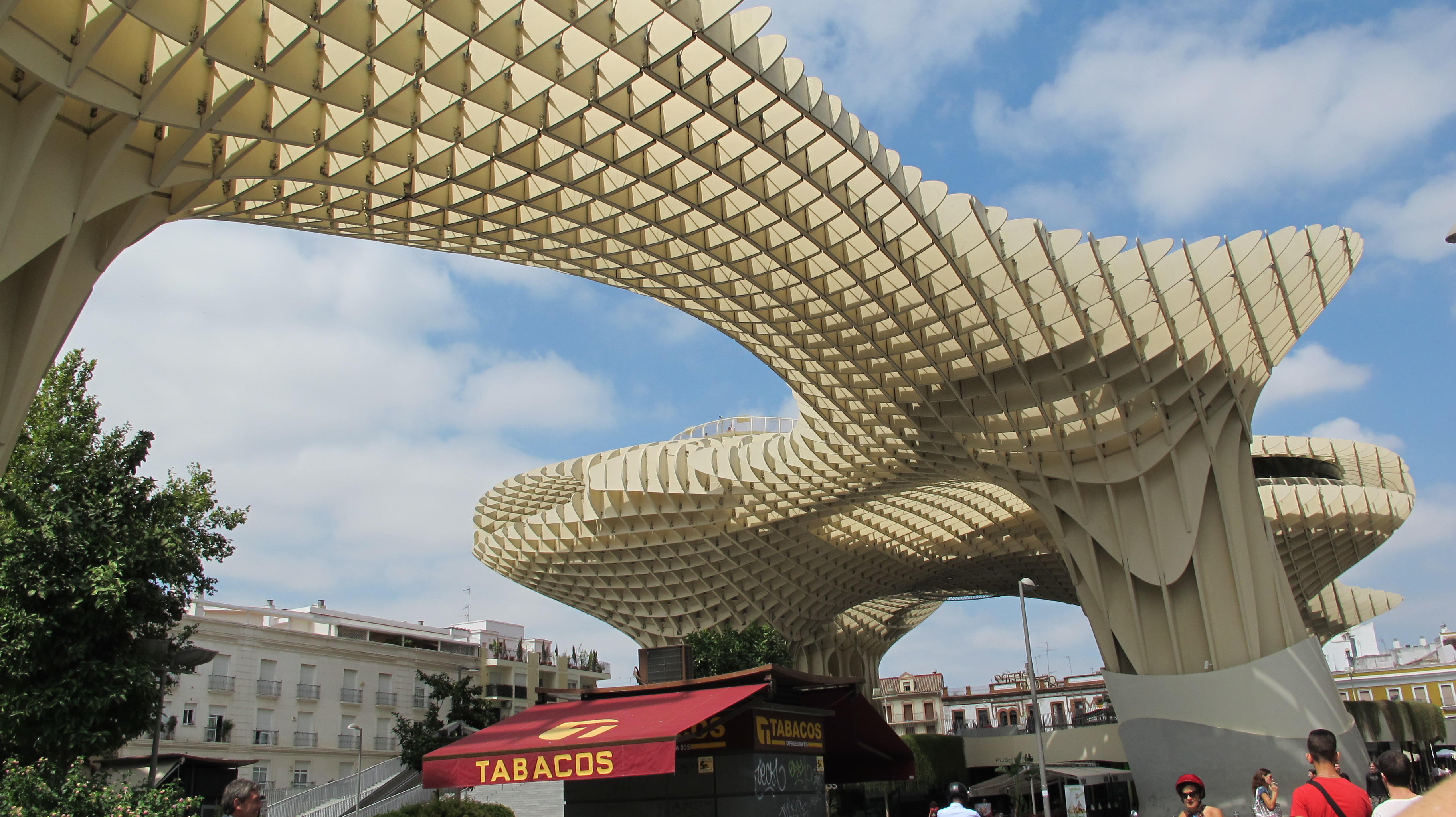
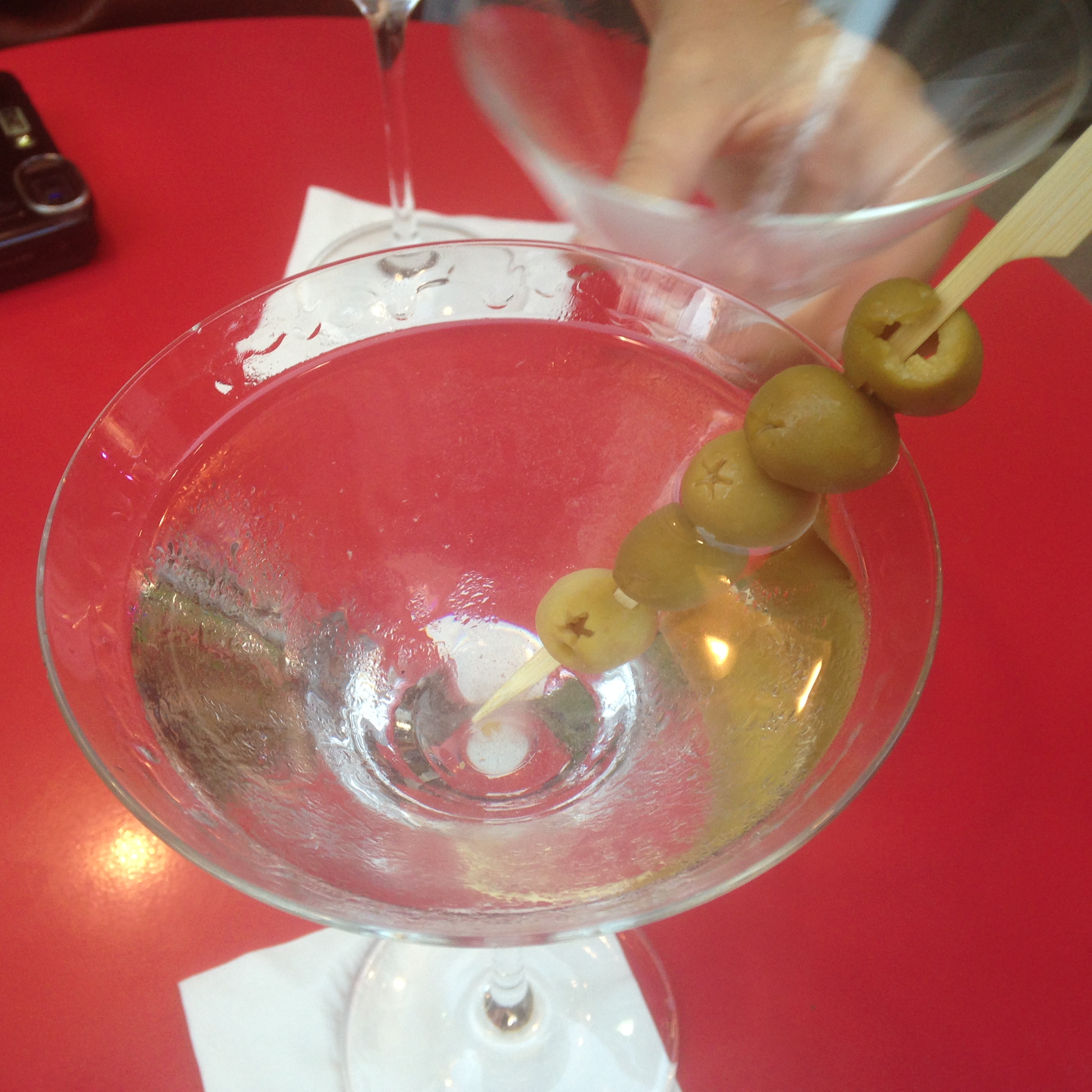
Metropol Parasol, The Second Room and their ridiculously potent dry martinis.
We stopped into the Second Room after visiting the Metropol Parasol, a wooden structure designed by noted German architect Jurgen Mayer-Hermann. The admission for entrance is 3 euros and it includes a free cocktail at one of 3 restaurants located at the base of the structure. We, of course, took full advantage of this incredible freebie and enjoyed a chilled glass of vinho verde under the Parasol.
This glass of vinho verde was followed by an order of deep fried calamari and onions with hot chili peppers and a bottle of wine – they were offering a promotion on wine after all – who can say no to that? Well, certainly not Emma and I. So, we ate the calamari and polished off the bottle of wine. As we made our way back to our hotel, we happened to notice a sign outside the Second Room, a popular cocktail bar, promoting their dry martini. It was ridiculously priced at 14 euros, but how could we say no to the only decent martini we’d seen on a menu in over a month. We sat down and ordered the martini, as you do – ‘Very dry with 3 olives, please and thank you!’ It was delicious! It was so delicious in fact, that we ordered a second martini…with 5 olives this time! Let me just say in our defence, that we had already consumed a half bottle of wine each and a martini, so we clearly were not thinking straight. Fast forward to the next afternoon when we woke up in our beds at the pension, fully clothed – I was still wearing my sandals – with absolutely no recollection of when or how we got there. After checking our bags to make sure we still had our wallets and cash, we checked our cameras to see if we had taken any photos following our martini throw down. The last photo on my phone was a picture of the 5 olive martini, it was time stamped 6:57PM. It was now past noon! Yikes! Thus, I would recommend that you do try the martini, but for the love of all that is holy, don’t be an idiot. Don’t drink a bottle of wine before hand and no matter what you do…do not, under any circumstances, order a second one!
The Second Room’s DEADLY DRY MARTINI – stop at one if you know what’s good for you!
On our last full day in Seville and we couldn’t possibly leave the city without visiting the famous Real Alcazar. To be completely honest, it’s the one thing I absolutely had to visit, especially knowing that episodes of Game of Thrones have been filmed there. The grounds and palace defy description and the photos alone do not do it justice. Suffice it to say that it was well worth the price of admission and the 2 hours we spent there were not nearly enough. The surrounding gardens are equally beautiful and one could spend 2 hours alone enjoying the quiet sanctuary they offer.
Real Alcazar, SevillaInside the Real Alcazar, Sevilla
Though tourists now flock to this marvelous city in droves, it’s currently ranked 11th on the list of most visited cities in the world (according to Forbes), this was not always the case. It is also currently the 5th most visited city in Europe (according to Conde Nast Readers’ Choice Award for 2014). The city was not really viewed as a destination until after it hosted the Olympics in 1992. Prior to the ’92 Olympics Barcelona was very different from what it is now. For one thing, there were no beaches in Barcelona, however, once they secured the games, they began working in earnest to transform their city from a mostly industrial backwater into the sun, sand and sangria destination it is today. The city spent over $11 billion dollars to not only construct the many sporting venues, stadiums, and accommodations for the athletes, but to add much needed infrastructure and green spaces and beaches. They demolished the industrial waterfront, added a modern marina and imported enough sand from Egypt to create a 2 mile long beach (they continue to import sand from Egypt every year in order to maintain the beaches). Interestingly enough, the sand was not the only thing they imported. We discovered on our tour of the city that even their palm trees were imported, since palm trees are not native to the area, and that the bulk of their palm trees were imported from as far away as Miami.
You can bet that I was stoked to be in this fabulous place and despite feeling like death warmed over, I couldn’t wait to get out and explore.
We arrived at our hostel, Holidaysbcn Hostel around 11am. Since I had been ill the entire morning, all I wanted to do was get some sleep and recover as soon as possible. After a very long nap, I was feeling well enough to venture out and grab a small meal of paella and sangria. Before leaving our hostel, we had checked out nearby restaurants on Yelp and though there weren’t really any near us, we did notice that Yelp was hosting an event that evening and that all were invited. We made our way to the event, and it just so happened that we arrived in Barcelona during their Dias De Gracias street festival and the Yelp event we attended was in conjunction with the festival.
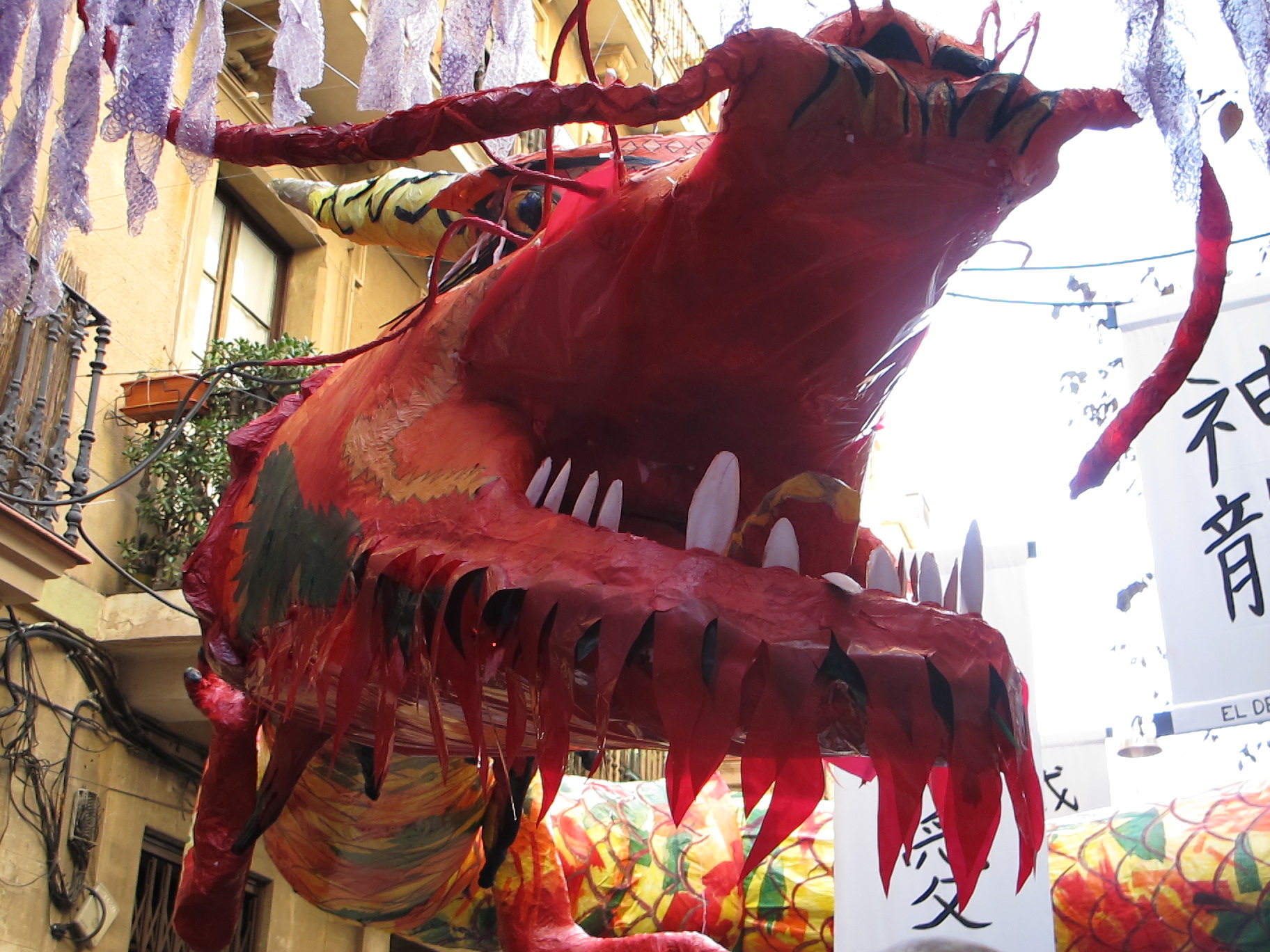
Scenes from Dias de Gracias 2015 – Barcelona
This festival is something else. As we meandered through the small streets of the neighbourhood we couldn’t help but marvel at the impressive decorations and installations throughout. Each installation was based on a specific theme and the themes were as varied as they were vibrant; The 4 Seasons, Moulin Rouge, Japanese Garden and Amusement Park to name a few. We saw belly dancers, musical performances and a whole lot more. There were countless food stands selling mouthwatering dishes. As we sat down by one of the fountains sipping our 1€ draft beers eating porchetta sandwiches we could hardly believe our luck at happening upon this wonderful festival. Our first night in Barcelona and we were in food and drink heaven. After drinking our fill of beer and gorging on food we made our way through the crowds and back to our hostel for the night.
The next morning, we were up bright and early’ish – okay we rolled out of bed at 10am – we’re on vacation, don’t judge us! We made our way to the Gothic Quarter for the free walking tour. There are several companies offering walking tours, including Sandeman, however, we chose the tour offered by Travel Bar because they were rated number one on TripAdvisor. Our guide, Chrissy, a transplant from Athens who visited Barcelona 4 years ago who fell in love with the city and never looked back, would walk us through the Gothic quarter for the next 2 1/2 hours. We learned quite a bit about Barcelona’s history, legends and lore. Once the tour was over she even sat with us for a drink and gave us some pointers on additional things to see and do during our stay.
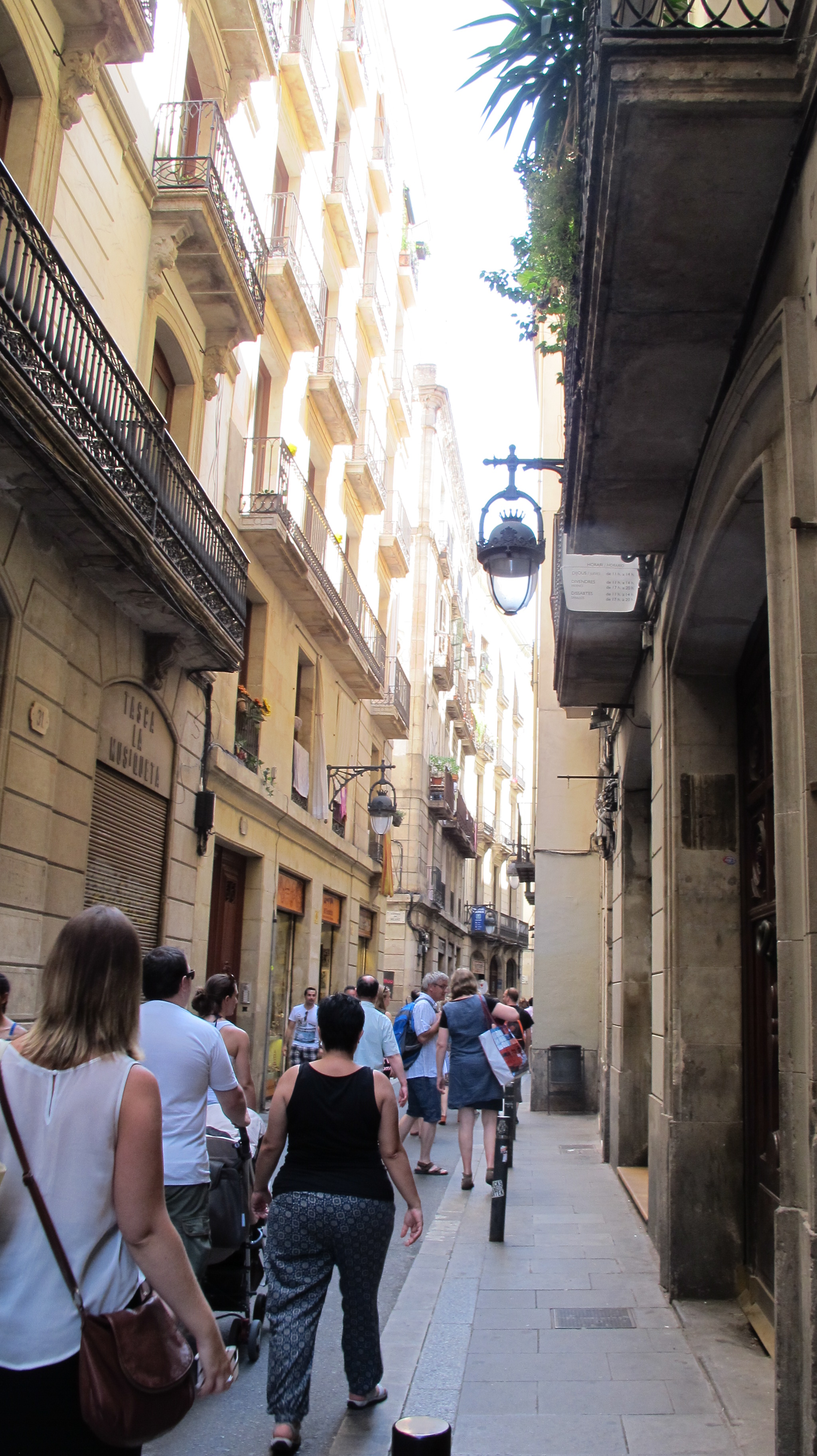
A few pics from the Barrio Gothic, Barcelona
One of the tours she mentioned was the Paella cooking experience, an evening tour lead by a trained chef who would guide us through the famous Boqueria Merkat St. Josef where we would purchase all things required for a traditional Spanish meal of pinxtos, paella and sangria. Did someone say Sangria? I’m in!!
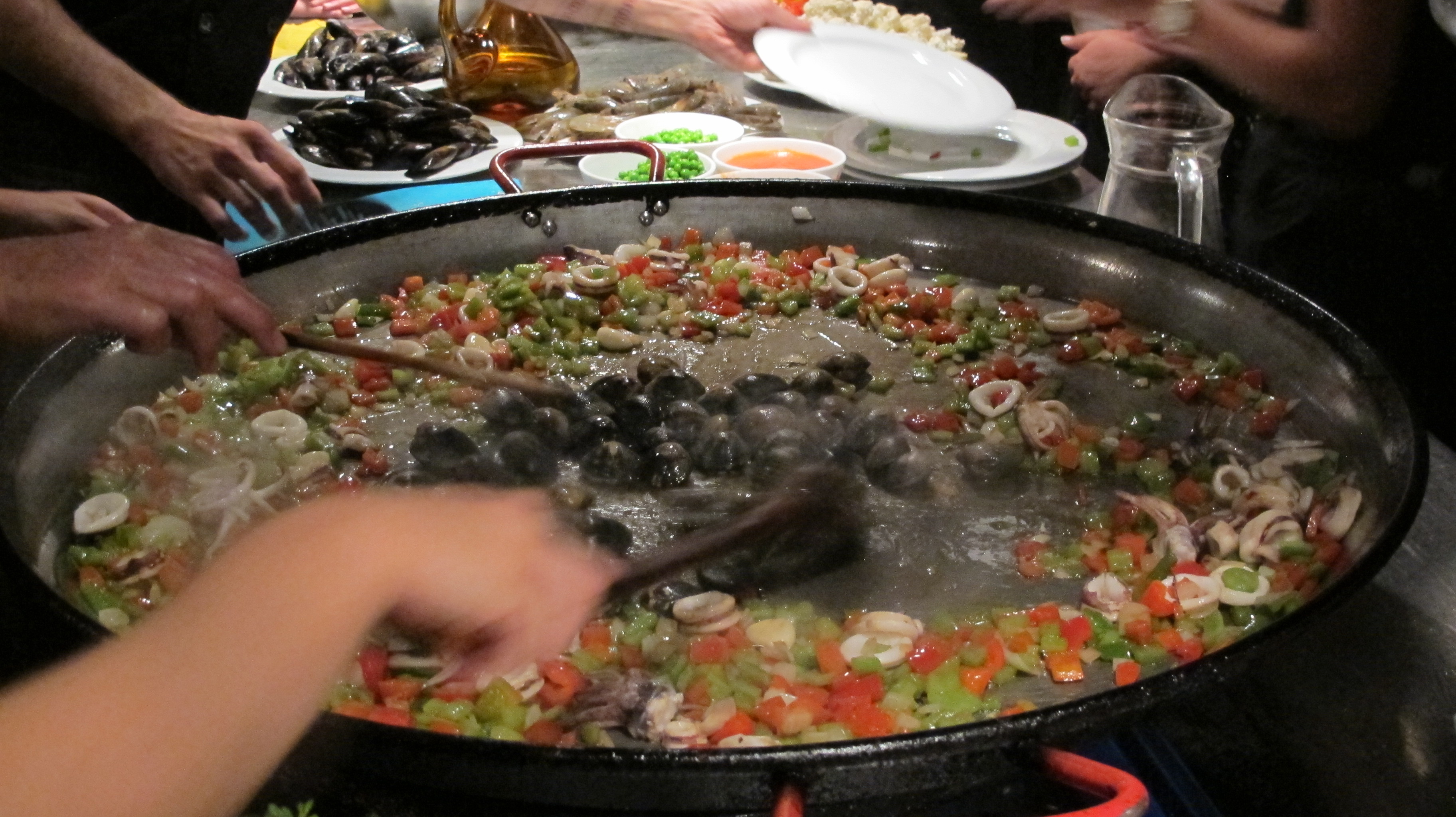
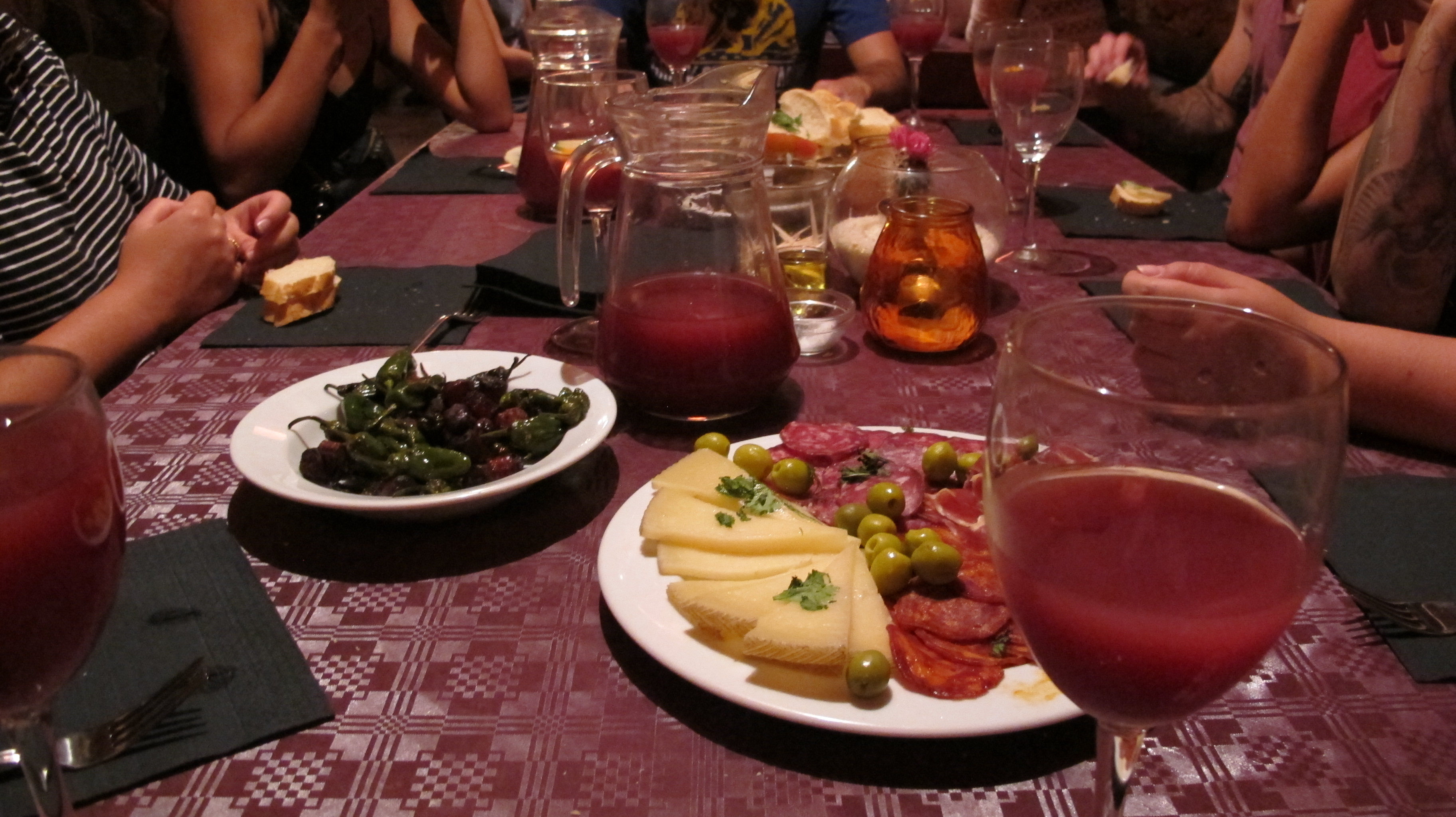
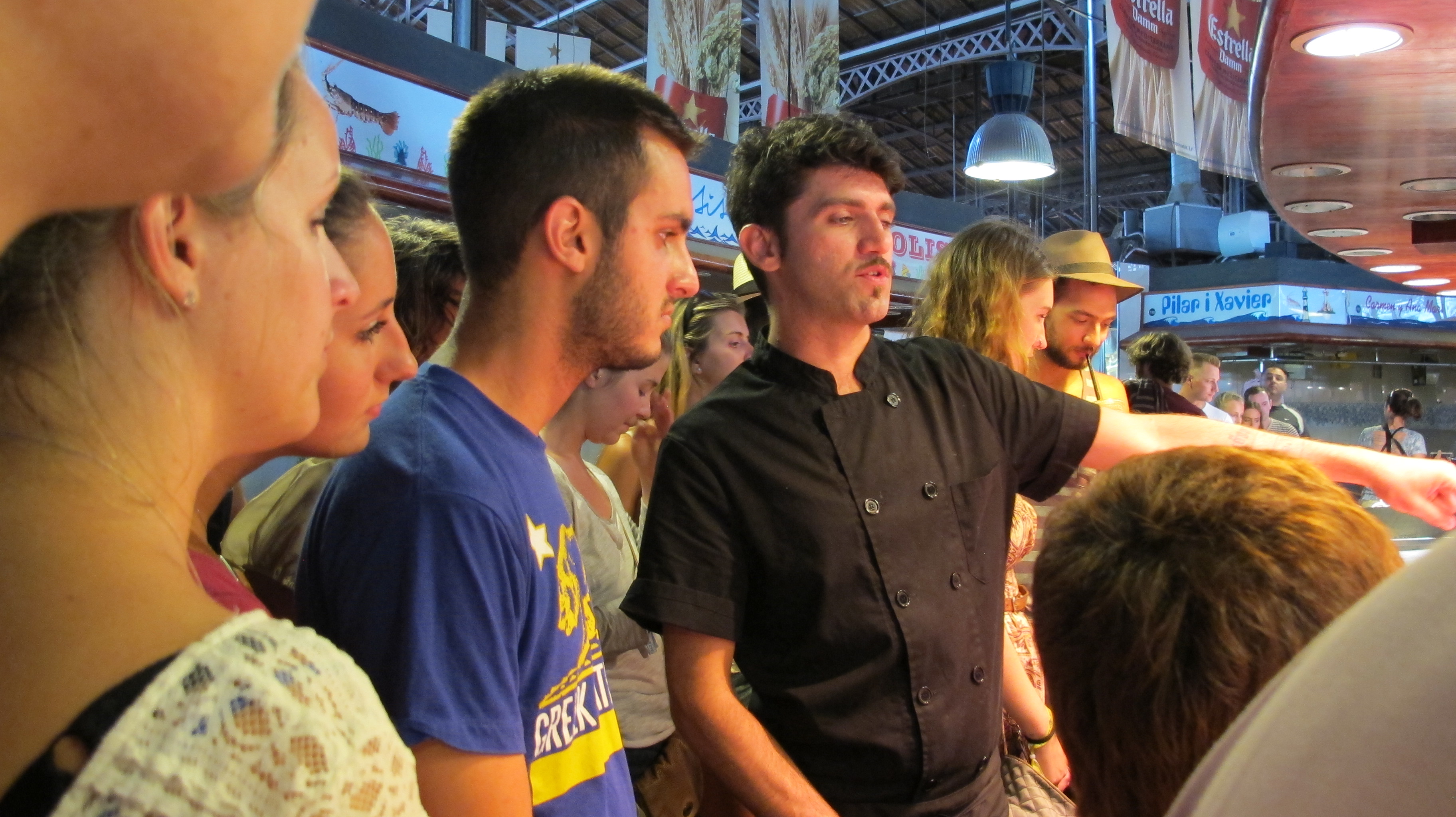
Fernando, our chef kicked off the tour by taking us to the Merkat St. Josef to select some of the ingredients (fresh seafood) required for our cooking class later that evening. The tour of the market was brief, but informative as he provided us with tips on selecting the best seafood for making paella.We then made our way to the cooking school where we would be making that evening’s dinner. Once we arrived at the school, we were greeted by the staff and immediately fed plates of iberico ham and cheeses and all of the ingredients needed to assemble some tasty pinxtos, which Fernando instructed us on. Did I mention the Sangria? So much Sangria and it was delicious.
Pinxtos, Paella and Sangria cooking experience
Touring the Boqueria St. Josef in advance of our cooking experience
After eating some pinxtos and drinking Sangria we were then brought to the kitchen area and walked through the process of cleaning the various seafoods, prepping the vegetables and cooking the paella…more Sangria was served, while we were all taught how to make Sangria…hell ya!
Once the paella was ready, we all received a very healthy serving – enough for seconds if you wanted it, along with more pinxtos and, of course, Sangria.
Following dinner, the staff collected our plates and served us more…Sangria!
Overall, a great night. We learned to cook a traditional Spanish meal complete with pinxtos, ate some delicious food all while sipping Sangria and making new friends.
Also, I should mention the price, it was 28 euros and well worth it. We’ve spent double that on meals with one pitcher of sangria! Cannot recommend this activity enough, Fernando and his team were amazing!
The next day, we joined another free walking tour, this one focusing on photography. To be completely honest, I wasn’t expecting it to be as good as it was. Our guide Andre spoke to us about the history of photography and taught us some of the basics of photo composition, lighting, and searching for the story in your photos. He showed us some easy ways to raise our picture taking to another level, beyond the usual ‘snapshot’ if you will. The tour lasted a little over 2 hours and it was excellent.
Practicing using my new photography skills during the photography tour in Barcelona…I think I’m getting better 🙂
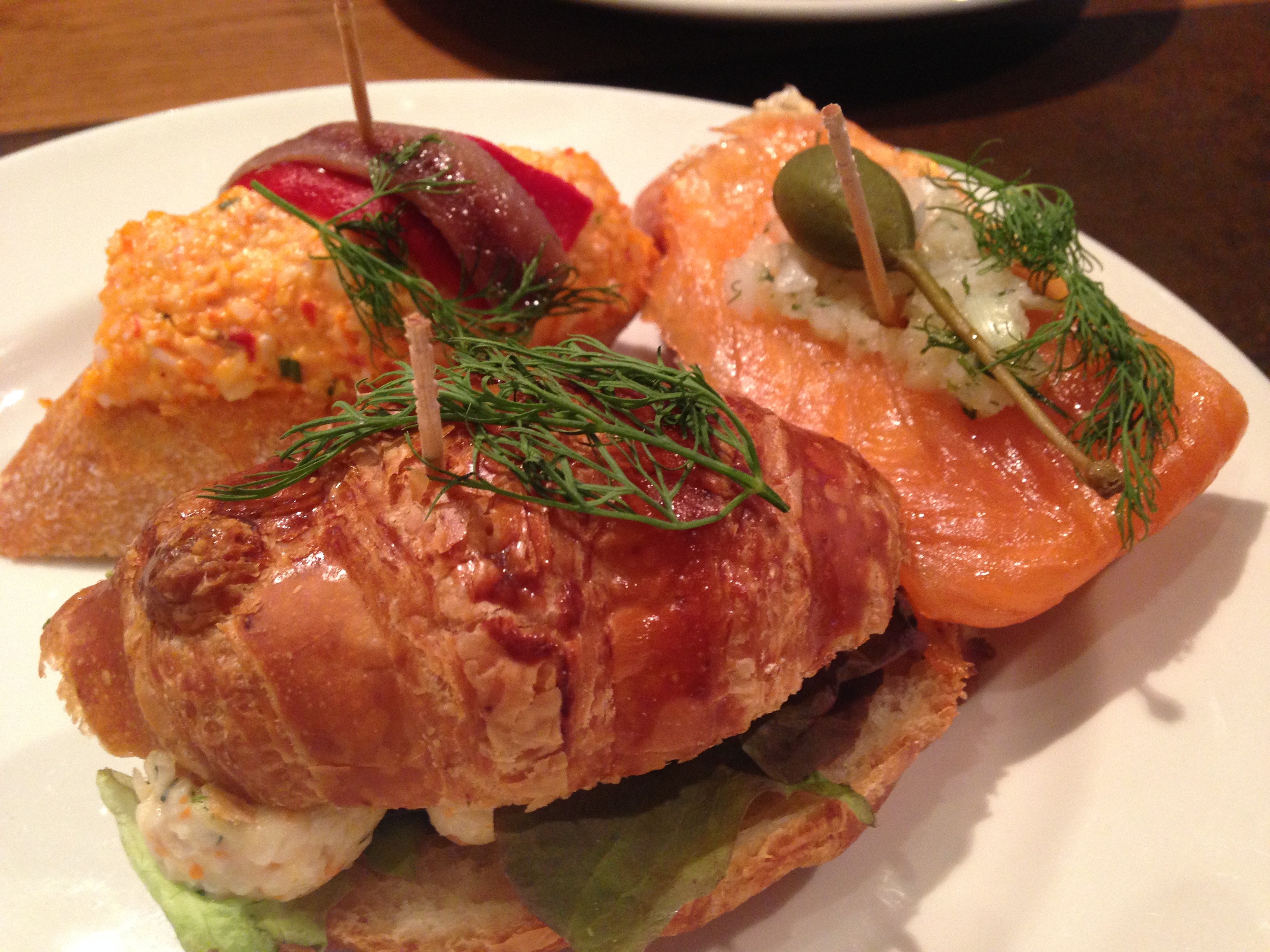
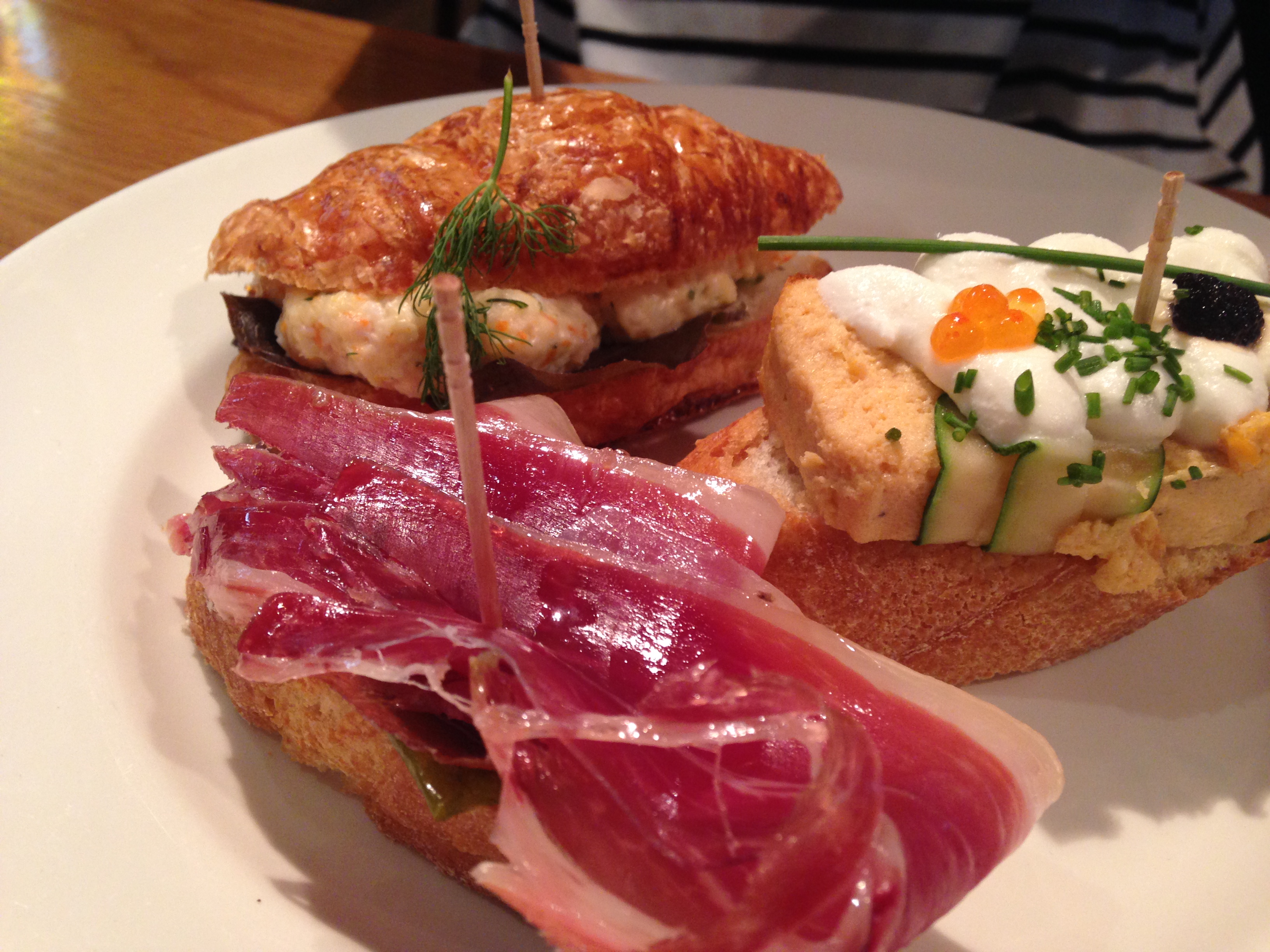
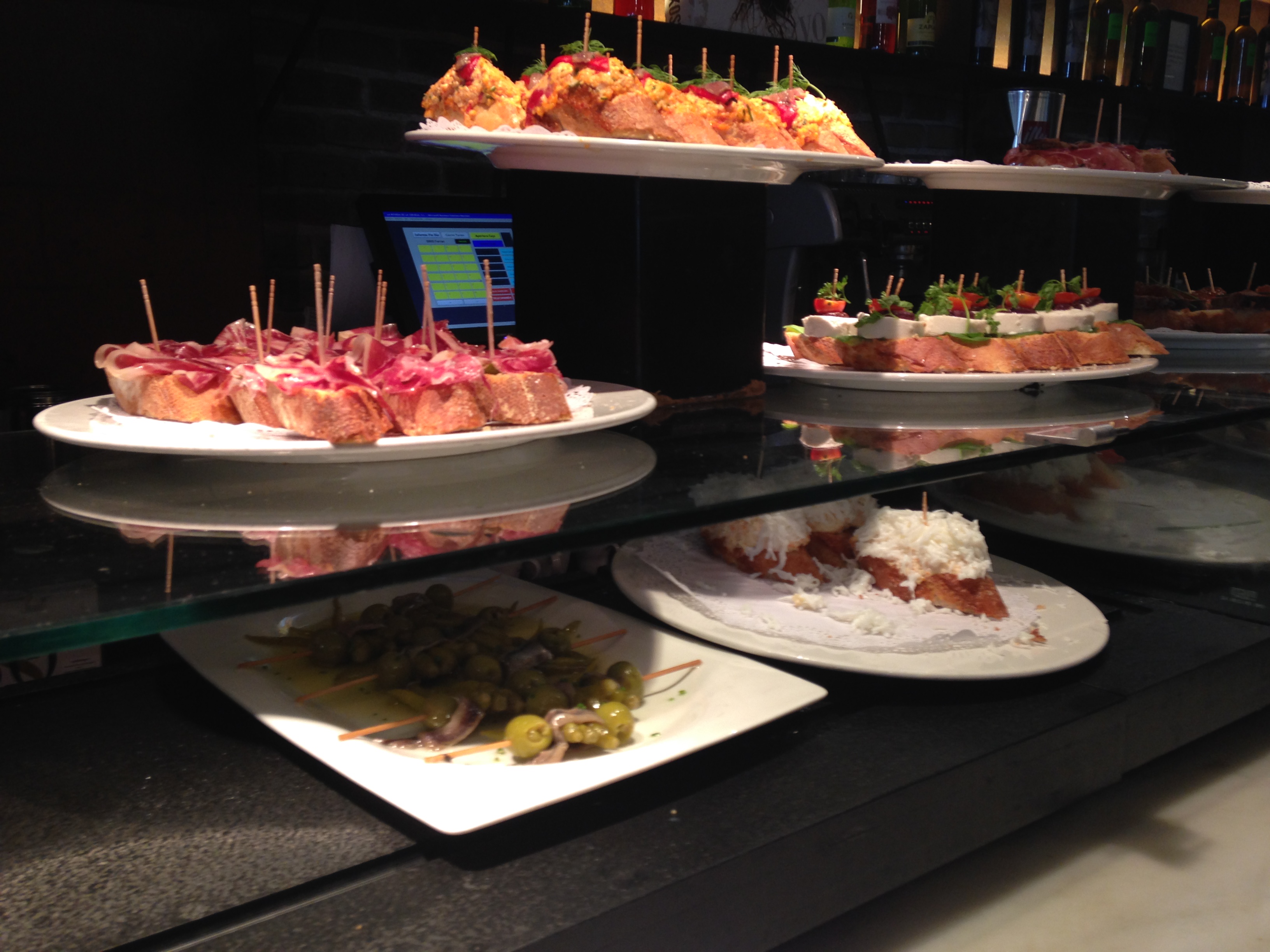
The thing I loved most about Barcelona, and there were many, trust me, was pinxtos. I am obsessed with food so walking into a pinxtos and tapas bar was absolute heaven for me. The endless options, the interesting flavour combinations and all the bite sized portions you can shake a stick at had me grinning from ear to ear every single time we were out and about. A couple of my personal favourites spots to grab pinxtos and tapas were Orio and Lia d’en Vicius. They were lovely spots, with delicious offerings at reasonable prices.
Orio’s pinxtos selection, hundreds of delicious bite sized delights.
Lia d’en Vicius’ sangria and pinxtos offerings…one of our favourite meals in Barcelona.
Barcelona has so many wonderful things going for it, the nightlife, the wines, the food, the beautiful public spaces, Gaudi’s influences everywhere, its beaches, its cobblestone streets and most of all its people – all of which make me want to come back and explore many times over. I will be back, you can count on it!
We begrudgingly crawled out of bed on our final morning in Barcelona and made our way to the train station. Next stop, Valencia.
While in Valencia, we stayed at an airbnb property. The apartment itself was spacious and well appointed. We had our own rooms, a large bathroom with a normal sized shower and a modern kitchen. Yay!
You’d think we’d died and gone to heaven, however a couple of hours into our stay and the apartment started to smell like something had literally died in there! Ground zero for the smell seemed to be an old, rather imposing cabinet in the dining room. The smell can best be described as roach bomb meets garbage truck. So, though our surroundings were beautiful and appeared luxurious, the noxious smell rendered us blind to all of it. The smell became all consuming robbing us of our appetites and even our sleep. We tried everything to get rid of the stench from room deodorizers to bowls of vinegar. NOTHING WORKED.
When Emma contacted the owner to let her know about the order the owner’s response was ‘it smells bad, but it’s not offensive.’ Um…Dude, we think this cabinet is literally killing us, that’s how bad the smell is! Emma dared open one of the drawers to this thing and released an odour so foul it could have only come from the 7th circle of hell. This malodorous buffet was in fact a portal to satan’s realm. I imagined that this is what demon farts must smell like. That stench will haunt my dreams.
Needless to say, we spent as little time there as possible. Returning only to sleep in the evenings.
The city itself is beautiful, with many lush parks and green spaces. Also very walkable.
We didn’t bother with the free walking tour in Valencia, since the free walking tour is only offered on certain days of the week, none of which coincided with our visit.
We knew we wanted to check out the Central Market and Oceanografic – the Santiago Calatrava designed Aquarium.
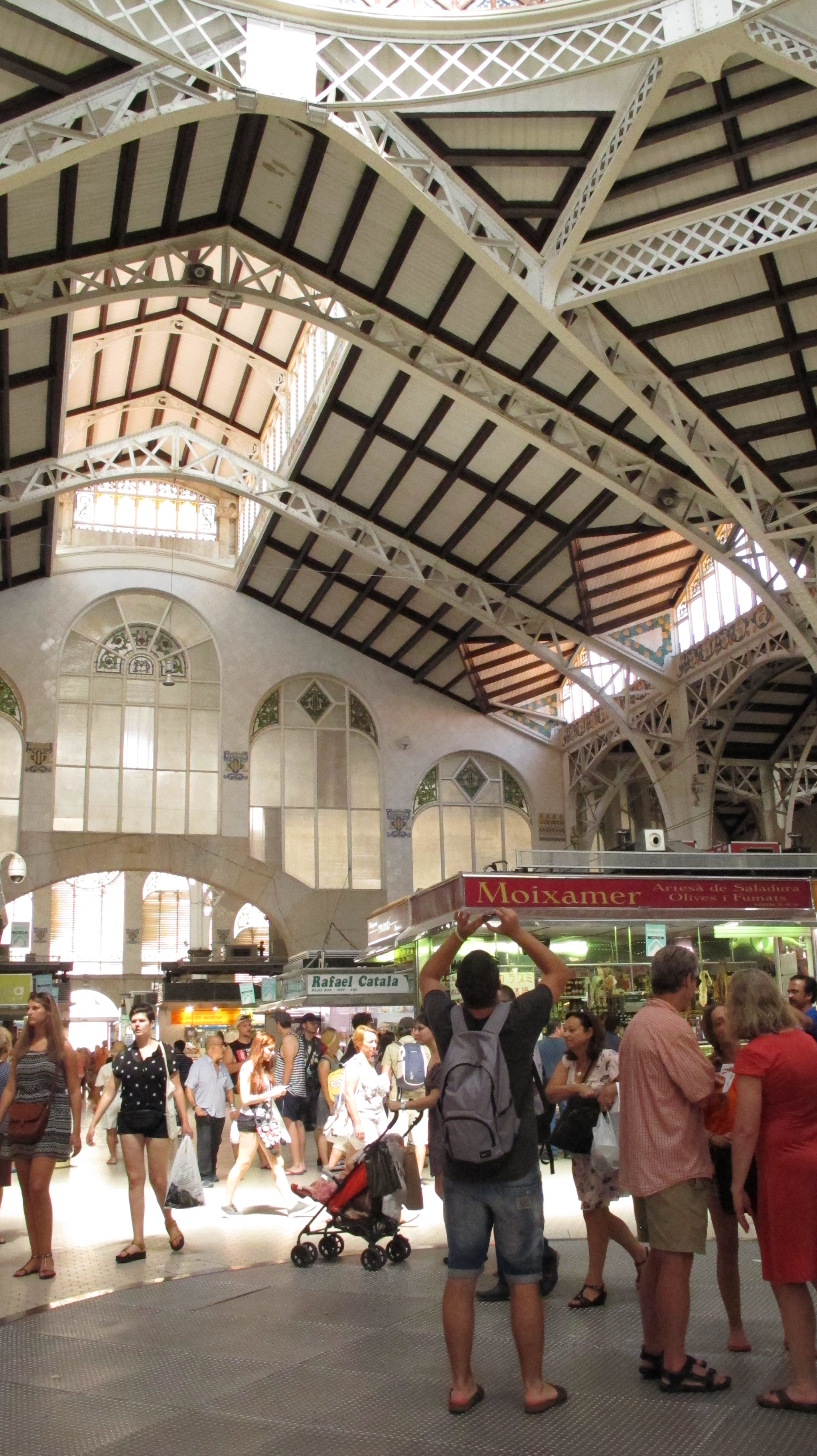
Valencia’s Central Market is absolutely beautiful!
The central market did not disappoint, I actually preferred it to Barcelona’s Bocario St. Josef. The building that houses the Central Market is massive while its high ceilings and stained glass panes give it an airy feel. There were many people visiting the market, but it never felt crowded because of the way the place is laid out. We tried many cheese and jamon samples that day my friend.
One of the unexpected surprises of Valencia was its many colourful murals. The street art in this city is spectacular, vibrant and highly imaginative. We wandered through many tiny streets discovering some stunning works along the way.
A sampling of some of the amazing and imaginative street art in Valencia
Oceanografic is a must when in Seville. Not just because it’s a fantastic aquarium and extremely well designed, but because it’s part of the larger Ciudad de las Artes y las Ciencias complex, designed by Santiago Calatrava. This place is stunning. We marvelled at the buildings for a good hour before even setting foot in any of them. The views, the angles, the creativity – all breathtaking. This place was designed by an artist and a dreamer.
Absolutely stunning architecture by Santiago Calatrava
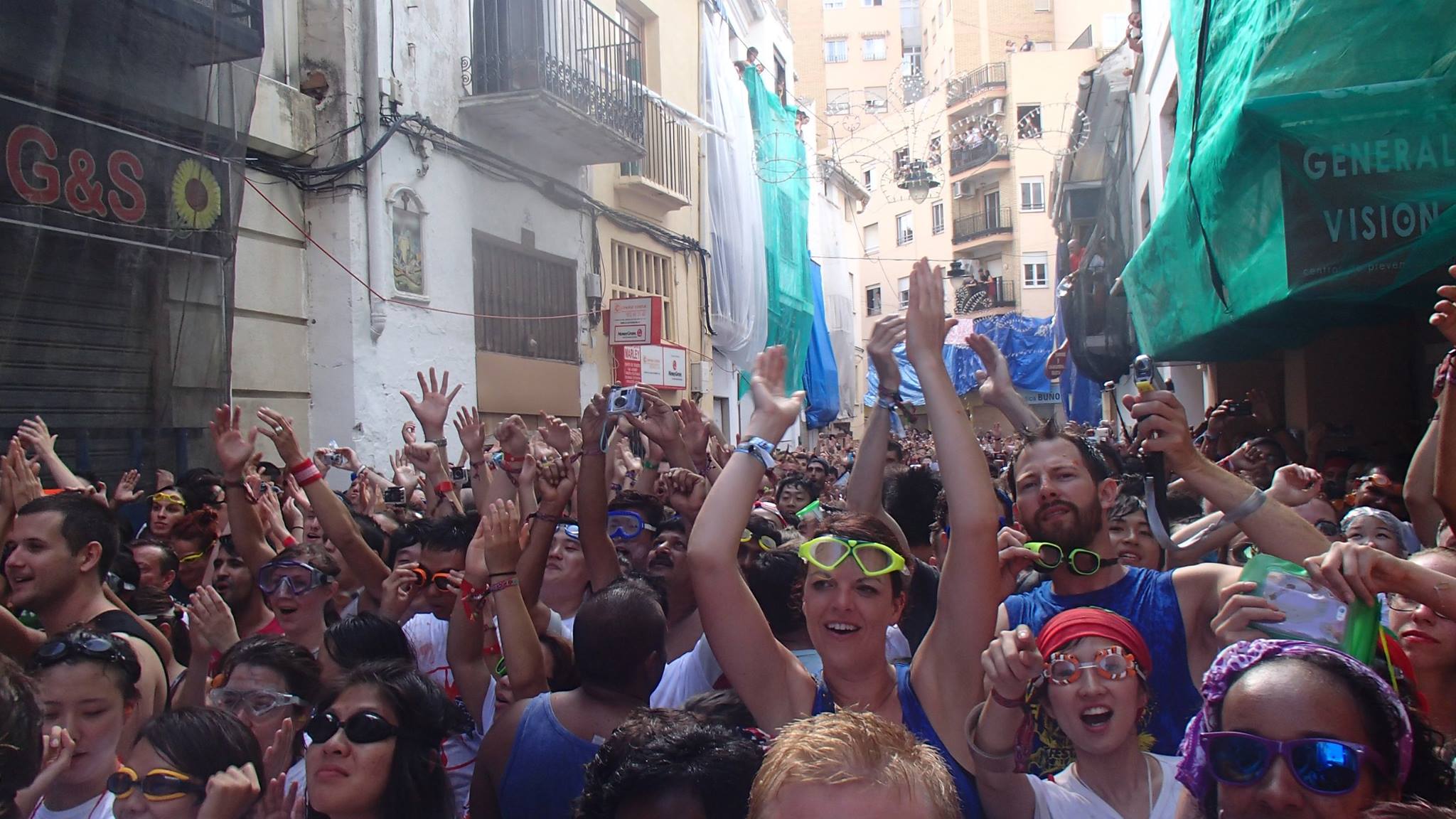
After two days of kicking around Valencia it was up bright and early for the bus ride to Bunol for La Tomatina! What is La Tomatina? Well, it’s only the world’s largest food fight! For 70 years people have been making the yearly pilgrimage to this tiny town in the hills of Spain to throw over 140 tons of tomatoes at anyone crazy enough to take part!
Now, in case you’re wondering, yes there are actual rules to a tomato fight. You have to squash the tomato before launching it at someone so that the blows ‘don’t hurt as much’. You are allowed to throw tomatoes at anyone who is looking at you, not looking at you, standing, sitting, lying down or just within throwing distance. The fight starts as soon as someone retrieves a large ham from the top of a greased pole in the town square at which time the cannon is fired announcing the start of the fight. Once the cannon has been fired the tomatoes begin flying in earnest. The fight ends when the second cannon sounds an hour later.
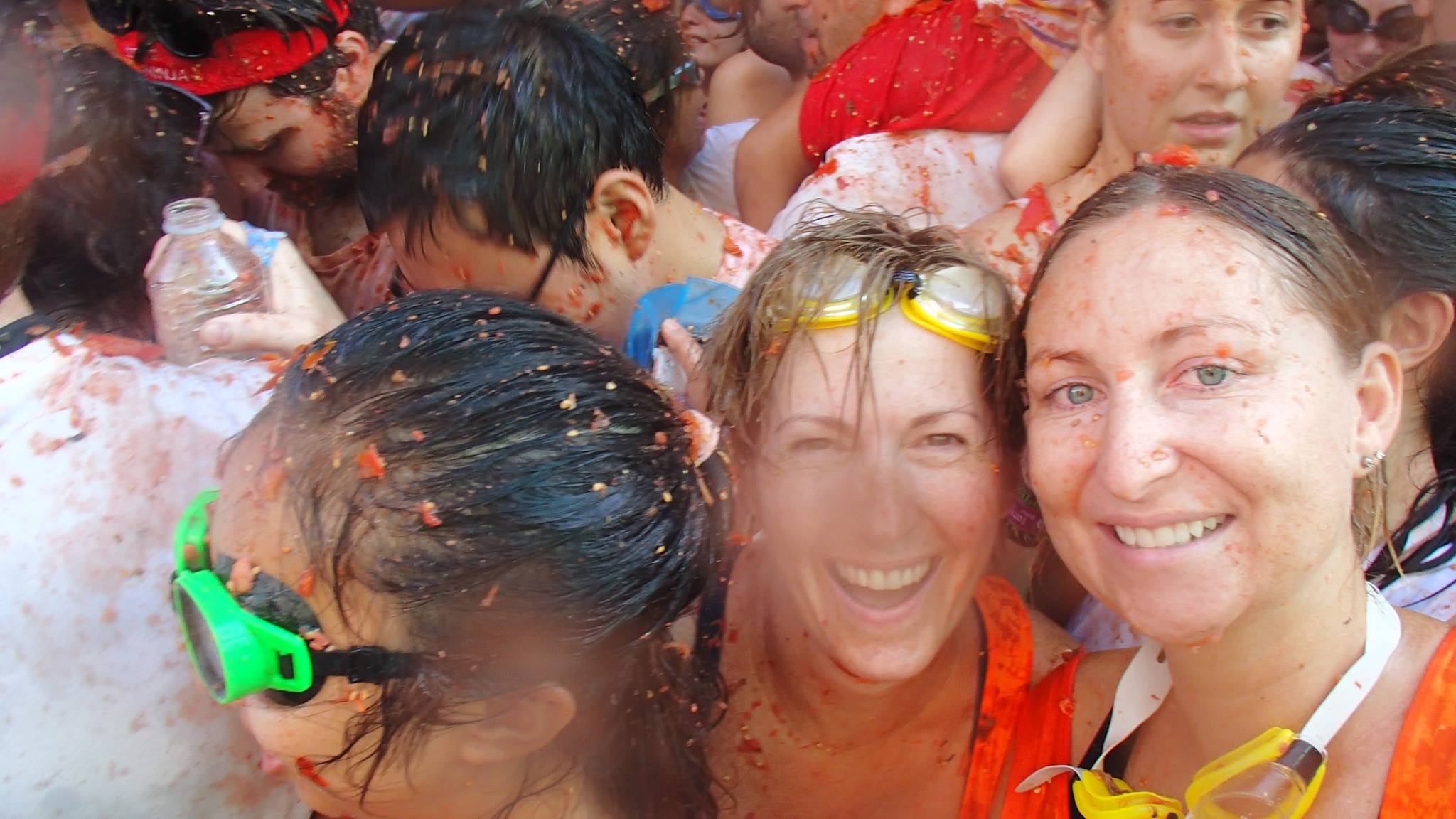
There were 20,000 of us crammed into this tiny street stomping and throwing tomatoes, ankle deep in tomato guts. The streets running red with a soupy, smelly tomato mess. There was no escape. It was amazing and so much fun! We emerged an hour later exhausted from the fight, bits of tomato in places we’d never imagined. Our hair and clothes caked in this layer of pulp and seeds. It took no less than 4 street showers (basically hosed down by the locals who line the sidewalks) and 2 litres each of sangria before we felt half way human again.
Emma and I at La Tomatina! Photo credit Emma Peachey
Once we got back to our apartment in Valencia we showered again, this time finally able to wash the rest of that stinky red pulp off. The clothes we wore however, were not salvageable. It was two days later and I was still finding tomato bits in my ear!
While La Tomatina had provided us an unforgettable life experience, it also gave us something else completely unexpected – a rash! We woke up the next morning covered in hives, apparently from the acid of the tomatoes – a slight allergic reaction and completely normal apparently. Nothing a little Claritin couldn’t fix.
You will notice that I haven’t really mentioned anything about the food in Valencia, other than our trip to the market and sadly that’s because we didn’t really find the food scene in Valencia to be all that amazing. If I’m being completely honest, it was more than a bit disappointing. The meals we had were ‘meh’ and certainly not on par with our other food experiences in Barcelona and meals I’d enjoyed while visiting Madrid on a previous trip.
On our final day in Valencia, we headed to the beach to recuperate from our tomato battle and work on our tans. The beach was outside of the city and quite beautiful. We lay in the sun that afternoon sipping beer and reminiscing on our food fight to end all food fights.
Alrighty, best buckle up and settle in…this is gonna take a while, because Prague kinda blew our minds and I have a lot to share with you.
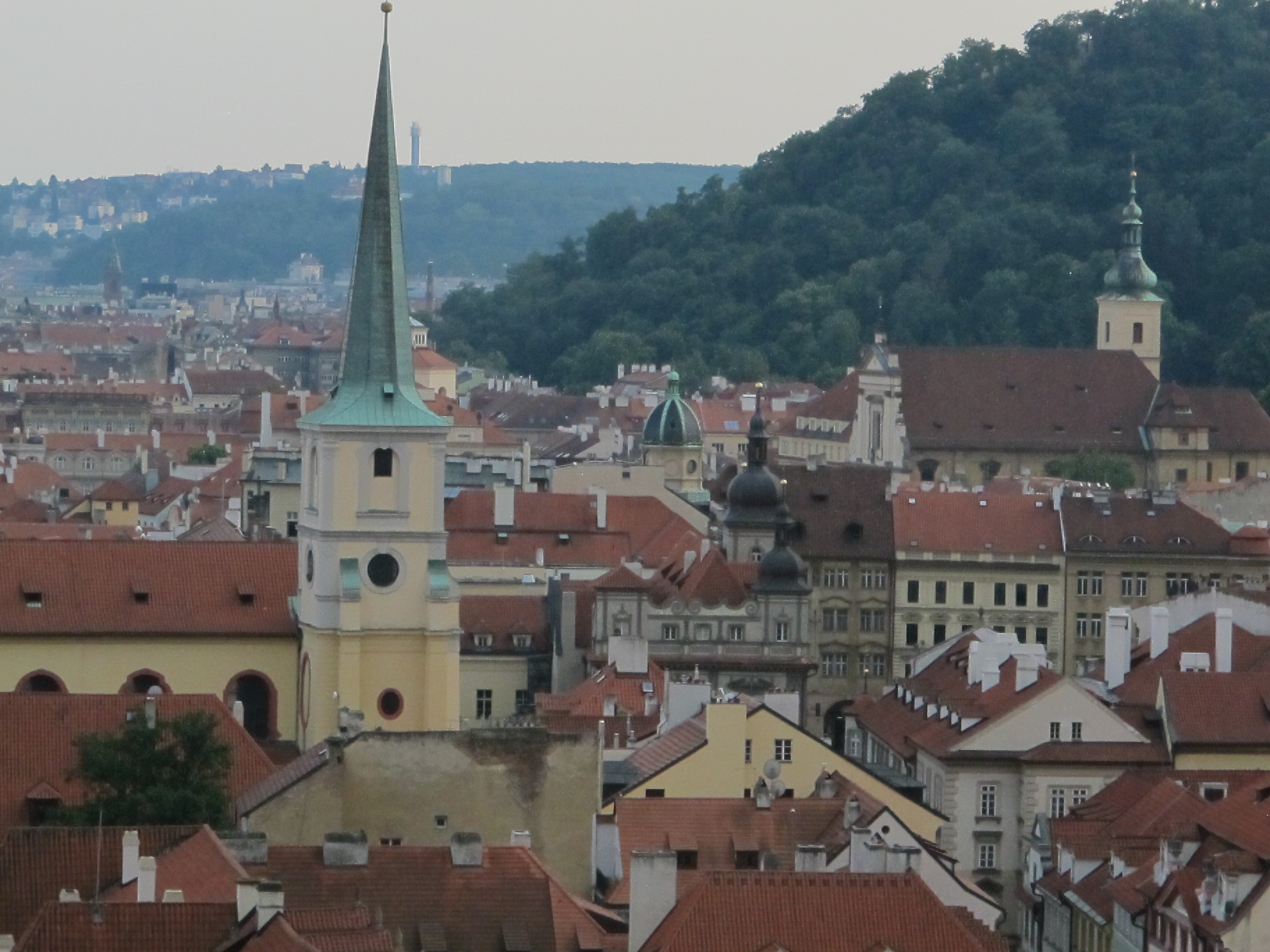
View of the city from the Royal Palace district
I’ve not visited a city with this much character, history and allure in quite a while. To be honest, I’ve never visited a city like this one – period. I absolutely loved everything about it. If you’re looking to visit a place with a rich and storied history, a crazy nightlife, an impressive arts and culture scene, and a place filled with more interesting characters than you can shake a stick at…then Prague is for you my friend!
One of many incredible art installations in Prague
We arrived in Prague in the early evening and took the bus from the airport into the town centre. Our bus stop was conveniently located near our accommodations, the ATS Hotel Jednota. While it at first appeared to be located in a pretty dodgy neighbourhood, this turned out to not be the case. It’s about a 10 minute walk to the Old Town Square and a 5 minute walk from the main train and metro station in Prague. Now, the park surrounding the metro station can be super skeezy, the dodgy looking individuals who ‘live’ there pretty much keep to themselves. It turns out that Prague is a very safe city and people generally don’t bother you. As our tour guide explained, the Czech people are not the type to quarrel in public or get into dust ups…the tourists do a good enough job of that on their own. If you do happen to witness a ‘fight’ in Prague, it’s likely to be a bunch of guys in the city for a stag do fighting with each other. However, they do have an issue with pickpockets, and money exchange scams on the streets in the Old Town Square, so just be wary. Emma and I never felt unsafe, even walking back to our hotel at 3am.
Speaking of our hotel, the building itself was completely lacking in any character, architecture, style, personality or any quality that would make it even remotely interesting. It can best be described as having the look and feel of an abandoned insane asylum, or even possibly a communism-era prison facility. Our room (or cell/hospital ward) was private, however we did have to use the communal showers and ‘kitchen’. The ‘kitchen’ had a sink, a stove, some cupboards and NO FRIDGE. It was also lacking in the one thing you would definitely need in a kitchen…cooking implements. There were no pots, pans, dishes, cutlery of any kind. So, even though it technically did have a ‘kitchen’, it most certainly wasn’t a useful one. Oh, and did I mention that the ‘kitchen’ was located in the communal showers? Our room was located directly across the hallway from the communal shower/washroom/kitchen so it does get a point for convenience, however it’s pretty much all downhill from there. The room did have high ceilings, and a large window that opened to the courtyard (not much of a courtyard, basically a view of the roofs below and the hotel’s guest terrace). We each had a twin bed (not really a bed, more of a deconstructed sofa type piece of furniture with a fabric covered piece of foam stapled to the base), a cupboard for our clothes and a desk. My bed was lopsided in that the frame had a 15 degree angle which caused the ‘mattress’ to tilt to one side, so every night when I lay in bed I felt like I had some strange case of vertigo, perpetually titled toward the floor. Just odd. In case you’re wondering – no A/C (normally not an issue in Prague, however, we did arrive in the midst of a heat wave where the temperatures hovered in the high 30s, and NO WIFI. They did advertise that they had wifi, but that was a lie, a bald faced, dirty lie! Sure, there was spotty wifi in the reception area, but if more than 2 people were logged on, forget about it.
After we checked into our room, we walked over to the Old Town Square, as we were quite anxious to check things out. We had done minimal research on Prague, but what research we did do let us know that we were in for a pretty good stay.
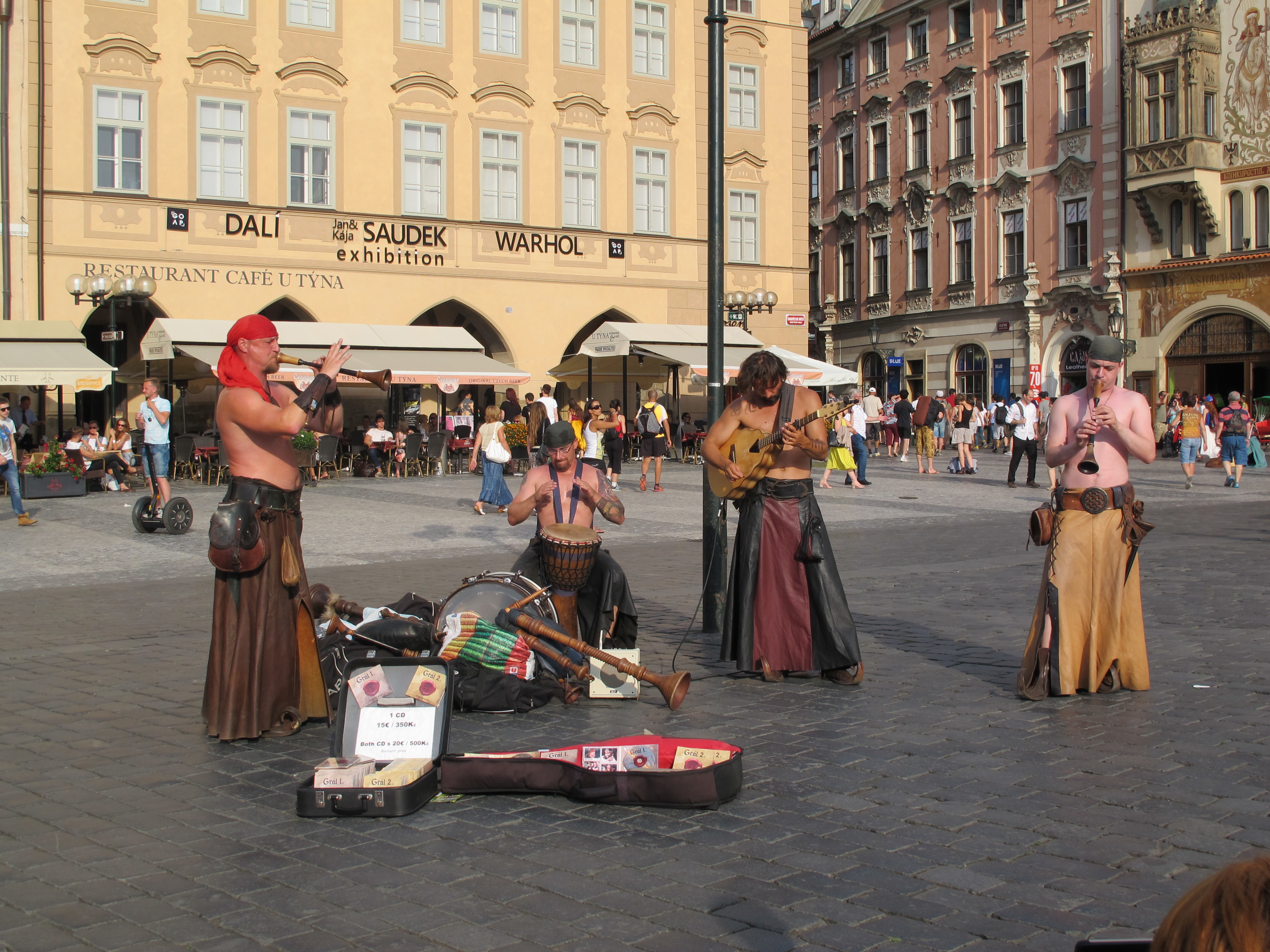
Odd group but good music, one of the many performances in Prague’s Old Town SquarePrague’s Old Town Square
The thing that strikes you immediately about Prague is just how beautiful, I mean stunning, this city is. Every view is a post card, the architecture, the food, the incredible history, the arts, the culture, and the BEER, you cannot forget the beer. All of which combined make it one of the most amazing cities I’ve ever visited.
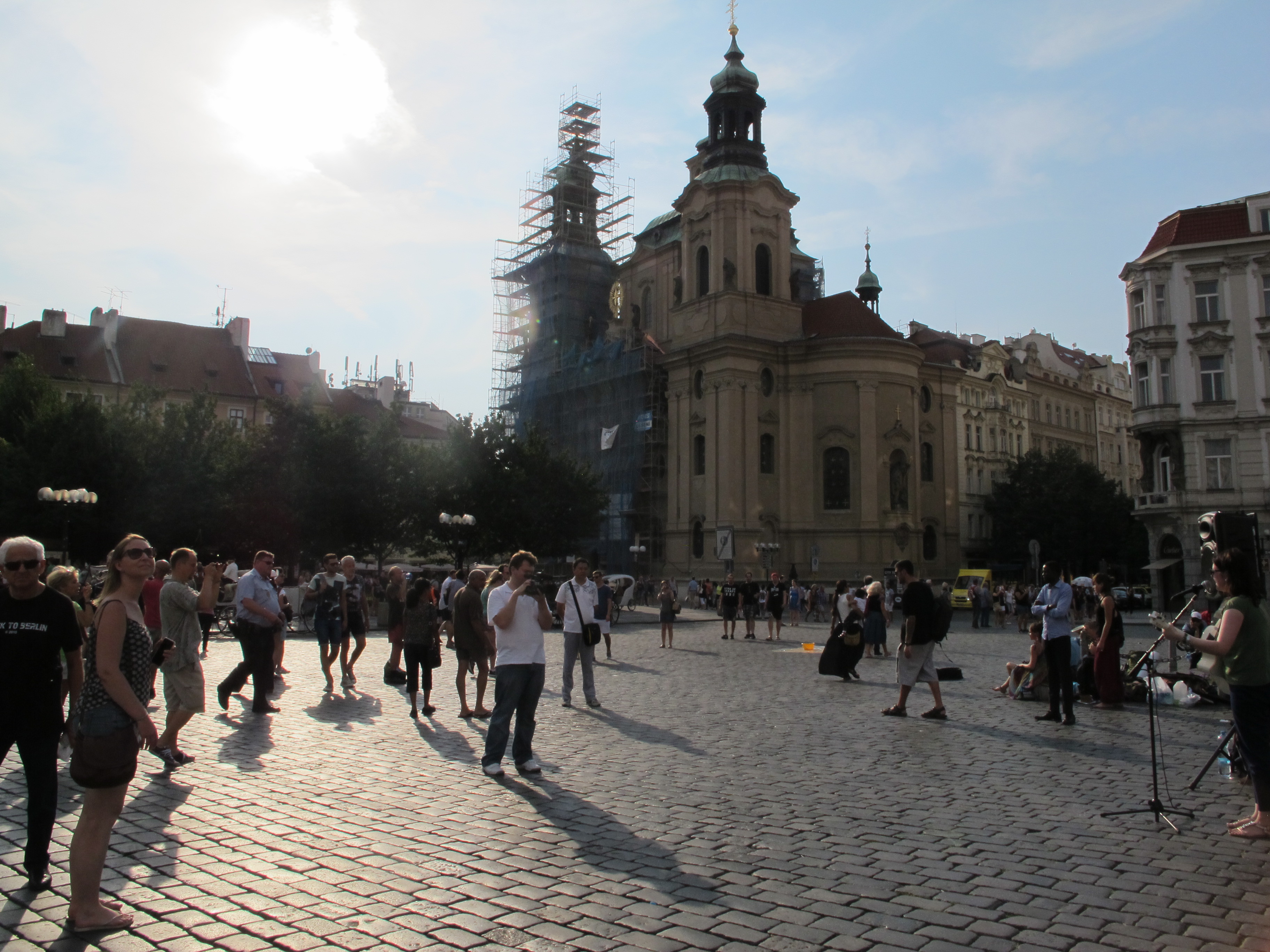
Sunset at Prague Old Town Square
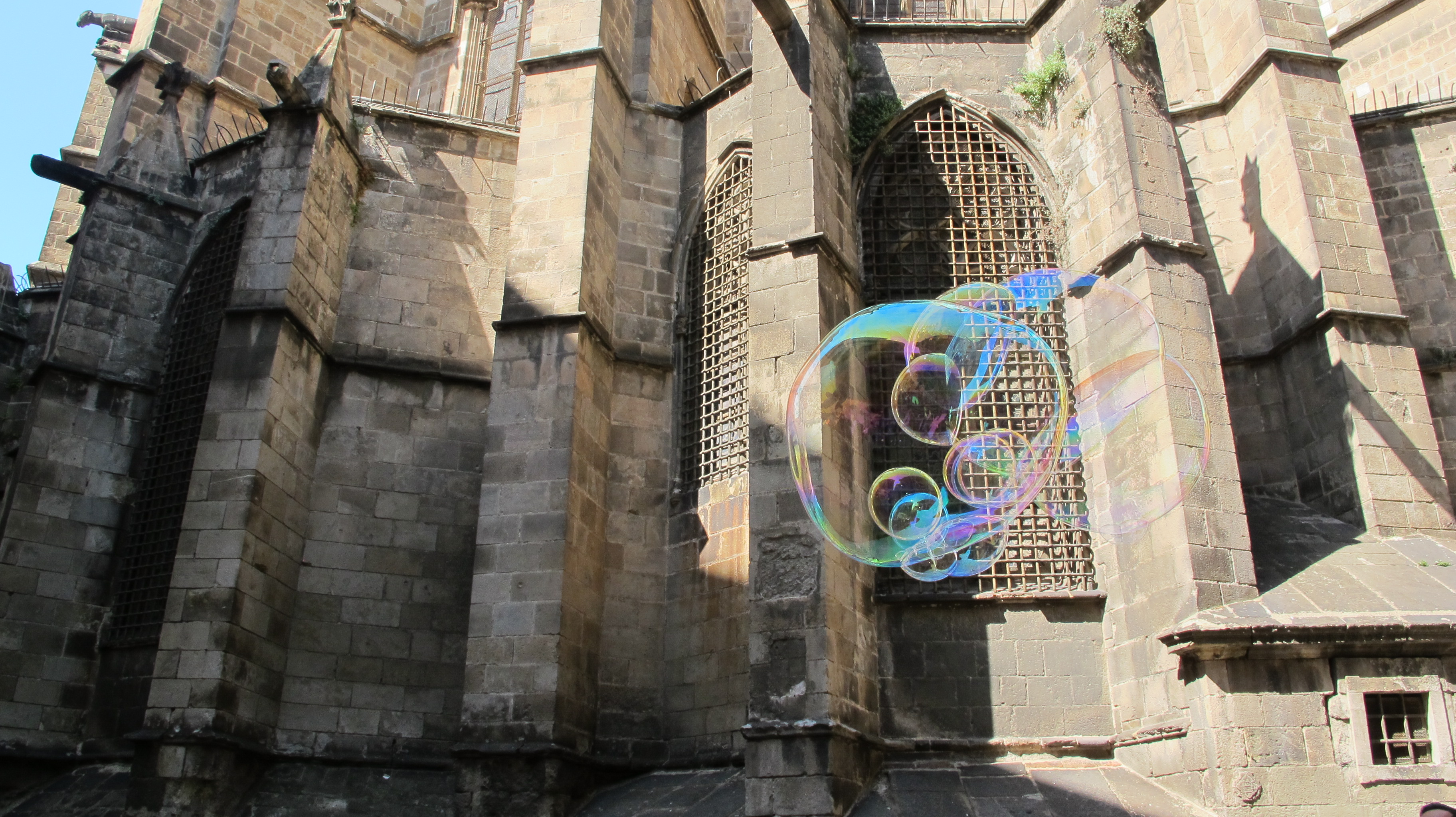
We explored the Old Town Square and it was quite the experience, everything from snake charmers, puppeteers, pianos players, human statues, singers, dancers, viking bands, bubble blowers and roving evangelists (the Czech Republic despite it’s innumerable churches, basilicas and cathedrals, is the most atheist country in the world – so these guys gots lotsa work to do), you don’t know where to look or what to look at. Everything is coming at you at once – the gaelic sounds of the viking musicians(???), the enthusiastic “JESUS!” chorus ringing in your ears and the hipster musicians screaming at you to give them money if you dare stop and listen to them, the beggars, the squeals of delighted children as they chase the giant bubbles through the square, while being chased by some dude in the mangiest shark costume I’ve ever seen, so much happening! So overwhelming, and yet LOVED EVERY SECOND OF IT!
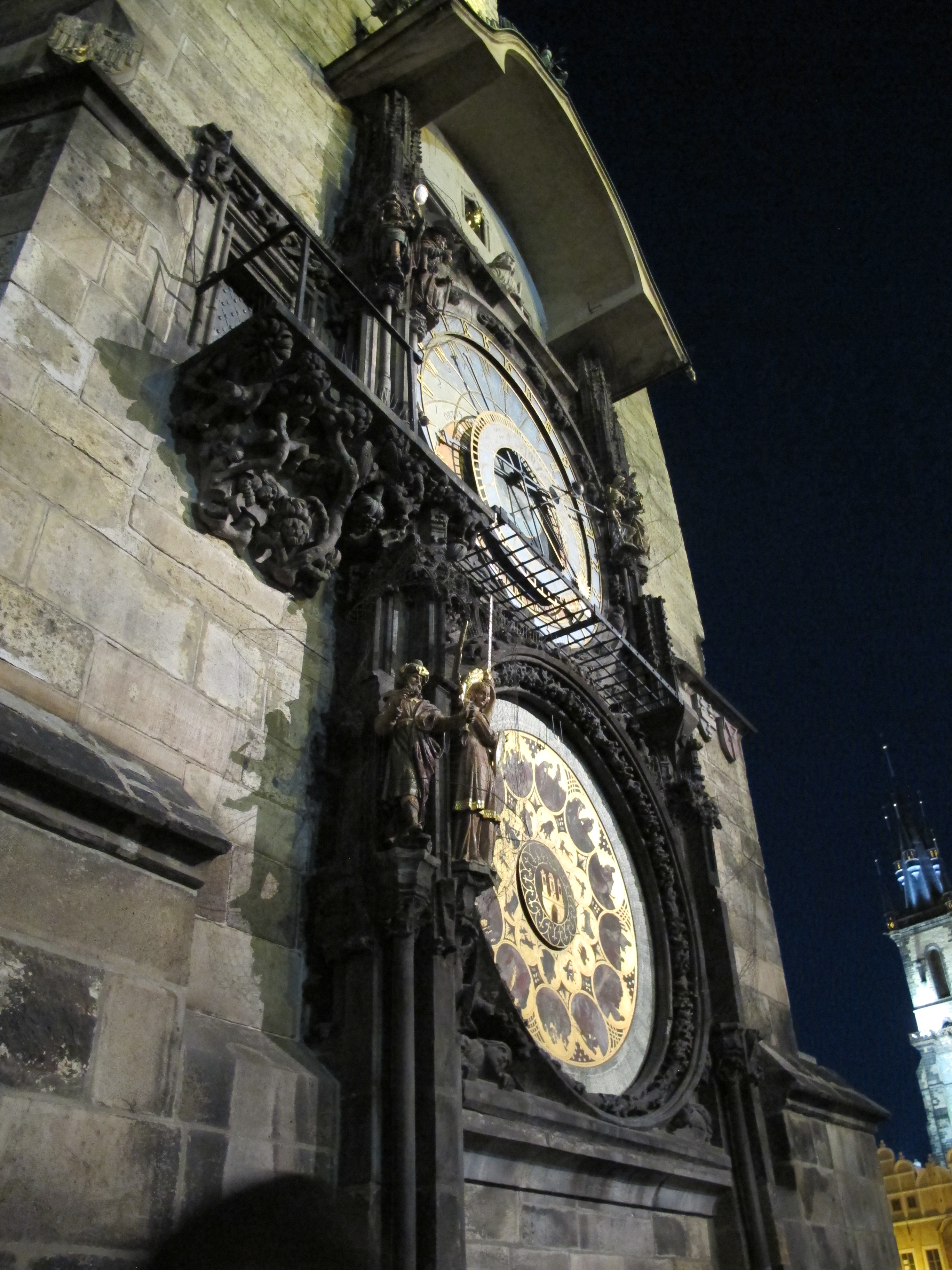
Astronomical Clock, Prague Old Town Square
Sitting in the middle of the Old Town Square is the world famous, centuries old, Astronomical Clock. The clock was built in 1410 and is the oldest working astronomical clock on the planet. The clock, though often listed in the top ten of the most disappointing tourist attractions in the world, is really pretty bloody amazing. Yeah, a show every hour where ‘Death’ rings a bell indicating to Greed, Vanity and the Turk that their time is up, as they shake their heads ‘No” is not much of a big deal to us now, but this was working over six hundred years ago, people were more easily amused back then and this was mind blowing. And let’s not forget the golden rooster who sits atop the clock shaking his wings while all this is happening – over 600 hundred years ago! And the clock still works to this day! That’s badass! If you think the clock is badass, wait until you hear about the guy who designed and built it.
Astronomical Clock, Prague Old Town Square
Legend has it that when Jan Hanus built the clock, Prague was a small merchant town, not the regal capital it is today. Soon after the clock was built, people came from all over Europe to see it. As the clock became famous and more people visited the town, the local merchants who fed and housed the visitors to the area began to see the clock as their bread and butter. Greed took over and they then began to fear that Jan would build another clock in another city and that people would then flock to see it instead. If that happened the tourists would dry up and the stream of money flowing through their coffers would along with it. As their fears grew the merchants met with the town councilmen met to discuss how they could solve this problem. They decided to invite Jan to a dinner at the palace to thank him for all he’d done for the town. Once he arrived at the dinner, did the merchants and councilmen offer to cut Jan in on a percentage of the profits in exchange for his loyatly? No, of course not! Instead, the food and wine flowed and when Jan was sufficiently drunk, they poked his eyes out with hot poker and cut out his tongue so that he could not build another clock or even tell someone how to build such a clock. A few days later, Jan, blinded and mute got his revenge on the council when he had his assistants walk him to the clock and up the tower, where he threw himself into the gears of the clock and rendered it useless until they were finally able to remove his mangled remains from the mechanism over a 100 years later. Badass!
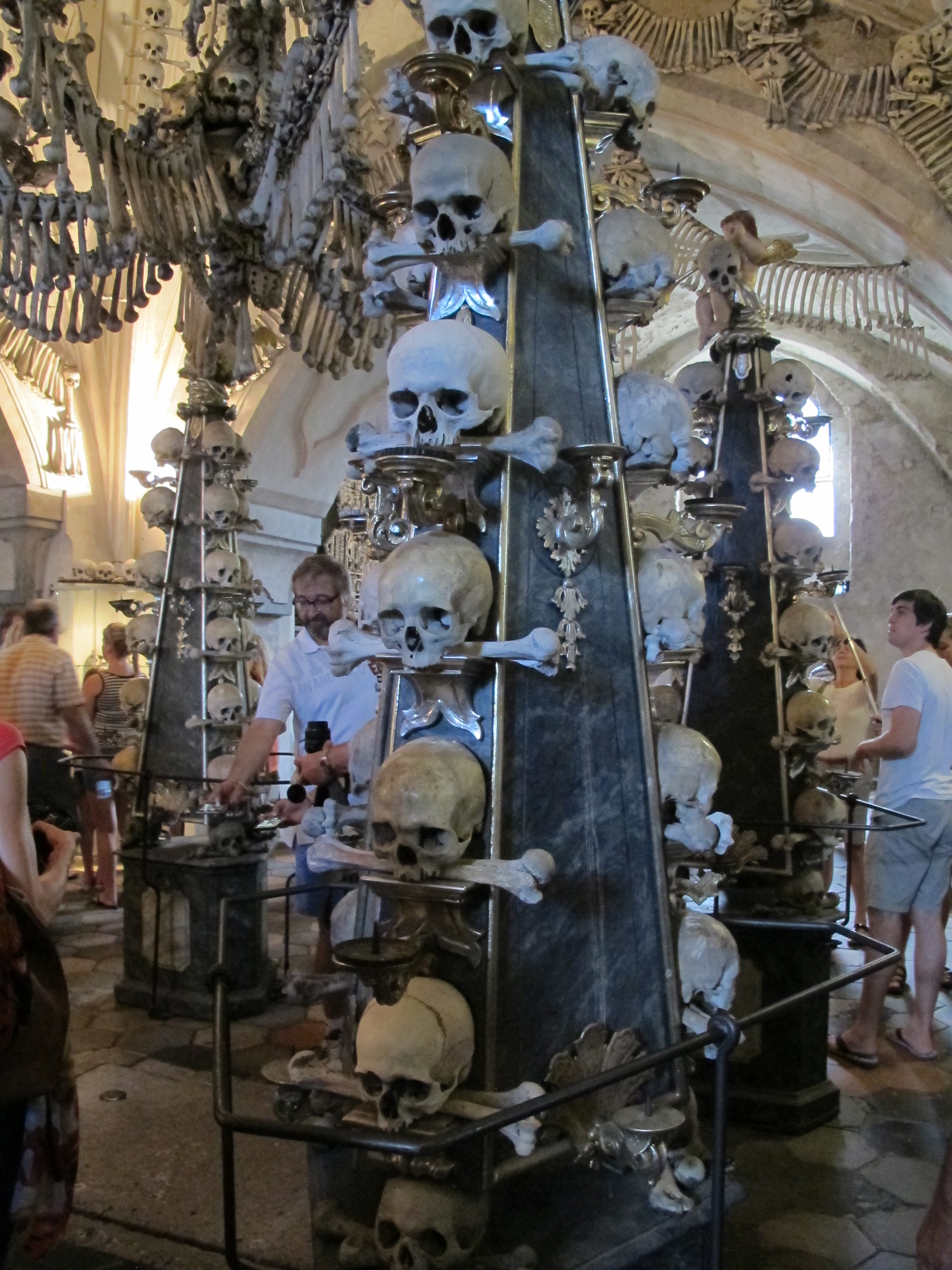
Bone Chuch of Sedlec:
Anyone who knows my travel partner in crime Emma Peachey, knows that she loves, and I mean LOVES all things macabre so when our walking tour our guide mentioned the Bone Church in Sedlec, a small town located just outside Kutna Hora, she was all over that shit! And thus began our visit to quite possibly the creepiest place I’ve ever visited. Now, I say that it is creepy, and it is, however it is also beautiful.
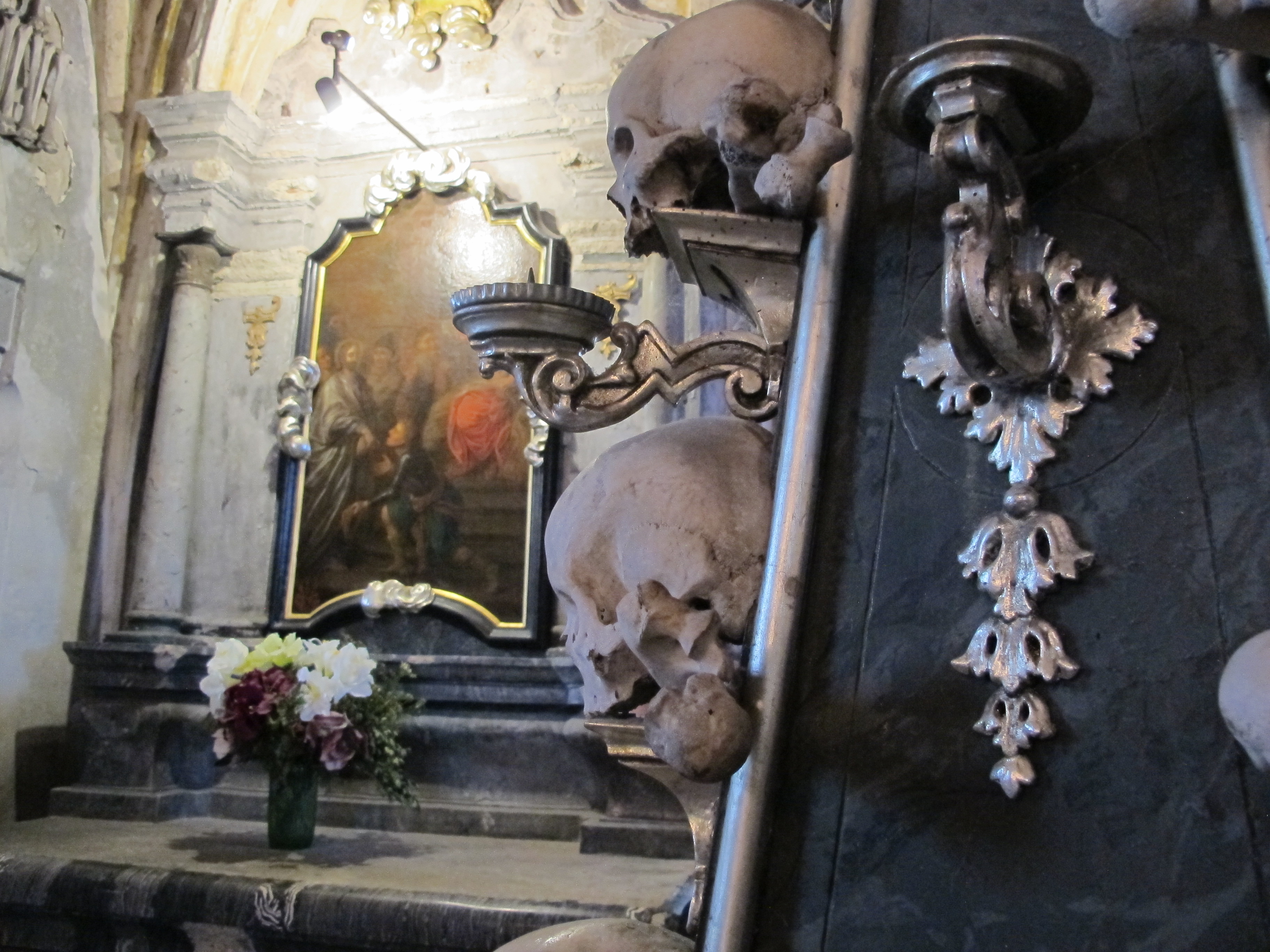
Bone Chandelier, Bone Church of SedlecInside Bone Church, Sedlec
The Bone Church is located next to the Sedlec Ossuary. This small town is located near Kutna Hora, a UNESCO world heritage site – 1 of the 12 world heritage sites located in the Czech Republic. This gothic church was built around 1400 and the skeletal remains of approximately 40,000 to 70,000 people who were buried in the adjoining ossuary were used to decorate it when the church and ossuary were purchased by a wealthy family in the early 1700’s. I have to admit, that the place is stunning. We spent about an hour inside the chapel snapping pictures and marveling at the intricate details of the way the place is decorated. The bone chandelier, prominently featured at the center of the chapel is quite remarkable and it’s obvious that the artist who created it all had an intimate and detailed knowledge of human anatomy and was also one sick fuck.
Inside the Bone Church of Sedlec
After our walk through the bone church, we made our way to Kutna Hora. We didn’t spend much time there as it is rather small. However, what is there is there is worth a look. The town, located in the heart of what was then Bohemia, was settled in 1142 and grew quickly in both size and wealth due to a large silver deposit which was discovered by a local monk. Kutna Hora soon became the leading supplier of silver to Europe and the home of the royal mint. We visited the St. Barbara Church (patron saint of miners), the former Jesuit college, and the Italian courtyard where the royal mint was once located.
Italian courtyard and site of the former Royal Mint.
After walking around the town in near 40 degree heat, we stopped for lunch at local Czech tavern for a delicious meal with our fellow travelers…we also had beer – of course! The entire tour lasted about 7 hours from start to finish, 2 hours of that was spent on trains (horrible trains – do not, I repeat do not use the bathrooms on the train under any circumstances…hold it FOR THE LOVE OF ALL THINGS HOLY) traveling to and from the town.
Prague Castle:
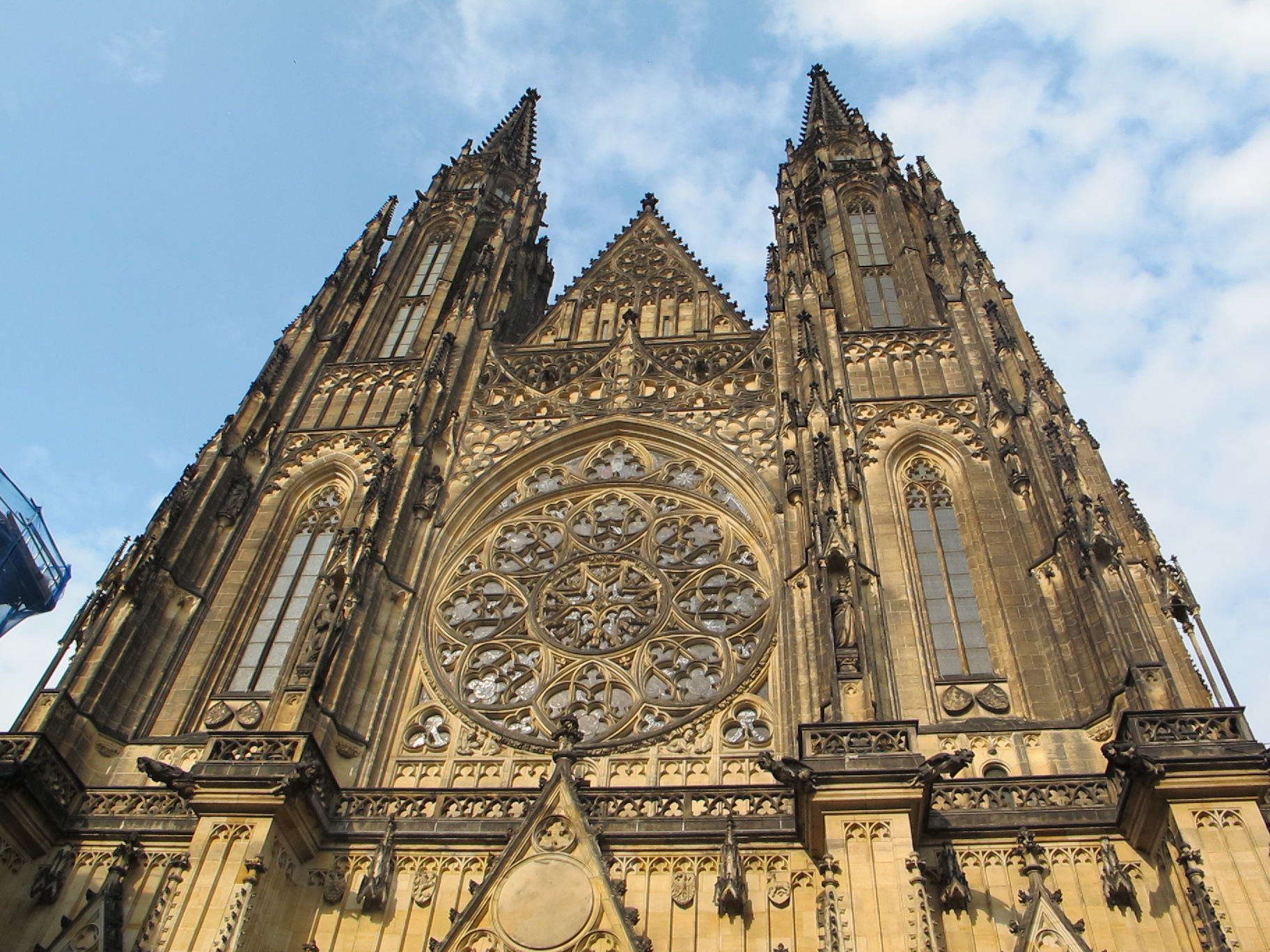
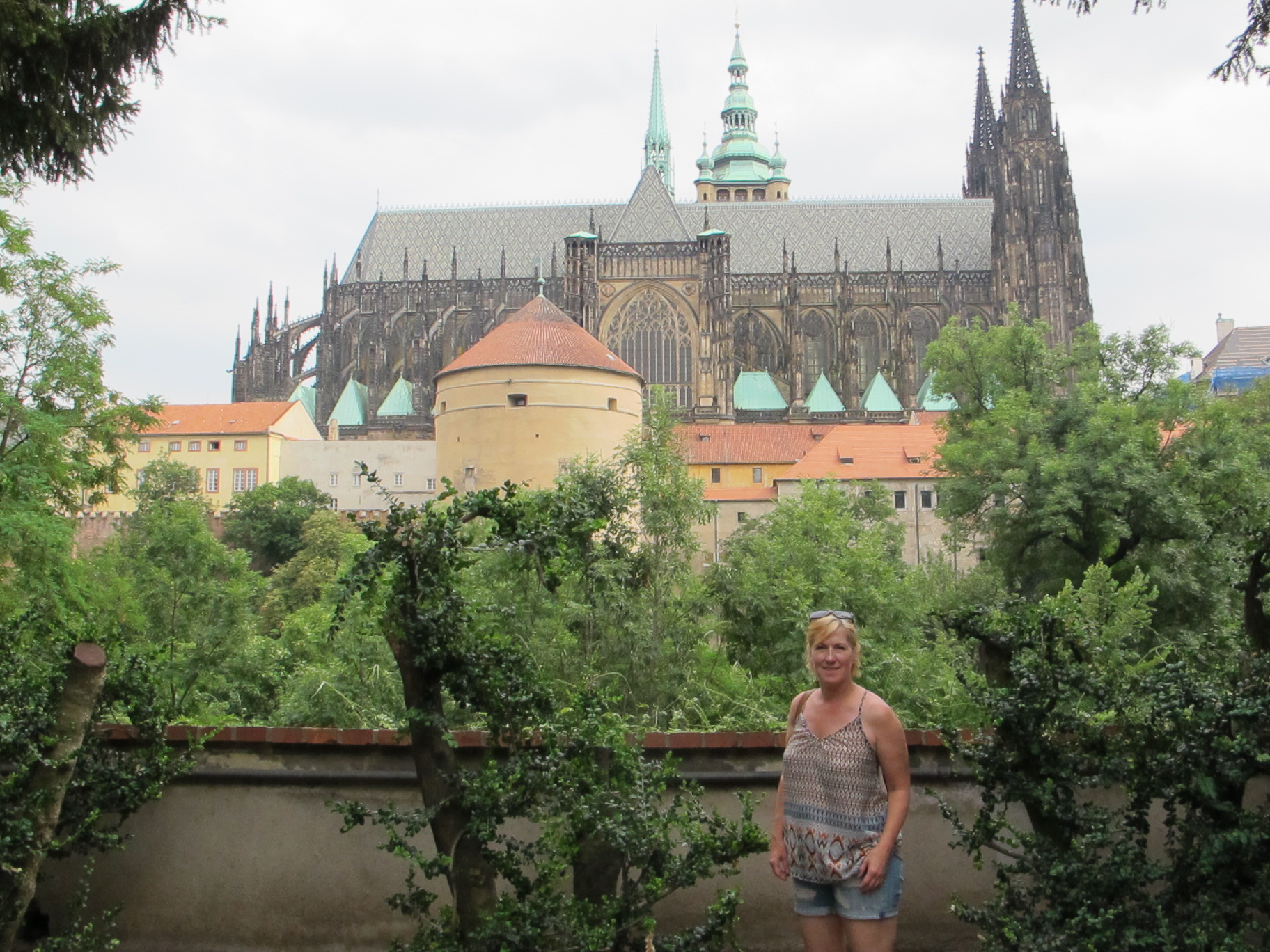
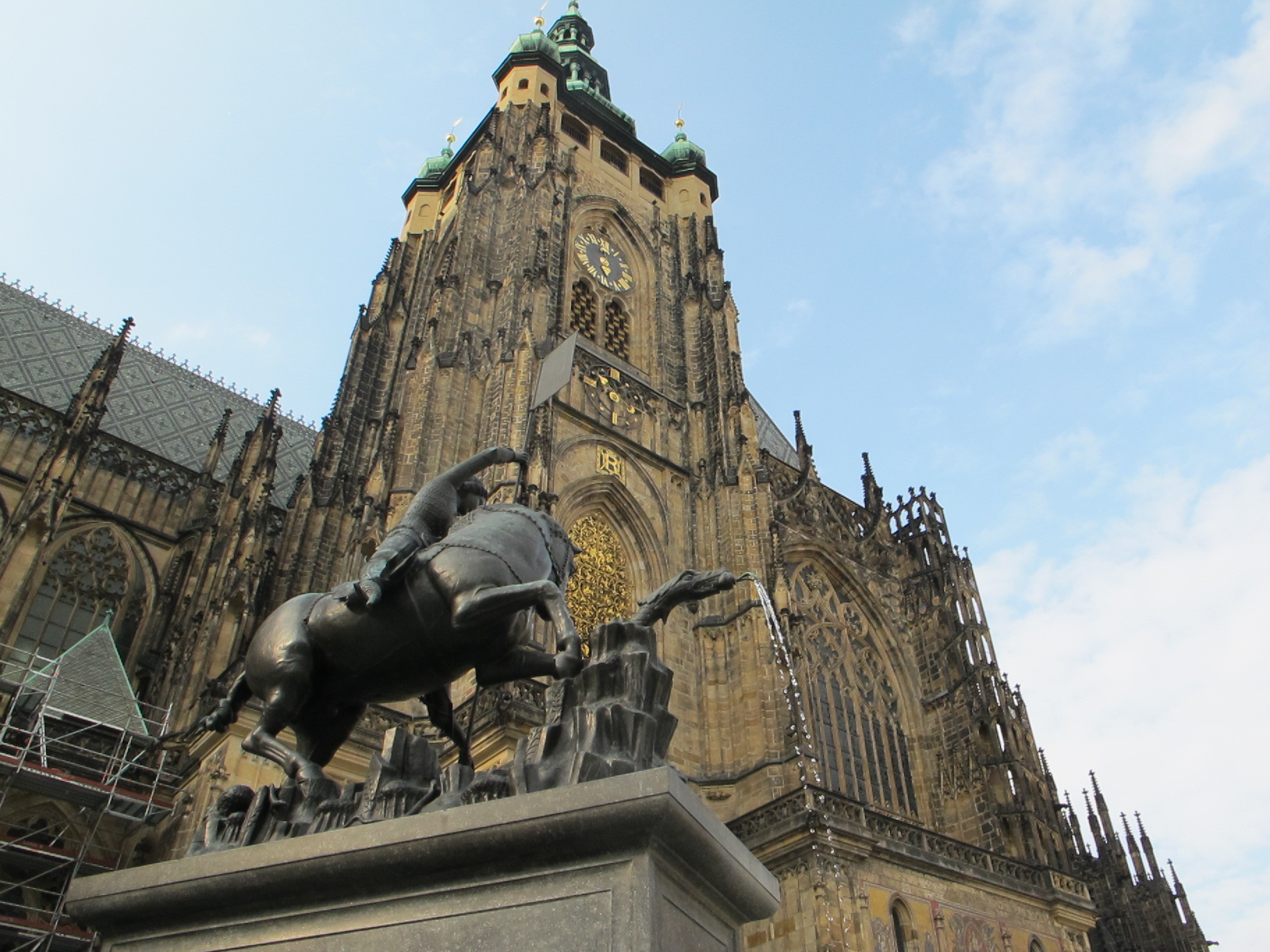
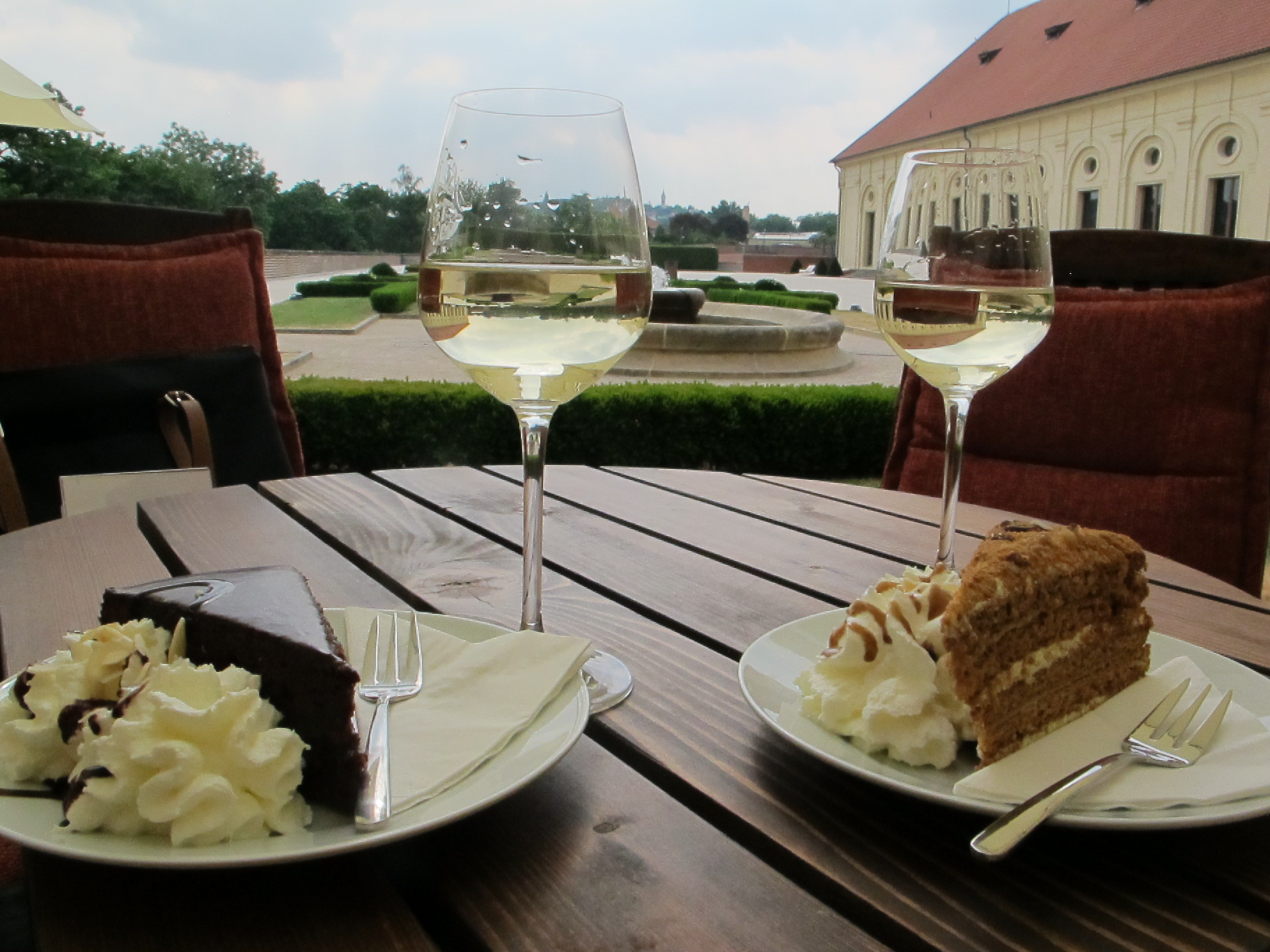
First of all it, it’s beautiful. The gardens are massive and you would need a full day to really explore it. We were too cheap to pay the entrance fee because we arrived late in the afternoon, however, we did use that money to enjoy a slice of cake and a glass of wine while overlooking the gardens…with just enough time to check our Facebook – free wifi. Although we didn’t explore inside the castle, we did have an opportunity to check out St. Vitus cathedral and the palace courtyards.
St. Vitus Cathedral, located in the Prague Castle complexInside St. Vitus Cathedral, Prague
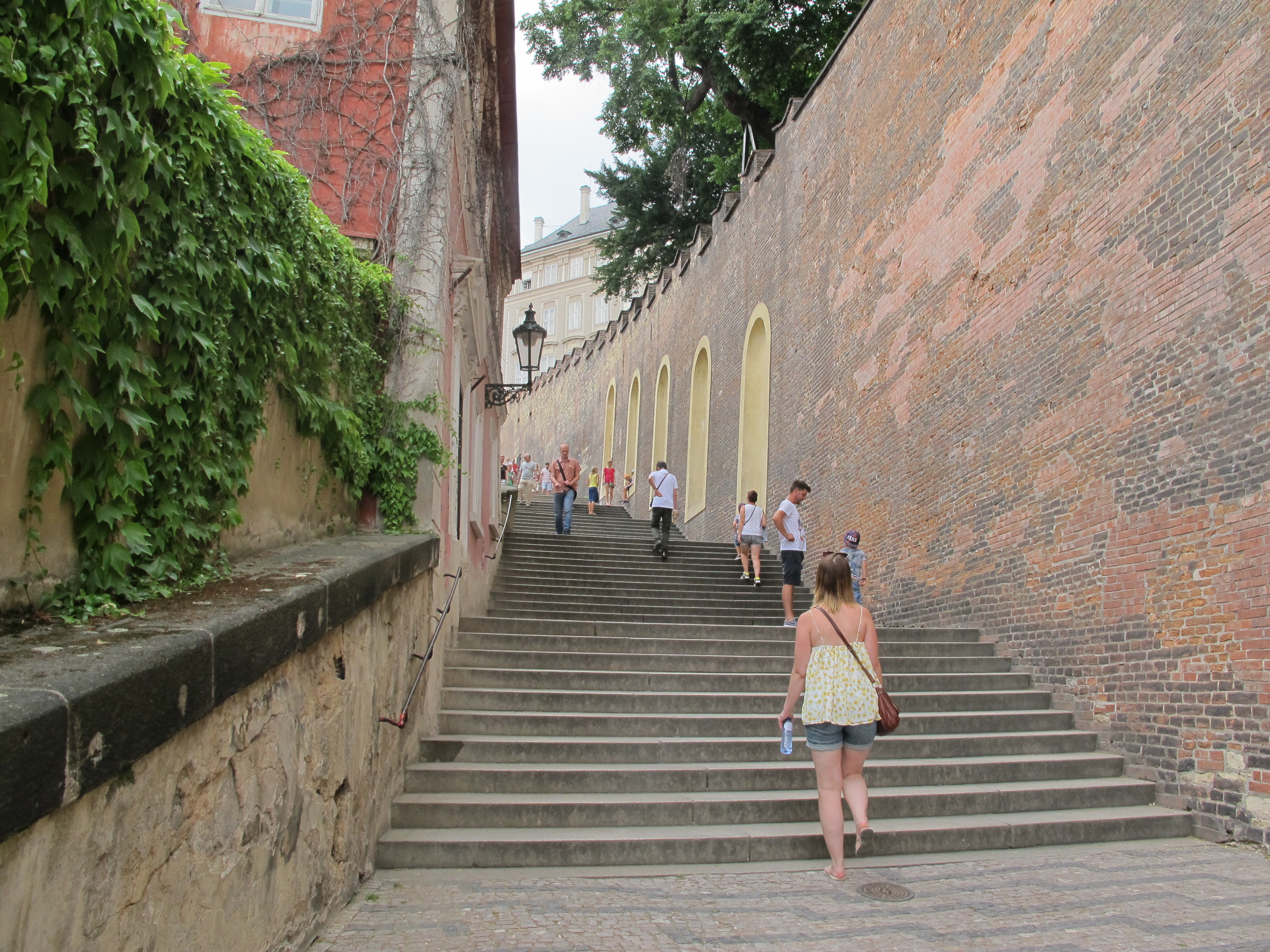
Did not regret spending money on wine and cake instead as everything was so pretty. Of note, the view of Prague from the top of the hill on which the palace and cathedral are located is absolutely stunning and I would strongly recommend that you make your way up the winding stairs to take it all in, even if you don’t plan on visiting the castle.
The climb to Prague Castle beginsPrague Castle and St. Vitus Cathedral, PragueSt. Vitus Cathedral, near Prague Royal CastleView of the city from the Royal Palace districtOur wine and cake break at Prague Castle – well worth it and free wifi
The Walking Tour
We decided to do the free Royal Prague Walking Tour and it was amazing. Our guide, Callum, an Aussie who now lives in Prague, was one of, if not the best, walk guides ever. He was extremely knowledgeable and quite funny (this guy’s comedic timing is bang on) which made the tour both informative and entertaining. We stopped in The Old Town Square and the Astronomical Clock, were provided with a brief history of Prague and learned about Jan Hus, the Hussite followers and their rebellion against the Catholic church.
Charles Street Bridge, PragueScene from Charles Bridge at dusk
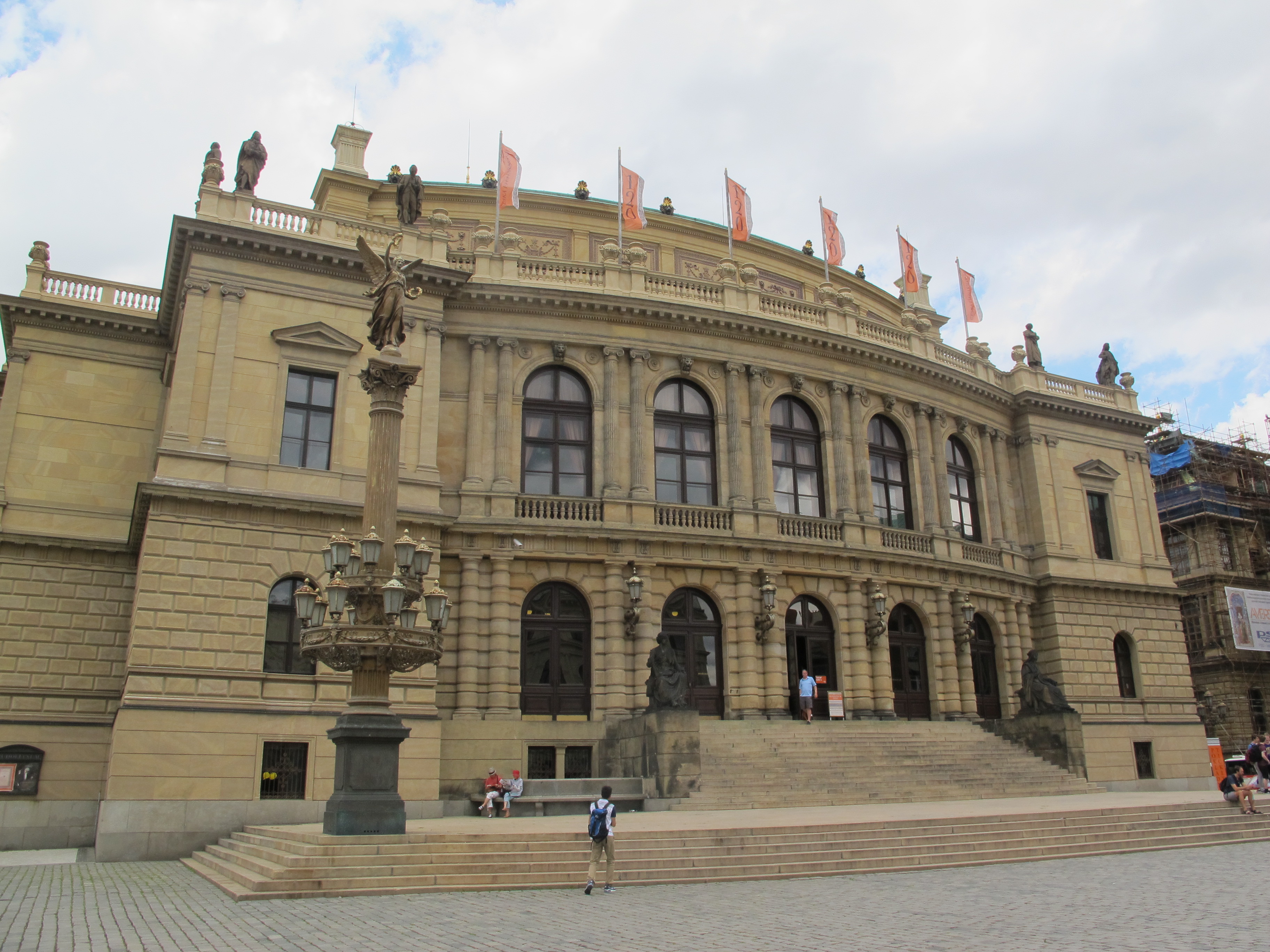
He walked us to the base of the Charles Bridge, then onto the Rudolfinum (it was used as a headquarters for the Nazis during the German occupation of Prague), we then walked to the Josefov, formerly the Jewish ghetto of Prague – this neighbourhood is now the poshest neighbourhood in Prague with stunning architecture at every turn, though our guide informed us that it is now mostly occupied by rich wankers. We learned about Frank Kakfa and toured the New Town. The tour ended outside the Prague Estates Theatre, where Mozart himself conducted the world premiere of Don Giovanni – incidentally, it’s currently in production at this very theatre. Definitely recommend this tour and if you can get Callum as your guide, you’re in for a treat. He’s bloody hilarious.
Rudolfinum, Prague Home of the Prague Symphony Orchestra
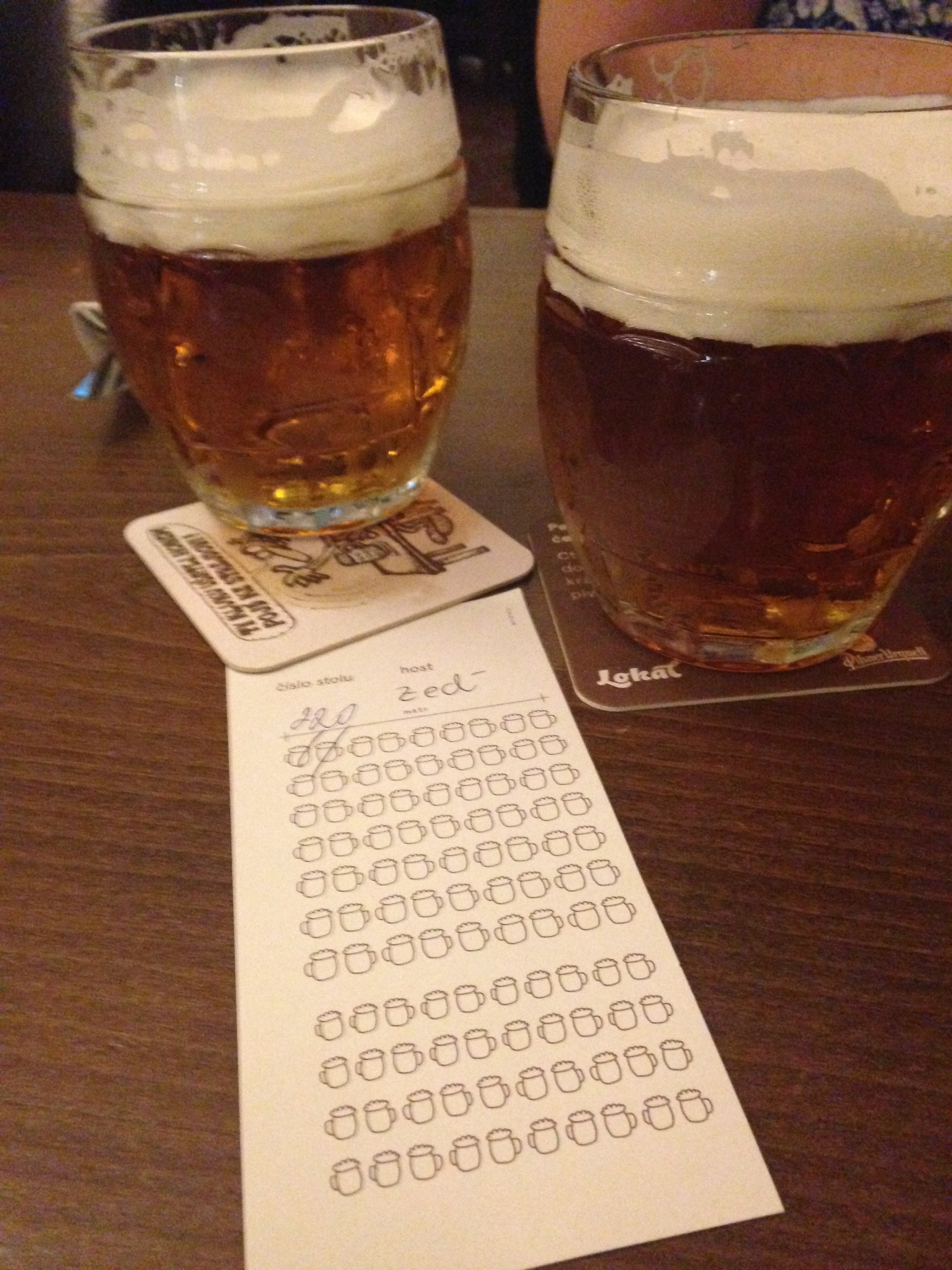
Pivo (the Beer) – Naz’Dravi!
So, we had heard that the Czech Republic was a little into their beers and that if you happen to be a be a beer fan, you might want to try some out while you’re there. Coincidentally, Emma and I happen to be beer fans, and as it turns out the Czechs are currently making some of, if not the best beer in the world.
Trying out some Czech beers at the Lokal Beer Hall – popular with both locals and touristsBeer Museum stop, late night beer sampling
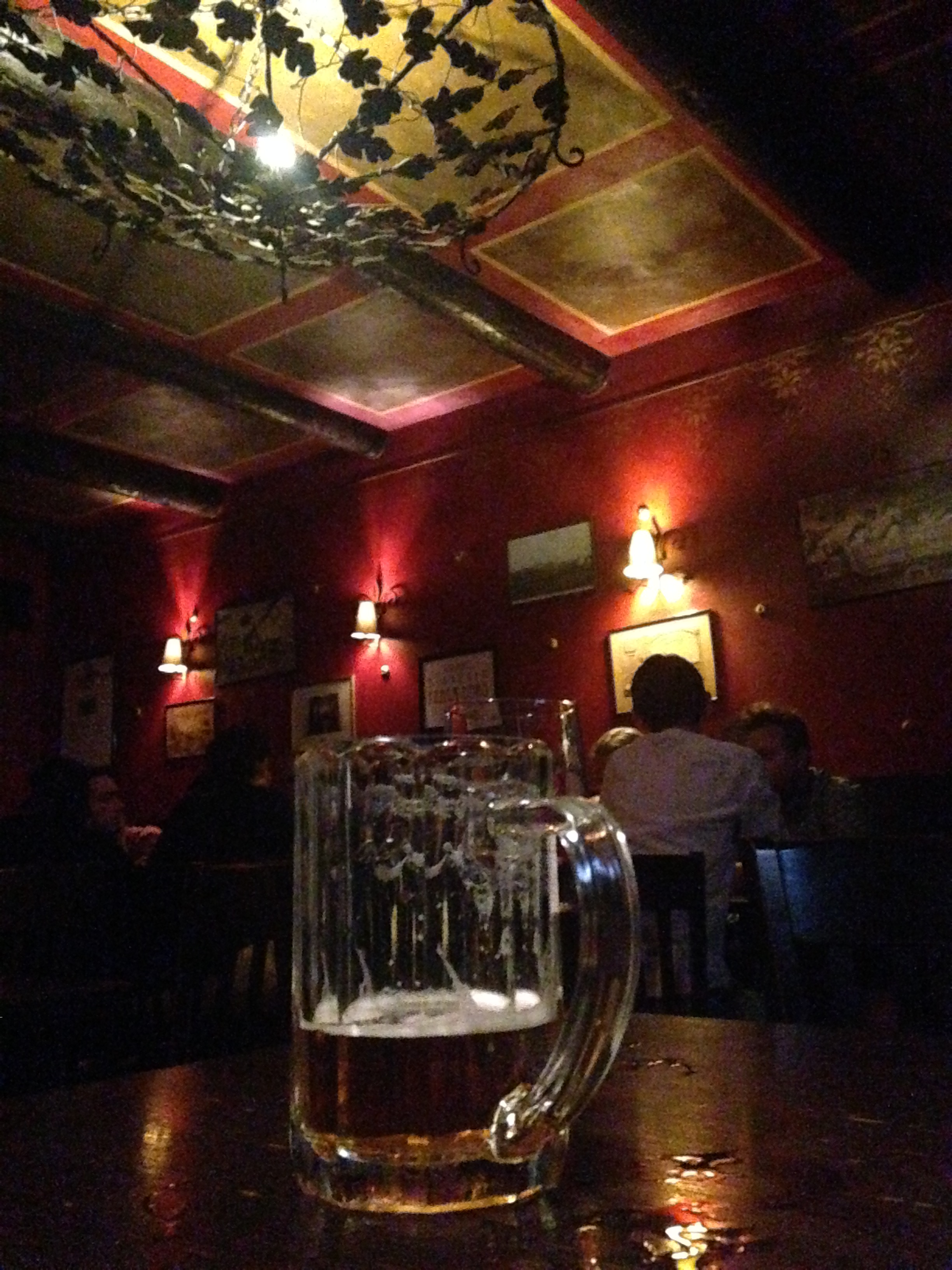
We tried many, many beers (strictly for research purposes) and not a single one disappointed. Many of the tour operators and local beer halls offer beer tours and tastings. We didn’t have time for a beer tour in the end, but we really didn’t need one, as our ‘beer tour’ was self-guided. We visited a few beer halls which were mostly frequented by locals and sampled as many brews as we could. Of all the beer halls, U’Medvidku was by far, our favourite. It’s a rather large hall – more like a series of large adjoining halls, it was formerly a medieval brewery and has done a very good job and maintaining that look and feel. They currently brew 11 beers which they offer on their menu along with several other beers. If you’re not comfortable making your own selections, they do offer a brewer’s tasting menu. They also brew the strongest beer in the world, X-33, with an alcohol content of 12.6% – drink with caution, it really sneaks up on you – so they say 🙂
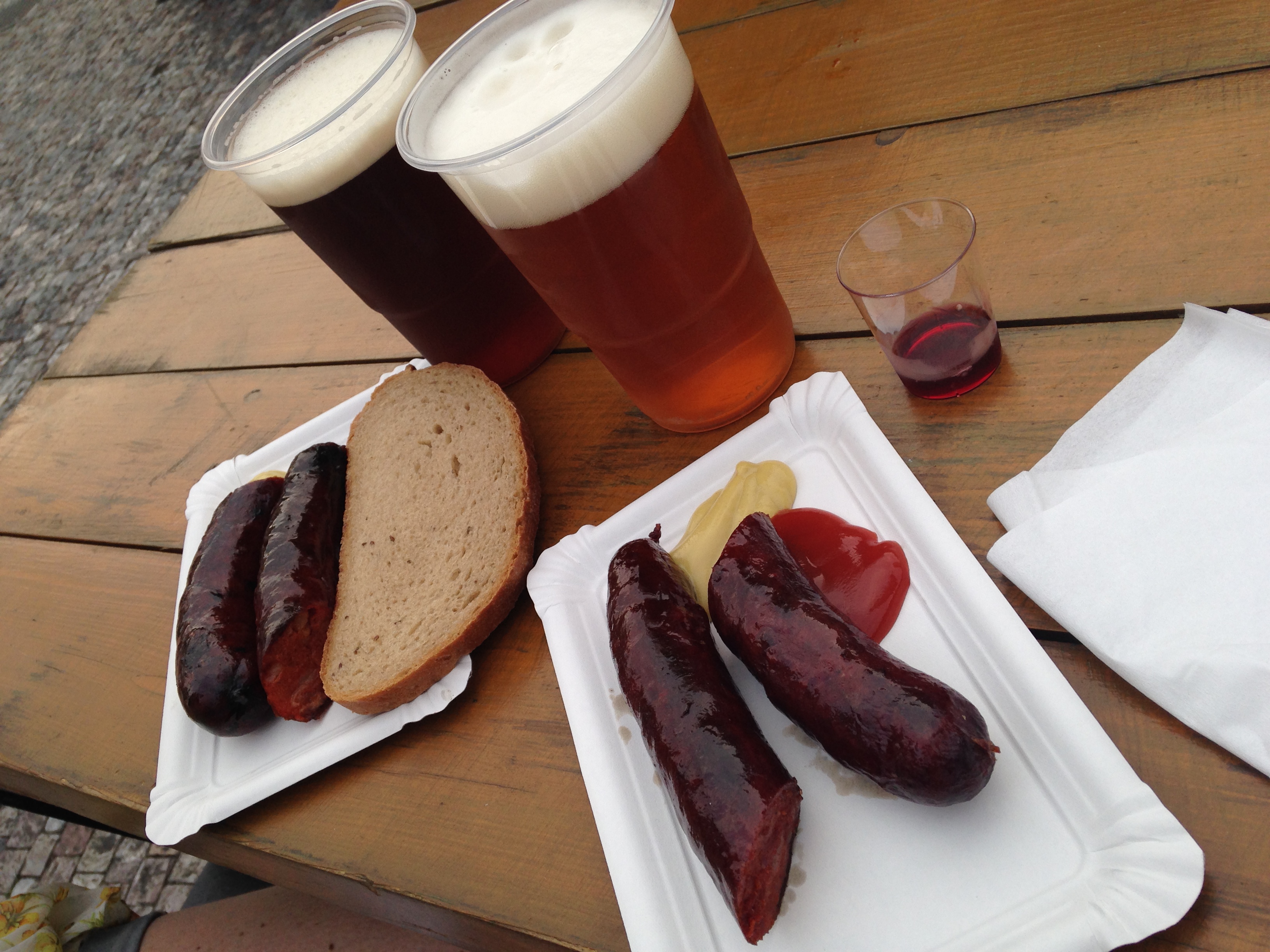
Wild Boar and Venison sausages paired with a local Czech micro brew – typical outdoor market fare
Fun Fact: Czechs consume more beer per capita than any other country. The annual beer consumption per person in the Czech Republic is 150 litres, with Germany holding down second place with 100 litres. Canadians consume on average about 65 litres per person and Australians hover at 83 litres per person – just in case you’re wondering.
The Architecture
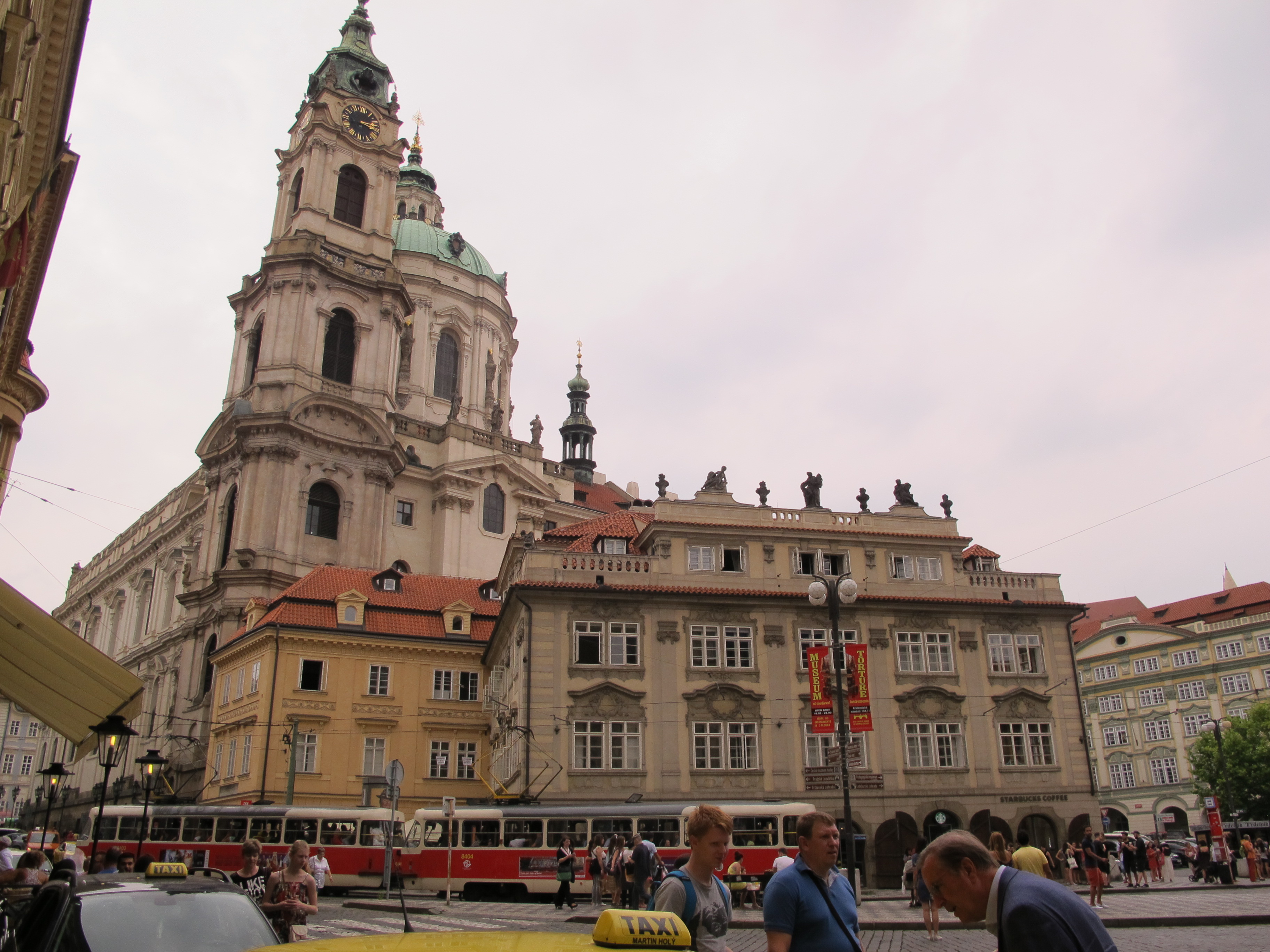
If you are an architecture buff or just enjoy taking photos of buildings you think are beautiful, Prague possesses an undeniable wealth in this area. I couldn’t stop taking pictures of the buildings and streetscapes – even when the buildings were of no historical significance or pedigree…they are just stunning! I took well over 250 pictures in Prague, mostly of buildings. I’m like that.
One of countless building photos I snapped…too many to count
Czech Food
We were super excited about trying Czech food and we ate traditional Czech food every chance we could.
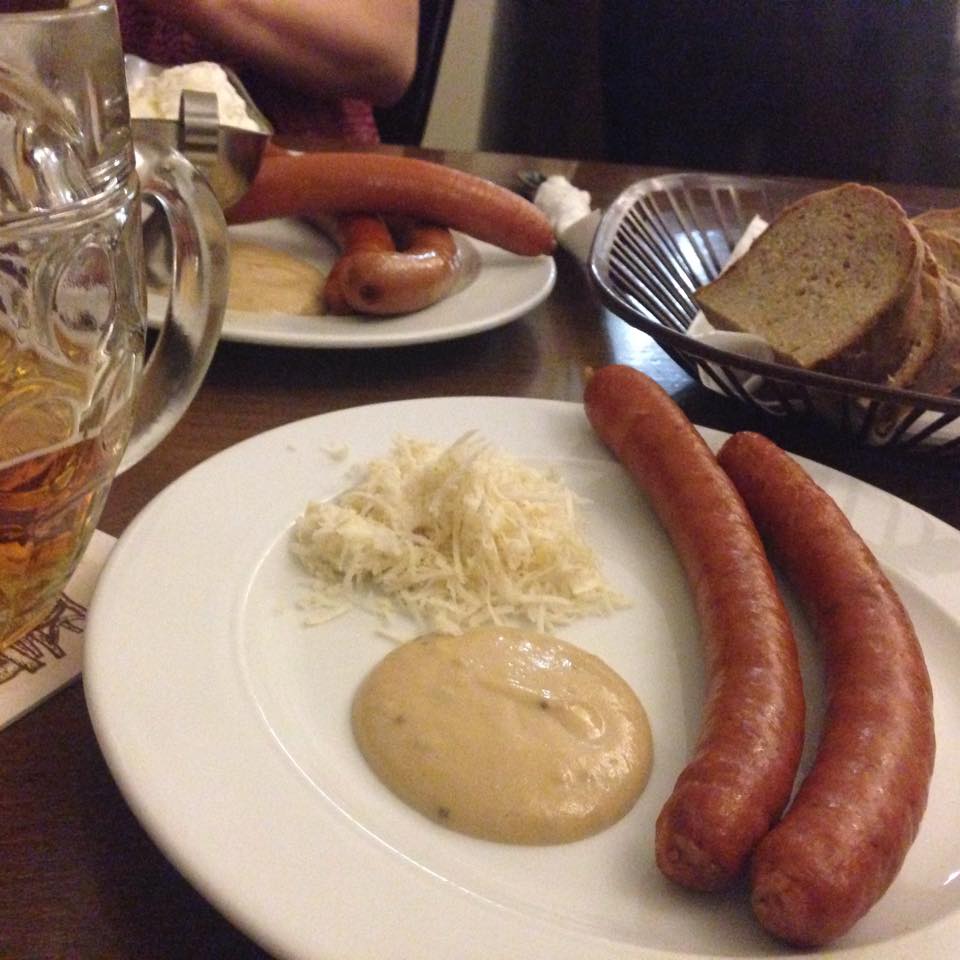
Sausages and pivo, the perfect combo – Naz dravi!
Sausages – so many different types of sausages, all of which pair very well with Pivo (beer).
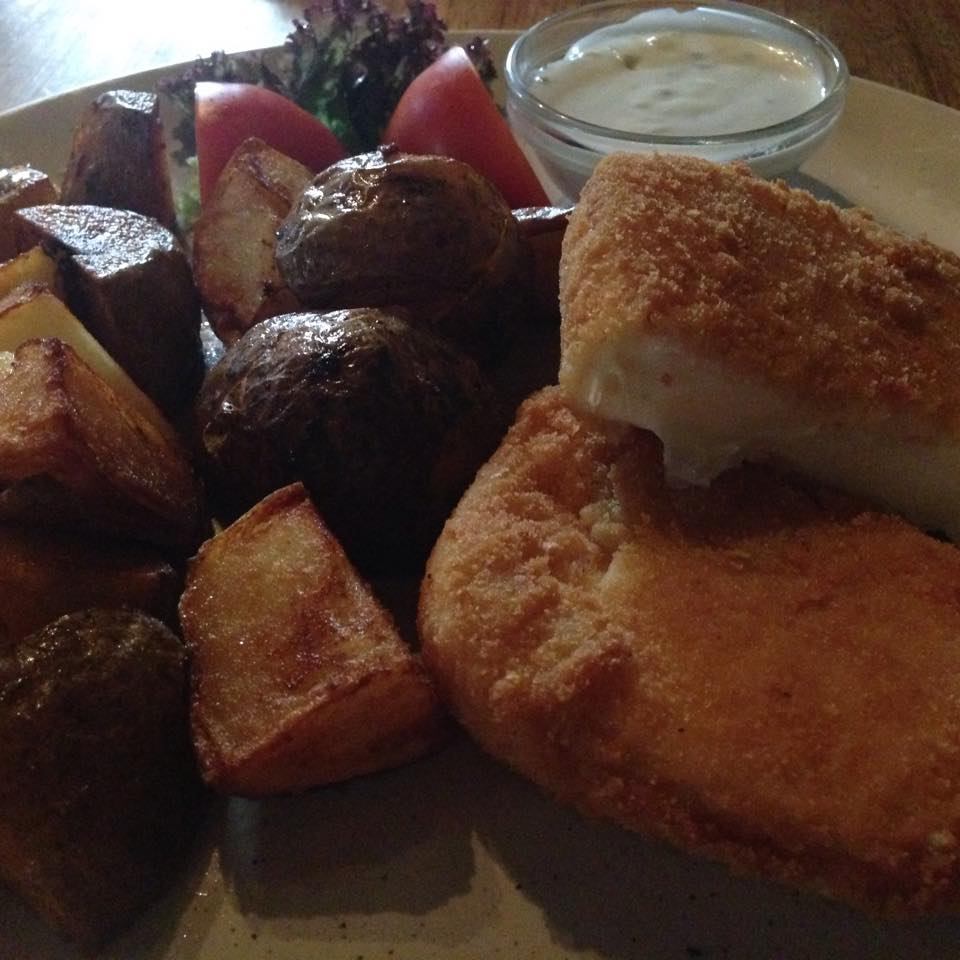
Syr Smazeny
Syr Smazeny – fried cheese
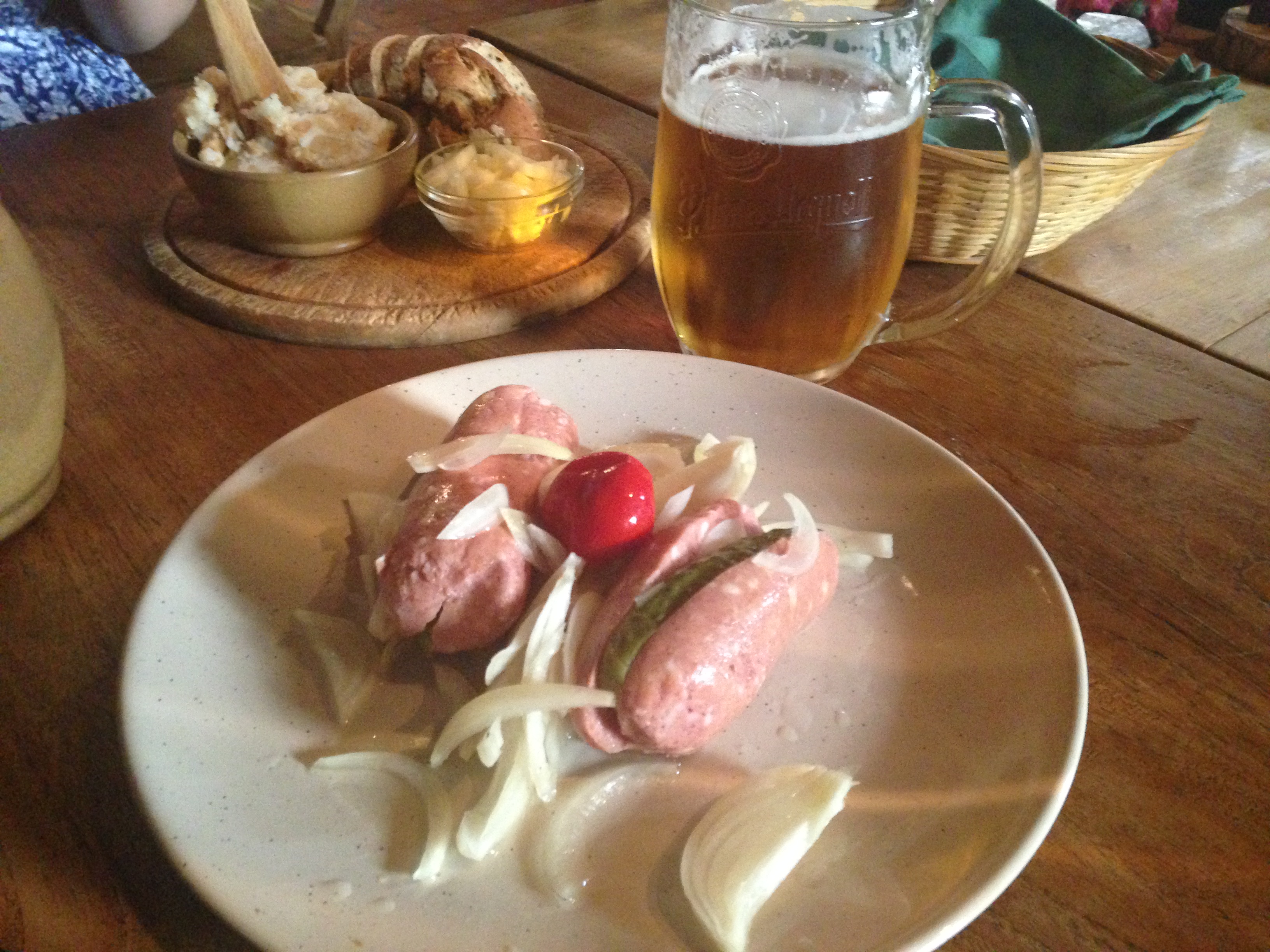
‘Drowned Men’ – marinated sausages
Utopenci (drowned men) – sausages marinated in vinegar and onions, served sliced with mini pickles – yum!
Gulash with dumplings
Gulash – not traditionally a Czech dish, but very popular
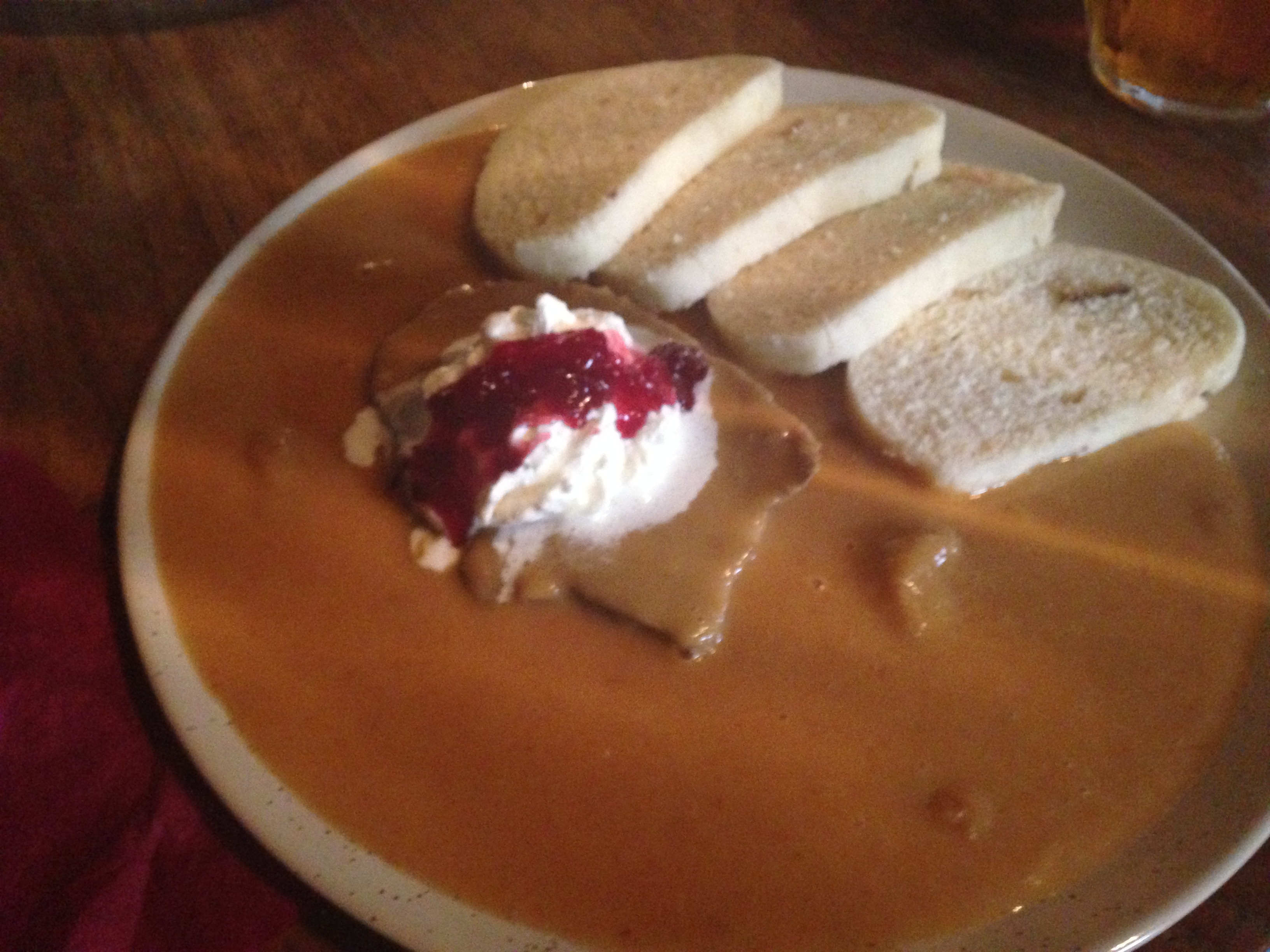
I know it doesn’t look good, but trust me, it tasted delicious.
Svickova na smetane – beef doused in a root vegetable gravy and served with whipped cream and cranberry sauce – weird, but totally tasty.
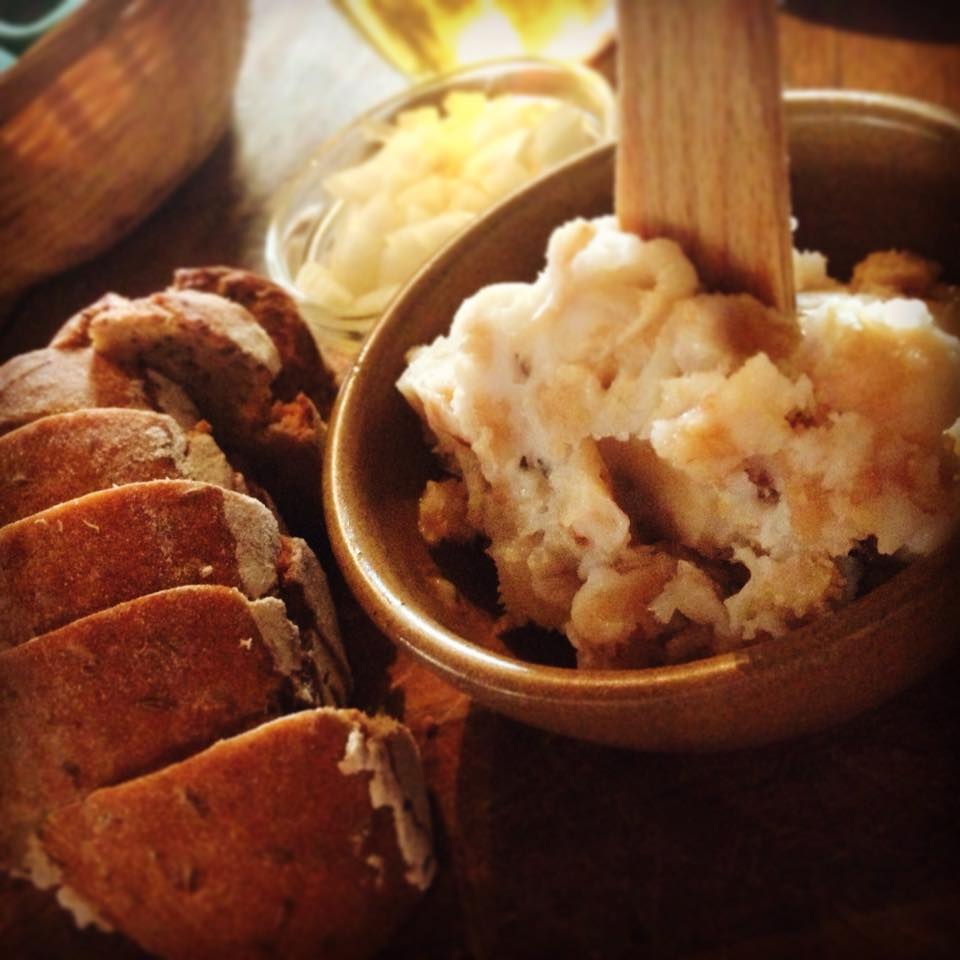
Svarky
Svarky – pork crackling mixed with pork lard and served with salty bread…it looked disgusting but tasted delicious and it goes very well with pivo (beer).
Schnitzel the size of your head.
Schnitzel – really doesn’t require an explanation, though I will say that the serving sizes are as big as your head. You will not starve.
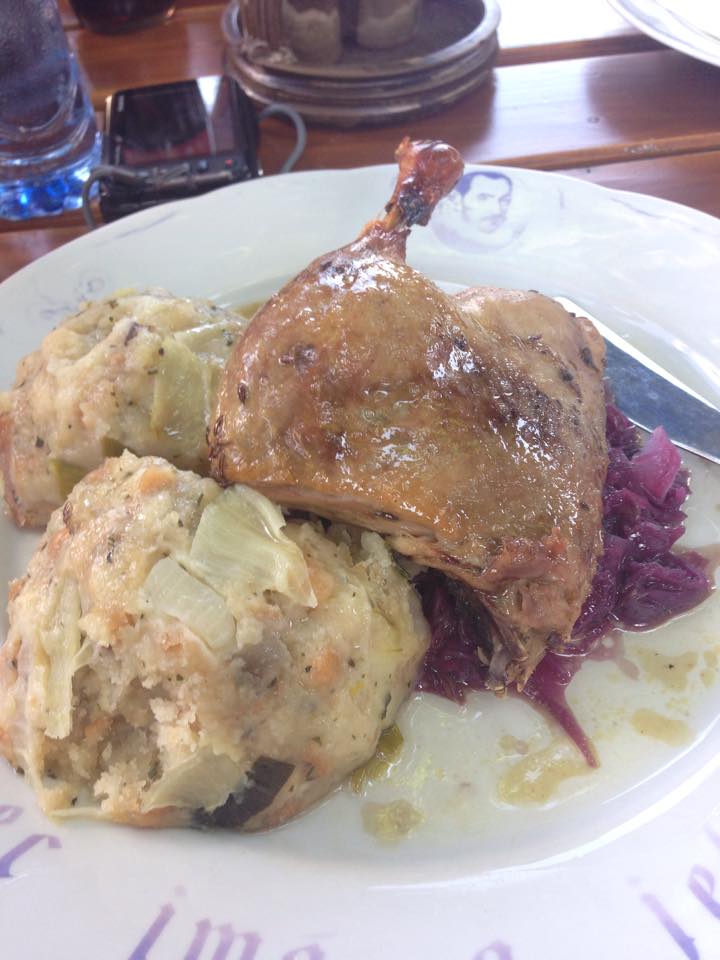
Duck – the Czechs cook a mean duck, traditionally served with red cabbage and potato/stuffing balls.
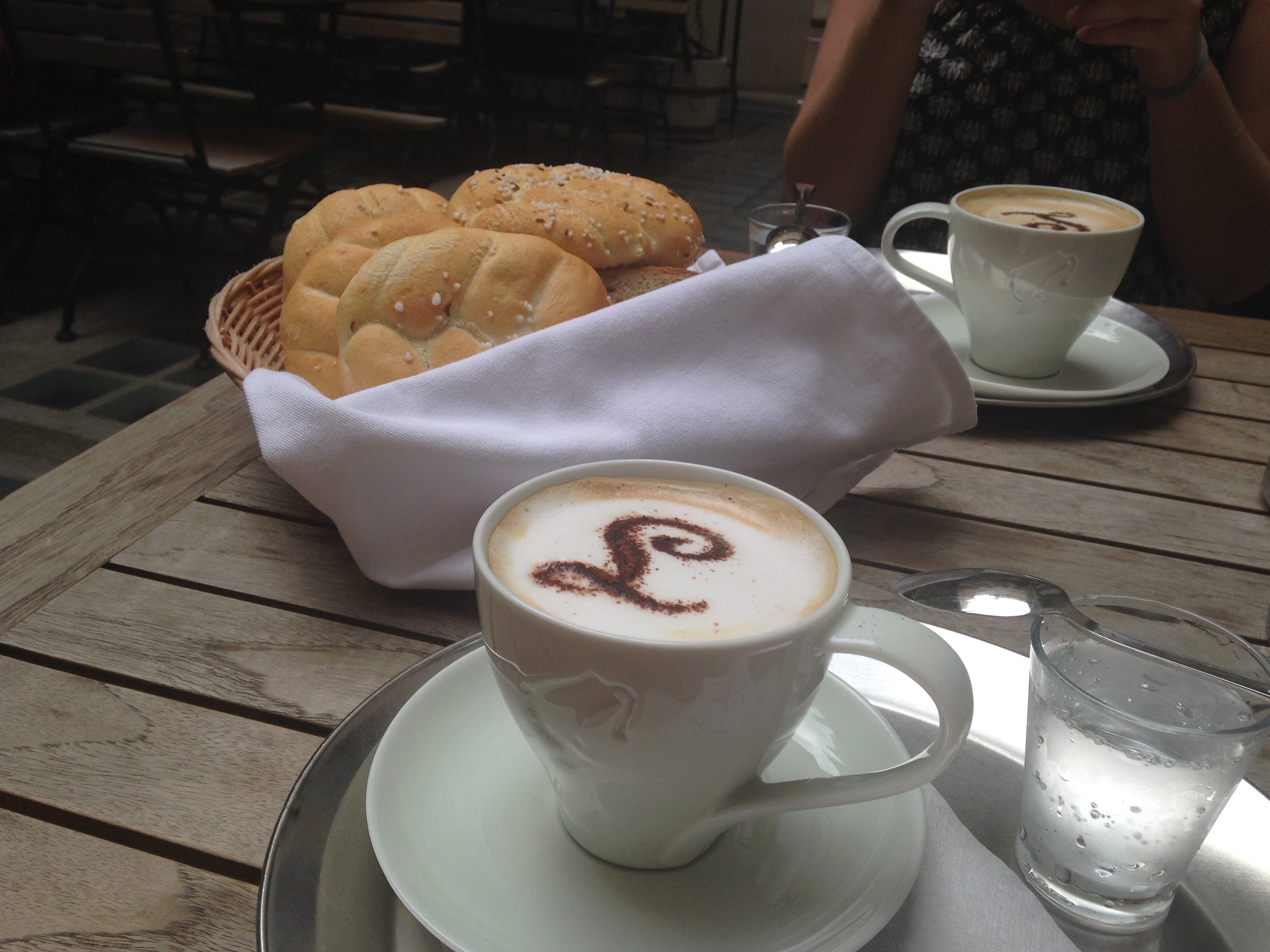
On our last morning in Prague, on the recommendation of our tour guide Callum, we stopped by the historical Cafe Louvre…and it did not disappoint. The cafe was established in 1902 and has a very colourful history. Albert Einstein and Frank Kafka count among their many famous guests.
Cafe Louvre breakfast
After 5 days of eating and drinking our way through Prague we headed to the airport. You might be thinking this is the end of the Prague post, but not quite. Prague wasn’t done with us yet. We were scheduled to leave on a 10:55pm flight to Athens, which was delayed to 11:20pm…no big deal. Since the flight was so late we thought it might be a good idea to wash up and brush our teeth before boarding. Emma located a bathroom on the lower level, she made her way there an I watched our bags. When Emma returned, I then went down the escalator to the same bathroom. I had just finished washing my face and brushing my teeth when the lights went out. At first I thought the lights were on a motion sensor and that if I waved my arms about that they would come back on…this was not the case. I then tried to open the door, maybe the light switch was on the outside? Nope, I was locked in and the lights were off. For 10 minutes I pounded on the door, yelling, then screaming for help before someone arrived to help me. Apparently, they locked the bathroom for the night, turning off the lights in the process. No one thought to check to see if anyone was still inside. I had pounded on the door so hard that my hands were bleeding by the time I got help. They clearly felt badly for locking me in because once I was freed and back at the gate, the airport staff kept stopping by to check on me to see if I was ok and how my hands were. Note to self, do not use a washroom in the Prague airport after 10pm.
Despite the airport incident, Prague was lovely, mindblowing and somewhere I’d love to return to. If you ever have the opportunity to visit it, I strongly encourage you to do so!










































 carryonadventures